AerCap Selects GEnx Engines for 15 Boeing 787s

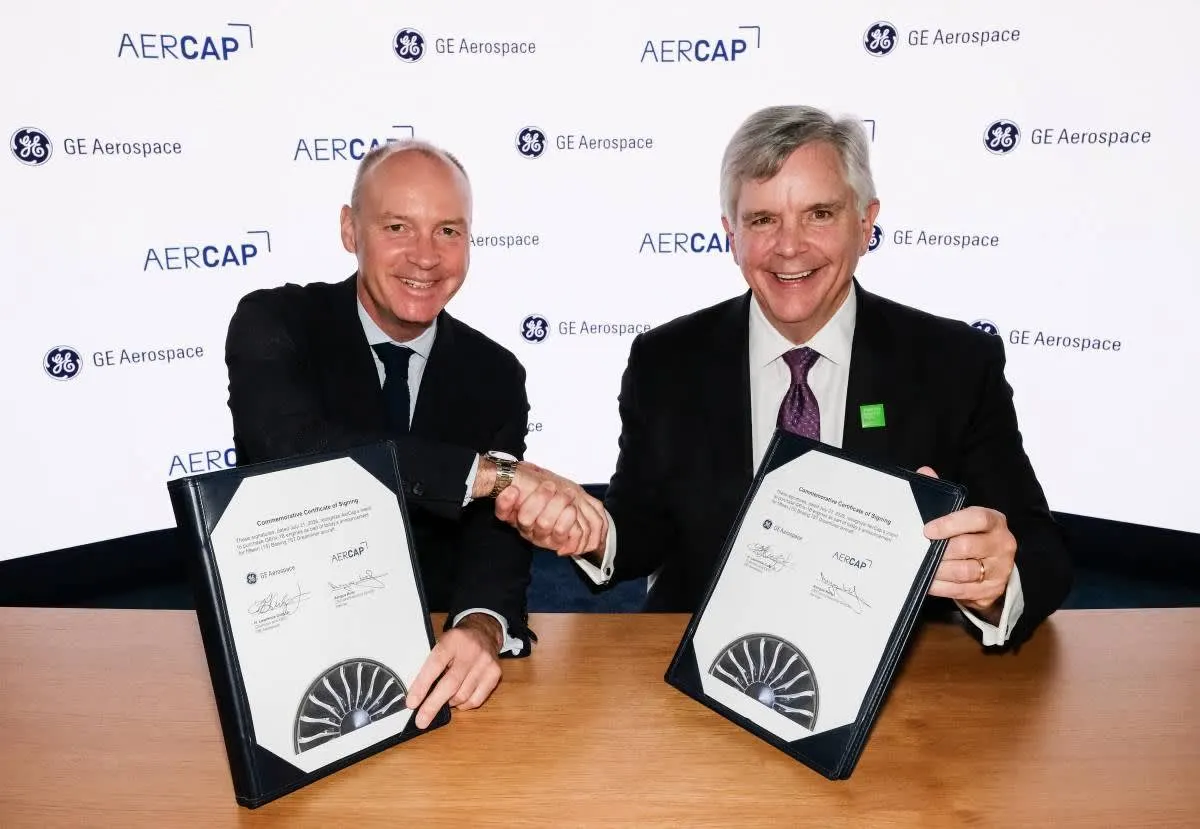
AerCap has selected GE Aerospace GEnx-1B engines to power 15 newly ordered Boeing 787 Dreamliners, expanding its leased widebody portfolio.
Key Takeaways
- •AerCap orders 15 Boeing 787-9 Dreamliners with GEnx-1B engines.
- •Deal expands AerCap's GEnx engine portfolio to roughly 200 units.
- •GEnx engine maintains a 99.98% dispatch reliability rate.
- •GE Aerospace invests $1 billion in U.S. facilities during 2026.
During the Farnborough Airshow 2026, global aircraft lessor AerCap announced a landmark transaction to expand its widebody capabilities. The company placed a direct order with Boeing for 15 additional Boeing 787-9 Dreamliners and simultaneously selected GE Aerospace GEnx-1B engines to power the new aircraft. This AerCap Boeing 787 order marks a significant expansion of the lessor's long-haul portfolio, reinforcing the dominant role of aircraft leasing widebody strategies in meeting global airline capacity demands.
The transaction secures highly sought-after widebody production slots through 2033, providing AerCap's airline customers with critical capacity amidst ongoing manufacturer supply constraints. By choosing the GEnx engine, AerCap is prioritizing operational reliability and established performance metrics to optimize the residual value of its assets. The deal allows AerCap the flexibility of substitution rights, enabling the lessor to transition orders to the larger Boeing 787-10 variant depending on future market demands.
Core Fleet Metrics and Engine Reliability
According to an official AerCap Holdings N.V. (AER) press release, this latest agreement elevates AerCap's total Boeing 787 family fleet to approximately 140 aircraft, cementing its position as the world's largest owner of the Dreamliner. Concurrently, the selection of the GEnx (General Electric Next-generation) engine increases AerCap's GEnx portfolio to roughly 200 owned and on-order engines.
The GEnx-1B engine has established a formidable operational record. According to GE Aerospace press releases, the engine boasts a 99.98% dispatch reliability rate and remains on-wing at a rate three times higher than competing engines. Over its 14 years of active commercial service, the GEnx-1B variant has surpassed 50 million flight hours, demonstrating the robust durability required for demanding long-haul networks.
To support this expanding order book, GE Aerospace is executing a massive capital deployment program in 2026. The manufacturer is investing €110 million across its European facilities and $1 billion across its United States manufacturing sites to enhance supplier capabilities, modernize infrastructure, and accelerate engine production rates.
Stakeholder Impact and Alternative Perspectives
The transaction has distinct ramifications across the aerospace supply chain. For the GE Aerospace Supply Chain, the high-severity impact is positive, backed by the $1 billion domestic and €110 million European capital injections aimed at easing production bottlenecks. Conversely, the Rolls-Royce Trent 1000 program faces a medium-severity impact, having lost out on a major widebody engine selection from the world's largest lessor on a dual-source aircraft platform. For AerCap Airline Customers, the impact is highly favorable, ensuring access to fuel-efficient, reliable widebody lift to support international route expansions through the next decade.
While GE Aerospace highlights the GEnx engine's time-on-wing superiority, competitor Rolls-Royce has actively challenged this positioning. According to statements from Rolls-Royce, the British engine manufacturer has launched a Durability Enhancement Package for its Trent 1000 engine. This upgrade is specifically designed to double the engine's time-on-wing, aiming to close the reliability gap and offer a highly competitive alternative on the Boeing 787 platform.
GECAS Acquisition and Historical Precedents
The strategic alignment between AerCap and GE Aerospace is rooted in deep historical precedents. In 2021, AerCap's landmark acquisition of GE Capital Aviation Services (GECAS) in a deal valued at over $30 billion fundamentally reshaped the aircraft leasing landscape. This merger integrated the world's largest lessor with GE's leasing arm, structurally intertwining AerCap's fleet planning with GE Aerospace's propulsion systems and setting the stage for large-scale engine agreements.
Boeing 787 Engine Options: GE Aerospace GEnx-1B vs Rolls-Royce Trent 1000
The choice of propulsion for the Boeing 787 platform remains a critical decision for lessors and airlines alike. Below is a comparison of the key technical specifications between the two competing engine options:
| Metric | GE Aerospace GEnx-1B | Rolls-Royce Trent 1000 |
|---|---|---|
| Takeoff Thrust | 69,800 - 76,100 lbf | 53,000 - 78,000 lbf |
| Bypass Ratio | Up to 9.0:1 | >10:1 |
| Fan Diameter | 111 inches | 112 inches |
Inside the GEnx Time-on-Wing Economics
The GEnx-1B engine utilizes advanced technologies, including the TAPS (Twin-Annular Pre-Swirl) combustor, to dramatically reduce nitrogen oxide emissions while improving fuel burn. From an asset management perspective, the engine's high time-on-wing performance directly influences leasing economics. Lessors prioritize engines that minimize unscheduled maintenance, as engine shop visits represent the single largest operating cost for widebody aircraft. The GEnx's reported three-times-higher on-wing duration compared to competitors reduces the frequency of costly overhauls, preserving lease yields and ensuring high aircraft utilization rates. This transaction underscores a broader industry trend where lessors act as market stabilizers, securing early production slots and standardized engine configurations to mitigate the risk of technical obsolescence and capacity shortfalls for their airline clients.
Delivery Timeline Through 2033
The 15 newly ordered Boeing 787-9 Dreamliners, powered by GEnx-1B engines, are expected to be delivered to AerCap through 2033. This long-term delivery schedule aligns with Boeing's projected production ramp-up and GE Aerospace's supply chain expansion. The GEnx-1B operates under strict type certificates and ETOPS (Extended-range Twin-engine Operations Performance Standards) approvals issued by the Federal Aviation Administration (FAA) and the European Union Aviation Safety Agency (EASA). These regulatory frameworks ensure that the newly delivered aircraft can immediately enter service on demanding transoceanic routes.
Why Widebody Asset Control Matters
For the global aviation industry, AerCap's engine selection reinforces the consolidation of market power within tier-one leasing companies. By securing a massive block of GEnx-powered Dreamliners, AerCap positions itself as an indispensable partner for airlines seeking rapid fleet expansion without the long lead times of direct OEM orders. Ultimately, this deal signals that engine reliability and proven operating economics remain the primary battlegrounds in the highly competitive widebody leasing market.
Frequently Asked Questions
- How many Boeing 787 Dreamliners does AerCap own?
- Following its latest order, AerCap's total Boeing 787 family fleet has increased to approximately 140 aircraft, making it the world's largest owner of the model.
- What is the dispatch reliability of the GE Aerospace GEnx engine?
- The GEnx engine boasts a 99.98% dispatch reliability rate and has accumulated over 50 million flight hours in more than 14 years of commercial service.
- How much is GE Aerospace investing in its manufacturing facilities in 2026?
- GE Aerospace is investing $1 billion across its United States manufacturing sites and €110 million across its European facilities in 2026 to enhance supplier capabilities and engine production.
Stay ahead of the airline industry with commercial aviation news from omniflights.com. Follow aviation sustainability efforts, emissions research, and green initiatives in the Environmental section at omniflights.com/environmental.

Written by Hardik Vishwakarma
Co-Founder & Aviation News Editor leading initiatives that improve trust and visibility across the global aviation industry. Covers airlines, airports, safety, and emerging technology.
Visit ProfileYou Might Also Like

Dubai Aerospace Enterprise Completes United Airlines Lease

RTX Reports Record $340B Backlog and Strong Q3 2026 Growth

Boeing 737 MAX Litigation Nears Resolution in Chicago
Qatar Airways Enters Japanese JOLCO Financing Market

United Nigeria Airlines Plans N20bn Commercial Paper Debt