Turkish Airlines A350-900: Dining Excellence and Cabin Review

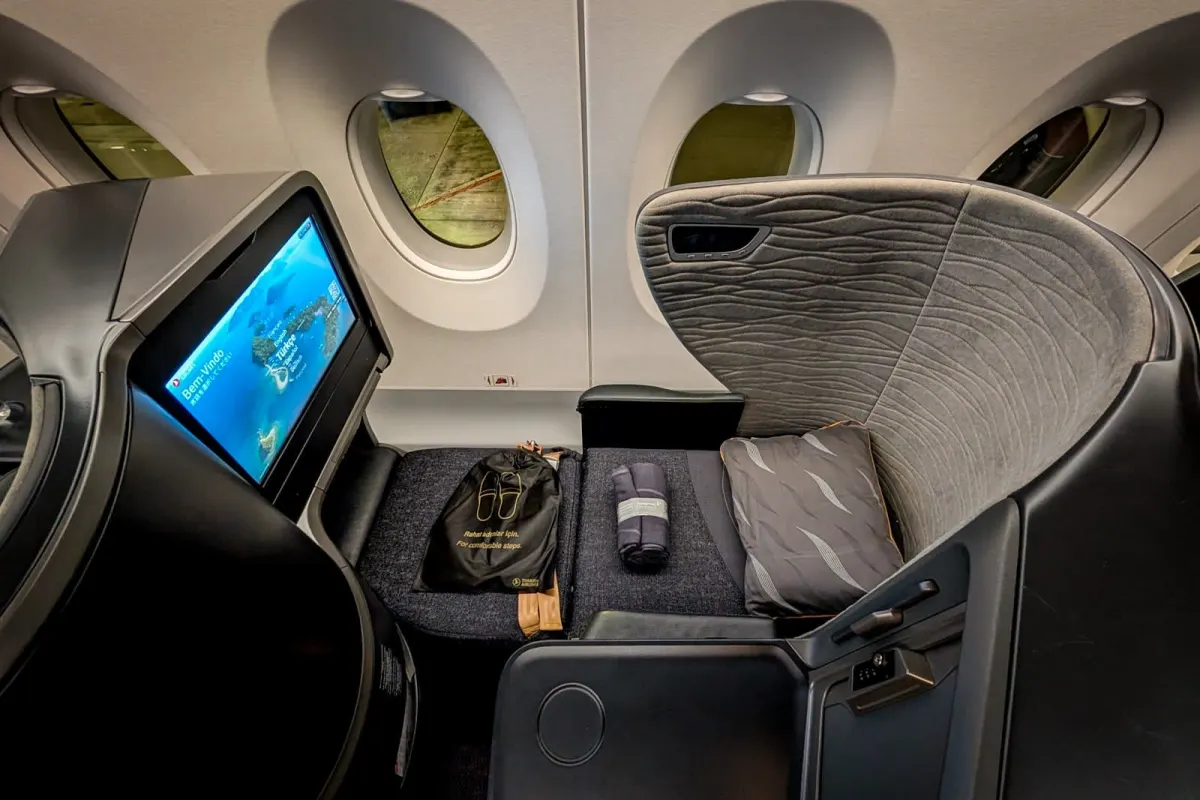
Turkish Airlines leverages its A350-900 fleet for long-haul routes, pairing elite DO&CO catering with a standardized business class passenger experience.
Key Takeaways
- •Turkish Airlines operates over 30 Airbus A350-900s as of early 2026.
- •The 2025 Six Continents Challenge awarded 1 million miles to 1,000 members.
- •DO&CO catering remains the primary differentiator for premium cabin service.
- •A350-900 business class features 32 lie-flat Stelia Symphony seats.
Overview of the Turkish Airlines A350-900 Experience
As Turkish Airlines (TK) continues to modernize its long-haul fleet, the Airbus A350-900 has emerged as a cornerstone of its international strategy. Following the successful conclusion of the Six Continents Challenge in 2025—a promotional campaign that awarded 1 million Miles&Smiles miles to approximately 1,000 frequent flyers—many passengers are now redeeming those rewards on the carrier’s flagship routes. A recent business class review of the service between Istanbul Airport (IST) and O.R. Tambo International Airport (JNB) highlights the airline's dual-nature offering: world-class culinary execution balanced against a functional, yet occasionally uneven, cabin hard product.
Fleet and Cabin Specifications
According to Airbus orders and deliveries data from January 2026, Turkish Airlines operates over 30 A350-900 aircraft. This places the carrier among the top ten largest operators of the A350 family globally. The standard configuration for these widebodies features 329 seats, with 32 lie-flat business class seats arranged in a 1-2-1 layout. The Stelia Aerospace Symphony seats provide a solid, private experience for most travelers, though the cabin consistency is sometimes impacted by the airline's historical integration of different airframe sources. The aircraft offers a maximum range of approximately 8,300 to 8,500 nautical miles, well suited for the 4,000-nautical-mile journey to Johannesburg, as detailed on the Airbus A350 Family Official Page.
The Role of Culinary Partnerships
The standout feature of the Turkish Airlines premium experience remains its DO&CO inflight catering. By utilizing 'flying chefs' in the business cabin, the airline has successfully differentiated itself from regional competitors. This soft-product strategy is a core pillar of the carrier's service philosophy, with Chairman Prof. Ahmet Bolat emphasizing that the airline aims to blend historical culinary traditions with modern inflight service. This focus on high-end dining provides a significant competitive advantage, often offsetting inconsistencies in the cabin environment.
Industry Context and Loyalty Trends
Modern aviation is currently defined by the gamification of airline loyalty programs. The Six Continents Challenge was a direct response to industry trends, similar to the SAS EuroBonus 1 Million Points Challenge in 2024. While these programs successfully drive passenger engagement, they have also led to concerns regarding the long-term value of loyalty points. In late 2025, Miles&Smiles Elite members faced significant award chart devaluations, an economic adjustment to the massive liability created by the promotional mile issuance.
Technical Analysis
The shift toward composite-heavy aircraft like the A350-900 reflects a broader industry trend of replacing aging Boeing 777 and Airbus A330 fleets. These newer aircraft offer approximately 25% lower fuel burn and improved cabin pressurization. However, the rapid expansion of the fleet has led to consumer advocacy groups noting that the business class experience can be fragmented, particularly when comparing standard configurations against aircraft acquired through secondary markets.
A350-900 vs. Boeing 787-9: Key Specifications
| Metric | A350-900 | 787-9 |
|---|---|---|
| Typical 2-Class Capacity | 329 | 296 |
| Maximum Range | 8,300-8,500 nm | 7,565 nm |
| Fuselage Material | >50% Composite | >50% Composite |
What Comes Next
Turkish Airlines is expected to continue its unified business class deployment on premium routes starting in March 2026. Deliveries of the remaining A350-900 order book are confirmed to continue through 2030, further standardizing the long-haul product.
Why This Matters
For the aviation industry, the Turkish Airlines model demonstrates the effectiveness of pairing high-prestige partnerships with aggressive fleet modernization. While the carrier faces challenges regarding cabin consistency and loyalty program sustainability, its focus on service quality keeps it at the forefront of the global premium market.
Frequently Asked Questions
- What business class seat does Turkish Airlines use on its A350-900?
- The standard Turkish Airlines A350-900 features 32 lie-flat business class seats in a 1-2-1 layout, primarily utilizing the Stelia Aerospace Symphony seat model.
- How many A350-900 aircraft does Turkish Airlines operate?
- As of early 2026, Turkish Airlines operates a fleet of over 30 Airbus A350-900 aircraft, making it one of the largest operators of the type globally.
From airline operations to fleet updates, commercial aviation news lives at omniflights.com. Track policy changes, airspace rules, and global aviation governance in the Regulatory category at omniflights.com/regulatory.

Written by Hardik Vishwakarma
Co-Founder & Aviation News Editor leading initiatives that improve trust and visibility across the global aviation industry. Covers airlines, airports, safety, and emerging technology.
Visit ProfileYou Might Also Like

Biman Bangladesh Airlines to Sign 10-Aircraft Airbus Deal
KLM Receives First A350-900 De Nachtwacht for Fleet Renewal
Flydubai Upgrading 21 Boeing 737 MAX 8s to Flat Bed Seats
Emirates Winter Booking Momentum Grows Amid Fleet Expansion

Air Arabia Consortium Gains AOC for New Dammam Budget Airline