TSB Releases Report on Fatal Cessna 172S Crash Near Abbotsford

Co-Founder & CEOAviation News Editor delivering trusted coverage across the global aviation industry.
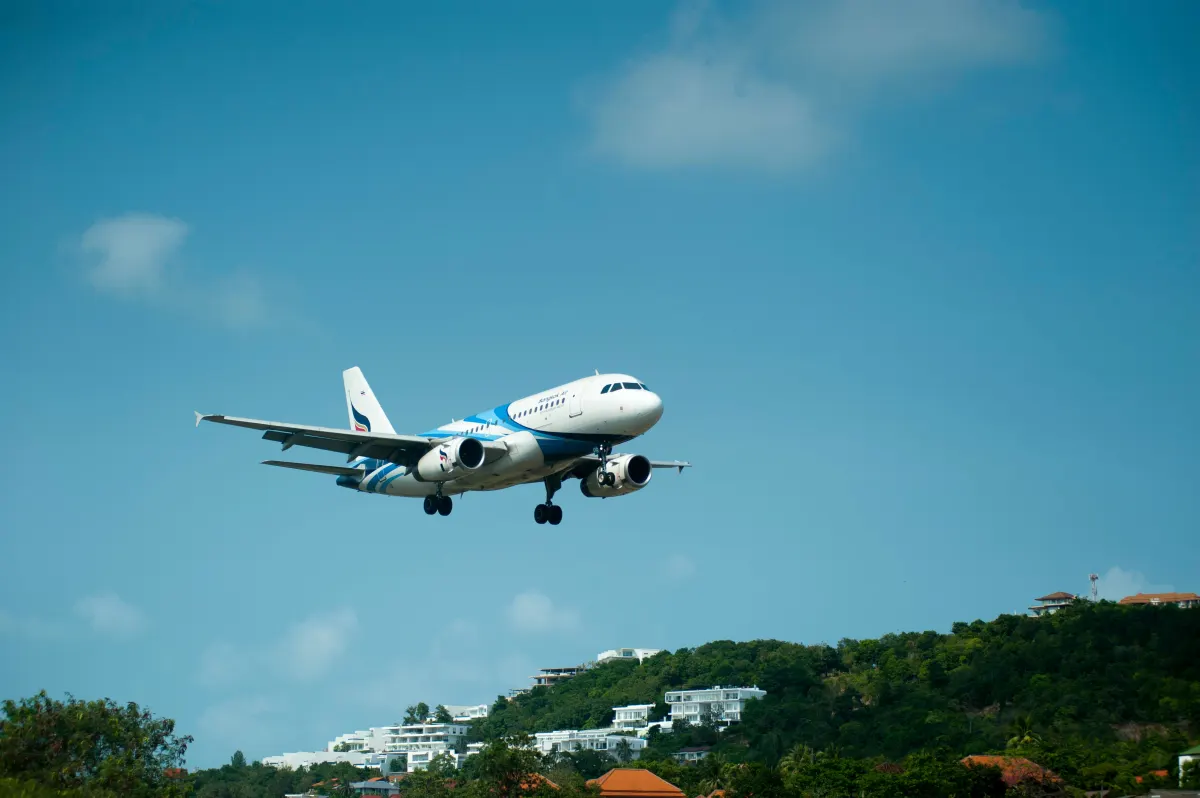
TSB Canada released its report on a fatal Cessna 172S training flight, citing an aerodynamic stall during a canyon turn as the primary cause of the crash.
Key Takeaways
- •Cites an aerodynamic stall during a canyon turn as the primary cause of the fatal crash.
- •Highlights a long-standing lack of mandatory mountain flying training regulations in Canada.
- •Notes that consumer tech (Apple device) alerted rescue services minutes after the ELT signal.
- •Reinforces safety concerns from similar historical TSB investigations in 2011 and 2006.
The Transportation Safety Board of Canada (TSB) has released its final investigation report (A25P0041) into the fatal April 5, 2025, accident involving a Cessna 172S aircraft near Abbotsford, British Columbia. The report concludes that the training flight ended after the aircraft entered an aerodynamic stall during a turn in mountainous terrain from which it did not recover.
The findings highlight a persistent regulatory gap in Canadian aviation: the absence of a mandatory requirement for pilots to receive specific mountain flying training. This leaves the responsibility for preparing pilots for complex valley and canyon maneuvers to individual flight schools and pilots, a factor that has been noted in previous TSB fatal accident investigations.
Investigation Details
The accident involved a Cessna 172S operated by Chinook Helicopters on a simulated instrument training flight under Visual Flight Rules (VFR). According to the TSB Investigation Report A25P0041, the aircraft departed Abbotsford Airport at approximately 12:30 p.m. local time. Radar contact was lost about 9 minutes after departure as the aircraft flew into the Chilliwack River Valley.
The investigation determined the aircraft was flying at an altitude of approximately 2,125 feet above sea level before it collided with the terrain. The first indication of distress came at 1:06 p.m. when the Joint Rescue Coordination Centre (JRCC) received a signal from the aircraft's Emergency Locator Transmitter (ELT). In a notable development, an automated crash detection notification was sent from an onboard Apple device just two minutes after the ELT signal, demonstrating the increasing role of consumer technology in supplementing traditional aviation emergency systems.
TSB investigators concluded that the pilot did not use "all the lateral space available" within the valley while attempting to reverse course. This failure to follow established best practices for a canyon turn resulted in the aircraft's speed dropping below the stall threshold. Without flaps deployed to improve lift at low speeds, the aircraft entered an unrecoverable aerodynamic stall.
Regulatory Gaps and Training Context
A central theme of the TSB report is the regulatory environment governed by Transport Canada. The investigation highlighted that there is currently no Canadian regulatory requirement for pilots to obtain a specific rating or endorsement for flying in mountainous areas. This places the onus on flight training units and individual pilots to seek out and standardize specialized training.
The accident has significant implications for stakeholders. Canadian flight schools, including Chinook Helicopters, may face increased pressure to implement or overhaul formal mountain flying curricula, including defined procedures for canyon turns, even without a federal mandate. For Transport Canada, the report brings renewed scrutiny over a long-standing safety issue that has been flagged in multiple previous accident reports. Some aviation safety advocates argue that while pilot technique was the immediate cause, the root cause is the regulator's failure to mandate essential training for high-risk environments.
A Recurring Safety Issue
This incident is not an isolated event. The TSB report draws parallels to previous accidents where the lack of standardized mountain flying training was a contributing factor.
In July 2011, a Pacific Flying Club Cessna 152 crashed near Harrison Lake, BC, under similar circumstances. The TSB investigation (A11P0106) found that an aerodynamic stall during a mountain turn led to the fatal accident. That event prompted the flight school involved to implement its own formal mountain flying training requirements, a pattern that supports the need for broader, standardized action.
Furthermore, in May 2006, another Cessna 172 crash during mountain training (TSB Report A06P0087) led the TSB to highlight the inherent risks and the absence of a specific Transport Canada rating for mountain flying. The 2025 Abbotsford accident demonstrates that this regulatory gap and the associated risks have persisted for nearly two decades.
Technical Analysis
This investigation illustrates a critical disconnect between known operational risks and regulatory evolution in Canadian aviation. The findings in report A25P0041 are consistent with previous TSB warnings, suggesting a systemic issue rather than a one-off pilot error. The failure to execute a proper canyon turn is the proximate cause, but the latent safety condition is the lack of a standardized, mandatory training curriculum for one of aviation's most demanding environments. This accident reinforces the argument that relying on voluntary adoption of best practices is insufficient for mitigating recurring, high-consequence risks. The secondary finding regarding the Apple device's rapid alert also signals an important technological trend. Consumer electronics are increasingly outpacing the performance of some mandated aviation systems, which may force regulators and search and rescue organizations to re-evaluate emergency equipment standards and response protocols.
What Comes Next
With the TSB's final report published, the focus shifts to Transport Canada and the flight training industry. While the TSB provides safety recommendations, it does not have the authority to implement new regulations. The detailed history of similar incidents is expected to intensify pressure on Transport Canada to finally introduce a formal mountain flying rating or endorsement. In the interim, flight schools operating in or near mountainous terrain will likely face heightened insurance and student scrutiny, compelling them to proactively enhance their training syllabi to demonstrate a commitment to safety beyond minimum regulatory requirements.
Why This Matters
This investigation underscores a significant vulnerability in Canadian pilot training. For an industry that prioritizes standardization to mitigate risk, the continued absence of a federal mandate for mountain flying creates an inconsistent and potentially dangerous training environment. The report serves as a stark reminder that while pilot skill is paramount, the regulatory framework that supports pilot education is fundamental to preventing predictable and recurring accidents.
Stay ahead of the airline industry with commercial aviation news from omniflights.com. For airline finances, mergers, and industry strategy, visit the Business category at omniflights.com/business.
Written by Hardik Vishwakarma
Co-Founder & Aviation News Editor leading initiatives that improve trust and visibility across the global aviation industry. Covers airlines, airports, safety, and emerging technology.
Visit ProfileYou Might Also Like
Discover more aviation news based on similar topics
NTSB Safety Recommendations Lag Amid 6 Monthly Near-Misses
Approximately 6 near-miss incidents occur monthly at U.S. airports as 270 NTSB safety recommendations remain unaddressed by federal regulators.
NTSB Rejects FAA Safety Responses After 67-Fatality Crash
The NTSB labeled 11 FAA responses to 2025 DCA mid-air collision recommendations as unacceptable, citing the lack of a mandatory ADS-B In requirement.
EASA Orders Urgent Airbus A380 Wing Spar Inspections
The EASA ordered urgent inspections on 16 Airbus A380s after discovering wing spar cracks that could compromise structural integrity.
Ryanair Flight RK514 Diverts to Birmingham After Emergency
Ryanair flight RK514 diverted to Birmingham Airport on September 13, 2026, following a medical emergency involving a passenger.
Amazon Suspends 21 Air After Fatal Miami 767 Runway Overrun
Amazon has suspended operations with 21 Air following a fatal Boeing 767 runway overrun at Miami International Airport that resulted in five deaths.
FAA Proposes A220 Fuel Line Inspections for US Operators
The FAA issued a proposed directive requiring inspection of motive-flow fuel lines on 13 US-registered Airbus A220s to prevent potential leaks.