TSA Sickouts Snarl US Airports Amid 2026 DHS Shutdown

Co-Founder & CEOAviation News Editor delivering trusted coverage across the global aviation industry.
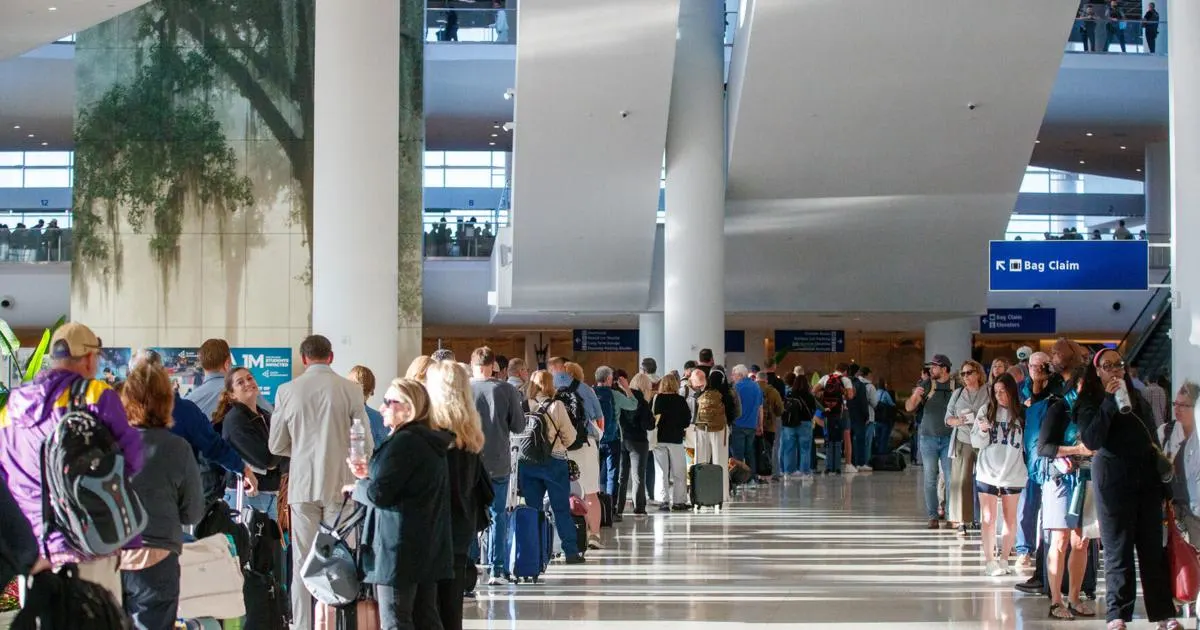
A DHS funding lapse is causing widespread TSA officer sickouts, with New Orleans seeing 36% absenteeism and travelers facing hours-long security lines.
Key Takeaways
- •TSA officer sick-out rate hits 10% nationwide amid a DHS funding lapse, with 35.8% absenteeism at New Orleans (MSY).
- •Forces major airlines including Delta and United to issue travel waivers as passengers face 3-4 hour security lines.
- •Loses 366 TSA officers to resignation since February, creating a long-term staffing deficit that requires 4-6 months to fill.
- •Mirrors the 2019 government shutdown, where aviation system pressure ultimately forced a political resolution.
A partial government shutdown affecting the Department of Homeland Security (DHS) has triggered a severe staffing crisis at the Transportation Security Administration (TSA), leading to extensive security delays at airports nationwide. With TSA officers classified as 'excepted' federal workers and forced to work without pay since the funding lapse on February 14, 2026, call-out rates have surged. According to TSA internal data, approximately 10% of the agency's 50,000-strong workforce called out sick nationwide on March 17, a dramatic increase from the normal baseline rate of 2%.
The operational impact is most acute at major hubs, where passengers are experiencing security wait times of three to four hours. The crisis has also led to a significant loss of personnel, with 366 TSA officers having resigned since the shutdown began, creating a long-term staffing deficit that will persist even after federal funding is restored.
Widespread Staffing Shortages
The strain on the aviation security system is becoming increasingly visible. While the national sick-out rate hovers at 10%, specific airports are experiencing far more severe shortages. A March 17 press release from the Department of Homeland Security (DHS) confirmed that call-out rates for Transportation Security Officers (TSOs) reached 35.8% at Louis Armstrong New Orleans International Airport (MSY) and as high as 55% at Houston Hobby Airport (HOU). This has forced airport authorities to consolidate security checkpoints and advise passengers to arrive significantly earlier than usual.
Erin Burns, an official at MSY, is urging travelers to arrive three to four hours before their scheduled departure to navigate the congested security lines. The staffing crunch is compounded by permanent departures from the agency. DHS Acting Assistant Secretary Lauren Bis explicitly blamed the political gridlock for the 'unneeded financial hardship' that prompted the 366 resignations. Replacing these officers is a lengthy process, as DHS notes that new recruits require four to six months of training and certification before they can be deployed.
Passenger and Airline Disruptions
The direct impact on travelers is significant, with many missing flights despite arriving hours in advance. In response to the chaos, major airlines have begun issuing travel waivers to provide flexibility for affected customers. Delta, United, and Allegiant have announced policies waiving change fees and fare differences for flights departing from heavily impacted airports, including New Orleans, Houston, and Atlanta.
The shutdown's effects extend beyond passengers and airlines. The financial hardship imposed on unpaid TSOs is the primary driver of the crisis. As 'excepted' workers under rules from the U.S. Office of Personnel Management (OPM), they are legally required to report to duty without a paycheck, a situation that has now stretched for over a month. This has led to both the coordinated sick-outs and the wave of resignations as officers seek more stable employment.
A Familiar Crisis
This situation mirrors a previous political standoff with similar consequences for the aviation industry. During the 2018-2019 U.S. federal government shutdown, a shortage of unpaid air traffic controllers, who are also 'excepted' employees, led the Federal Aviation Administration (FAA) to temporarily halt flights into New York's LaGuardia Airport. That operational disruption created immediate and widespread pressure on federal lawmakers, contributing directly to the end of the 35-day shutdown. The current crisis with TSA staffing suggests a similar pattern, where the tangible collapse of critical aviation infrastructure becomes a catalyst for political resolution.
Acting Deputy TSA Administrator Adam Stahl warned that it is 'not hyperbole' to suggest smaller airports may have to close entirely if understaffing worsens. This historical precedent indicates that as operational failures mount, the pressure to pass a DHS appropriations bill will intensify.
Long-Term Damage and an Uncertain End
Even if Congress passes a funding bill tomorrow, the damage to the nation's aviation security workforce is already done. The loss of 366 experienced officers creates a knowledge and experience gap that cannot be quickly filled. The four-to-six-month training pipeline for new TSOs means that staffing levels will remain below optimal for much of the year, potentially impacting the busy summer travel season.
The primary milestone required to end the crisis is the passage of a DHS Appropriations Bill by the U.S. Congress, but the timeline for such a vote remains unknown. In the interim, the TSA has warned that it may be forced to close specific security checkpoints or even entire terminals at major airports if call-out rates continue to exceed 10%.
Why This Matters
This ongoing crisis demonstrates the critical dependence of the U.S. aviation system on a federally funded security workforce and its vulnerability to political disputes. The shutdown not only causes immediate and severe disruption for passengers and airlines but also inflicts lasting damage on the TSA's ability to recruit and retain essential personnel. For the aviation industry, it serves as a stark reminder of how external political factors can rapidly destabilize core operations, eroding passenger confidence and threatening the reliability of air travel.
From airline operations to fleet updates, commercial aviation news lives at omniflights.com. For airline finances, mergers, and industry strategy, visit the Business category at omniflights.com/business.
Written by Hardik Vishwakarma
Co-Founder & Aviation News Editor leading initiatives that improve trust and visibility across the global aviation industry. Covers airlines, airports, safety, and emerging technology.
Visit ProfileYou Might Also Like
Discover more aviation news based on similar topics

FAA Faces $3.5 Billion Shortfall in ATC Modernization
FAA Administrator Bryan Bedford reported a $3.5 billion shortfall for the Brand New Air Traffic Control System, totaling $16 billion for Phase One.
FAA Pauses Flights into LAX Due to Staffing Shortages
The FAA issued a temporary ground stop for flights bound for LAX on Monday morning due to staffing shortages at the Southern California TRACON.

FAA Proposes Ending Overland Supersonic Flight Ban
The FAA has proposed a new performance-based noise standard to replace the 1973 ban on overland supersonic flight, enabling future commercial travel.

DOT Rule Exempts Airlines From Cyberattack Delay Costs
Starting October 19, 2026, the DOT will allow airlines to withhold meal and hotel vouchers for delays caused by cyberattacks and nine other events.

Wizz Air, Ryanair Demand NATS Reform After ATC Failure
Wizz Air and Ryanair are calling for urgent NATS reform after a September 8 system failure caused over 1,000 flight cancellations across the UK.
US Treasury Iran Sanctions Target 27 Airlines, Mahan Air
The U.S. Treasury sanctioned 36 entities, including 27 Iranian airlines, to disrupt illicit procurement networks used by the Iranian government.