Trump Executive Order Authorizes TSA Pay Amid Unprecedented Airport Delays

Co-Founder & CEOAviation News Editor delivering trusted coverage across the global aviation industry.
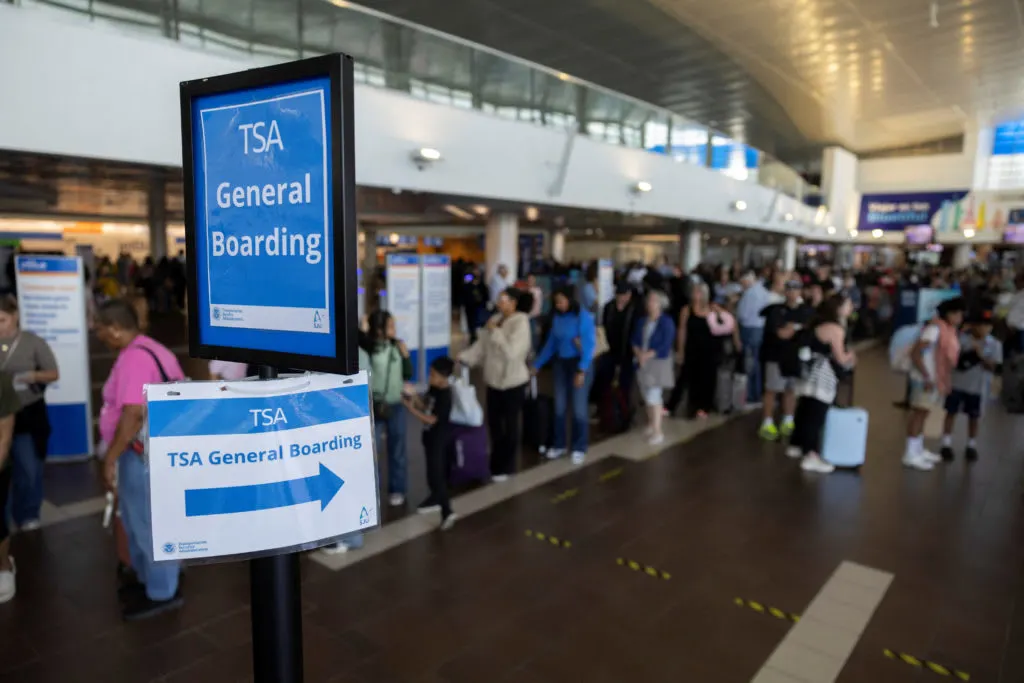
President Trump signed an executive order to pay TSA officers amid a staffing crisis causing record airport wait times during the 2026 government shutdown.
Key Takeaways
- •Addresses an 11.8% nationwide TSA absentee rate that caused record travel delays.
- •Authorizes immediate backpay for officers who worked over 40 days without compensation.
- •Follows nearly 500 TSA officer resignations since the shutdown began in February.
- •Leaves long-term DHS funding unresolved pending a congressional vote expected in April.
An executive order signed March 27, 2026, has authorized immediate backpay for federal airport security screeners, a move intended to alleviate a severe staffing crisis that has crippled U.S. airports during the peak spring break travel season. The order addresses the Transportation Security Administration (TSA), whose officers had worked without compensation for over 40 days due to a partial government shutdown affecting the Department of Homeland Security (DHS). The funding lapse led to a nationwide daily absentee rate for TSA officers hitting a record 11.8% on March 26, 2026, according to DHS data.
The operational impact on the national aviation system has been severe. The staffing shortage forced checkpoint consolidations at major hubs, including Houston's George Bush Intercontinental Airport (IAH) and Baltimore/Washington International Thurgood Marshall Airport (BWI). According to congressional testimony from TSA Acting Administrator Ha Nguyen McNeill, average airport security wait times surged to 4.5 hours during the shutdown, the highest in the agency's history. These delays have caused cascading flight disruptions and a significant number of passengers missing their flights.
Staffing Crisis and Operational Collapse
The crisis stemmed from the Anti-Deficiency Act, which designates TSA screeners as essential workers required to report for duty without pay during a funding lapse. The financial strain on the workforce has been substantial. According to DHS figures, nearly 500 of the agency's approximately 50,000 officers have quit since the shutdown began on February 14, 2026. This attrition exacerbates the pre-existing challenge of retaining staff in a high-stress, relatively low-paying federal job.
The American Federation of Government Employees (AFGE), the union representing TSA officers, has been vocal about the hardships faced by its members. Industry groups, including the Air Line Pilots Association (ALPA), also advocated for a resolution. Capt. Jason Ambrosi, President of ALPA, highlighted the untenable situation, noting that officers "are expected to show up every day to keep America's skies safe and secure" while facing personal financial crises. The executive order directs the DHS to use alternative funds from the Reconciliation Act to issue payments, bypassing the stalled congressional appropriations process as a temporary measure.
Parallels to Previous Shutdowns
This event is not without precedent. The 2026 shutdown mirrors the 2018-2019 federal government shutdown, which lasted 35 days. During that period, TSA officers also worked without pay, leading to high call-out rates and significant airport congestion until a funding bill was passed. The outcome of that event demonstrated the direct vulnerability of aviation security to federal budget disputes, a pattern that has now been repeated with even more severe consequences. The 2013 government shutdown also impacted aviation, though primarily through furloughs of Federal Aviation Administration safety inspectors and air traffic controllers, highlighting the broader susceptibility of the entire aviation ecosystem to political gridlock.
The primary stakeholders affected by the 2026 shutdown include TSA officers who endured over a month without pay and airline passengers who faced unprecedented travel disruptions. Airport operators have been forced to manage immense crowds with diminished security capacity, while airlines have contended with operational delays and the financial impact of rebooking passengers who missed flights due to security bottlenecks.
Technical Analysis
This development indicates a recurring systemic risk to U.S. aviation infrastructure. The reliance on designating essential security personnel to work without pay during funding gaps has proven to be an unsustainable model, directly leading to operational failure. The data from the 2019 and 2026 shutdowns suggests that high rates of absenteeism and resignation are a predictable consequence of prolonged payless periods. This creates a cycle where airport security becomes a high-profile point of leverage in political negotiations, with passengers and the airline industry bearing the immediate consequences. The pattern accelerates the degradation of workforce morale and complicates long-term recruitment and retention for the TSA, potentially impacting the baseline level of security and efficiency even after funding is restored.
What Comes Next
The executive order is a stopgap, not a permanent solution. According to the DHS, the first paychecks for TSA officers under the order are expected to be issued by March 30, 2026. However, long-term stability depends on congressional action. A vote on a full DHS funding bill is expected in April 2026.
Labor representatives and some lawmakers have expressed skepticism about the executive order's sufficiency. The AFGE TSA Council 100 has argued that a one-time payment is insufficient to repair workforce morale and stem the tide of resignations. Former TSA officer Caleb Harmon-Marshall noted that a single paycheck might not be enough to restore staffing, warning that "it has to be an extended pay for them to come back." Furthermore, some congressional Democrats have questioned the legal authority of using alternative funds to bypass the standard appropriation process, suggesting potential challenges to the order itself.
Why This Matters
The crisis underscores the fragility of the U.S. aviation system's reliance on a federally funded security workforce. For airlines and airports, it reveals a critical operational vulnerability tied directly to political budget cycles. For the traveling public, it demonstrates how quickly essential transportation services can degrade, signaling that similar disruptions are likely during future government shutdowns until a more resilient funding mechanism for essential personnel is established.
For in-depth airline coverage and commercial aviation news, omniflights.com delivers timely industry insights. For reporting on UAP sightings, investigations, and aviation-related encounters, see the UAPs section at omniflights.com/uaps.
Written by Hardik Vishwakarma
Co-Founder & Aviation News Editor leading initiatives that improve trust and visibility across the global aviation industry. Covers airlines, airports, safety, and emerging technology.
Visit ProfileYou Might Also Like
Discover more aviation news based on similar topics

FAA Faces $3.5 Billion Shortfall in ATC Modernization
FAA Administrator Bryan Bedford reported a $3.5 billion shortfall for the Brand New Air Traffic Control System, totaling $16 billion for Phase One.
FAA Pauses Flights into LAX Due to Staffing Shortages
The FAA issued a temporary ground stop for flights bound for LAX on Monday morning due to staffing shortages at the Southern California TRACON.

FAA Proposes Ending Overland Supersonic Flight Ban
The FAA has proposed a new performance-based noise standard to replace the 1973 ban on overland supersonic flight, enabling future commercial travel.

DOT Rule Exempts Airlines From Cyberattack Delay Costs
Starting October 19, 2026, the DOT will allow airlines to withhold meal and hotel vouchers for delays caused by cyberattacks and nine other events.

Wizz Air, Ryanair Demand NATS Reform After ATC Failure
Wizz Air and Ryanair are calling for urgent NATS reform after a September 8 system failure caused over 1,000 flight cancellations across the UK.
US Treasury Iran Sanctions Target 27 Airlines, Mahan Air
The U.S. Treasury sanctioned 36 entities, including 27 Iranian airlines, to disrupt illicit procurement networks used by the Iranian government.