Taiwan Scrutinizes China's Uneven Cross-Strait Flight Proposal

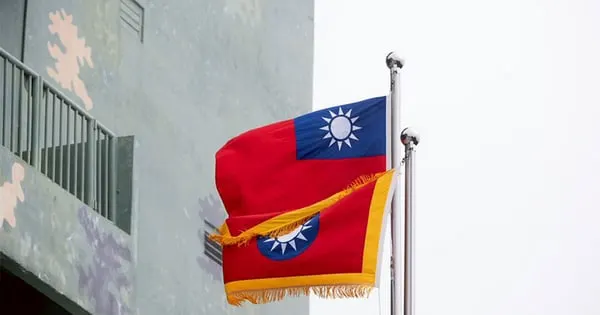
Taiwan's MAC is scrutinizing China's proposal for five new cross-strait flights, citing major concerns over commercial viability and low airline demand.
Key Takeaways
- •Scrutinizes Chinese proposal for five new routes due to commercial inviability.
- •Highlights a 7:1 travel imbalance and 26% underutilized existing flight capacity.
- •Cites direct flight costs nearly double that of indirect routes for key destinations.
- •Frames the offer as a political gesture ignoring practical airline economics.
Taiwan's Mainland Affairs Council (MAC) has confirmed it is scrutinizing a formal proposal from Beijing to resume cross-strait flights from five mainland cities. The plan, presented as an 'incentive measure' by China, faces significant skepticism from Taiwanese officials and airlines due to major concerns over its commercial viability and practicality.
The proposal calls for reinstating direct flights to Urumqi, Xian, Harbin, Kunming, and Lanzhou. However, the offer coincides with ongoing Chinese government restrictions that prevent its own citizens in those cities from traveling to Taiwan. This policy creates a fundamental economic imbalance, as flights from Taiwan would be full while return legs would be largely empty, undermining profitability for any carrier operating the routes.
MAC Deputy Minister Liang Wen-chieh stated that Taiwan's aviation sector has shown little enthusiasm for the new routes, emphasizing that airlines are unlikely to commit resources without assurance of reasonable load factors on both legs of a journey.
Economic Imbalance Undermines Proposal
The core of Taiwan's objection is rooted in data showing a severe lack of demand and lopsided travel patterns. According to the Taiwan Ministry of Transportation and Communications (MOTC), the existing cross-strait aviation market is already significantly underutilized. Of the 420 weekly flights permitted under the current bilateral framework, only 310 are actively operating, representing a 26% capacity gap. Transportation Minister Chen Shih-kai cited this figure as clear evidence of soft demand.
Further compounding the issue is a stark travel asymmetry. Data from the MAC reveals that in 2024, approximately seven Taiwanese citizens traveled to China for every one Chinese citizen who visited Taiwan. This 7:1 ratio makes operating new routes with empty return flights an unsustainable business proposition for airlines.
Cost is another prohibitive factor. The MAC highlighted that a direct flight from Taipei to Xian costs between NT$15,000 and NT$20,000. In contrast, an indirect flight via a major hub like Shanghai is substantially cheaper, ranging from NT$8,000 to NT$12,000. Given that the proposed cities are not primary destinations for Taiwanese travelers, the convenience of a direct flight does not outweigh the significant cost premium.
A Pattern of Underutilized Capacity
Taiwan's cautious stance is consistent with its approach since the large-scale flight suspensions of 2020. During the COVID-19 pandemic, Taiwan scaled back most direct links to control the spread of the virus. A partial resumption occurred in March 2023, when Taiwan's Civil Aeronautics Administration (CAA) permitted regular flights to 10 Chinese cities and charter services to 13 others, prioritizing routes with proven market demand.
This history informs the current evaluation. The proposal to add flights to cities like Xian and Kunming, which were suspended in 2020, is being viewed through the lens of past experience, where market forces, not political directives, determine route sustainability. China's Taiwan Affairs Office (TAO) has argued that demand is 'strong' and urged Taiwan to remove 'unreasonable restrictions,' a perspective that clashes with the data on passenger flows and flight utilization provided by Taiwanese authorities.
Technical Analysis
This development highlights the deep intersection of geopolitics and commercial aviation in the Taiwan Strait. Beijing's proposal appears less a market-driven aviation initiative and more a political gesture framed as an economic benefit. The 'incentive' of new flights is effectively nullified by China's own non-aviation policy—the ban on outbound tourism to Taiwan from those regions. The data on existing capacity utilization and the 7:1 travel imbalance suggest that the proposal ignores the fundamental economic realities that govern airline network planning. For carriers like EVA Air and China Airlines, operating these routes under current conditions would likely result in financial losses. The situation reflects a broader pattern where economic overtures from Beijing are viewed with skepticism in Taipei, which analyzes them for both practical benefit and underlying political intent.
What Comes Next
Taiwanese officials have indicated a thorough review process is underway. The Mainland Affairs Council and the Civil Aeronautics Administration are expected to conduct a pragmatic assessment of the route proposal, with a decision anticipated by mid-2026. The evaluation will likely focus on verifiable passenger demand and the commercial viability for airlines. Until China lifts its travel restrictions on its own citizens for these routes, a favorable decision from Taiwan remains unlikely.
Why This Matters
This standoff illustrates how geopolitical tensions can directly impede the normal functioning of commercial air travel. It serves as a case study in how bilateral aviation agreements can be complicated by broader political disputes and non-aviation policies like tourism bans. For the airline industry, it underscores the risk of routes becoming political tools, forcing carriers to weigh government pressure against commercial realities.
Frequently Asked Questions
- Why is Taiwan hesitant to approve new flights from China?
- Taiwan is hesitant because China restricts its own citizens in the proposed cities from traveling to Taiwan, which would make return flights commercially unviable for airlines. Additionally, current cross-strait flight capacity is already underutilized by 26%.
- How significant is the travel imbalance between Taiwan and China?
- The travel imbalance is substantial. According to Taiwan's Mainland Affairs Council, in 2024 approximately seven Taiwanese citizens traveled to China for every one Chinese citizen who visited Taiwan, creating asymmetrical demand for air travel.
For global airline trends and commercial aviation news, turn to omniflights.com. Discover how innovation is shaping aviation through aircraft systems, avionics, and digital tools at omniflights.com/technology.

Written by Hardik Vishwakarma
Co-Founder & Aviation News Editor leading initiatives that improve trust and visibility across the global aviation industry. Covers airlines, airports, safety, and emerging technology.
Visit ProfileYou Might Also Like
FAA Clears Boeing 737 MAX 10 Software Glitch

FAA Faces $3.5 Billion Shortfall in ATC Modernization
FAA Pauses Flights into LAX Due to Staffing Shortages
FAA Proposes Ending Overland Supersonic Flight Ban

DOT Rule Exempts Airlines From Cyberattack Delay Costs