Sydney Airport Under Scrutiny After Ground Near-Misses

Co-Founder & CTOCo-Founder & CTO driving the technology and data systems behind Omni Flights.
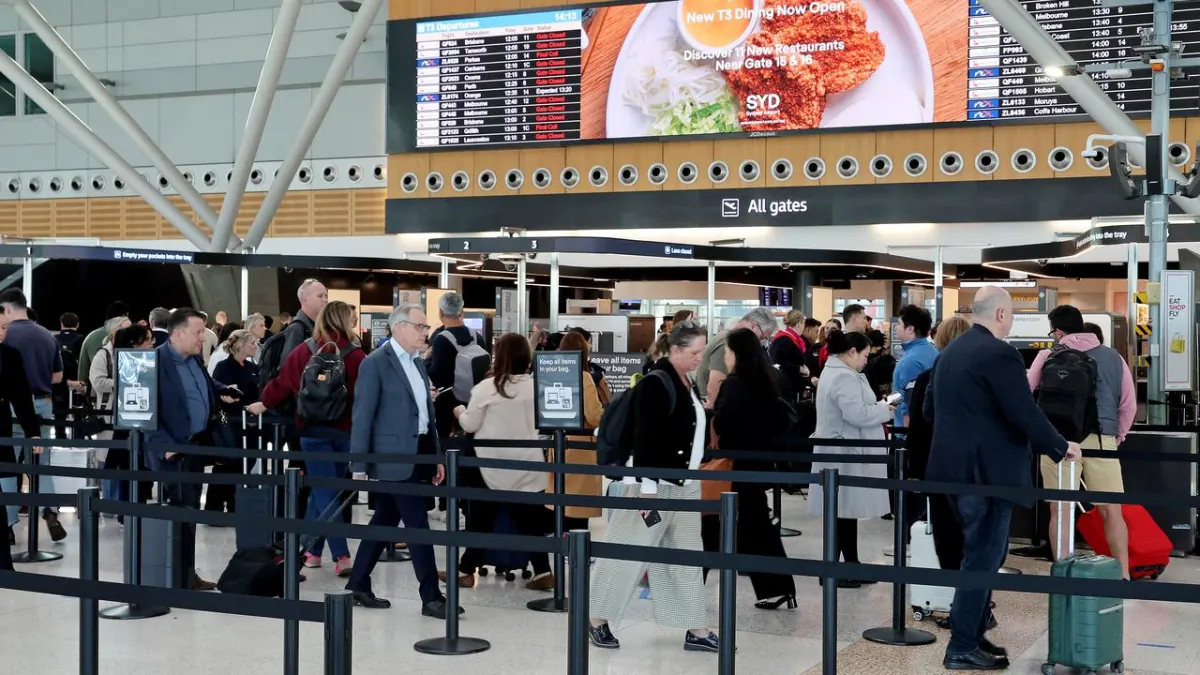
The ATSB is investigating three ground safety incidents at Sydney Airport as unions raise alarms over security contractor staffing.
Key Takeaways
- •ATSB launches investigations into three ground safety incidents at Sydney Airport.
- •Airservices Australia faces intense scrutiny over chronic ATC staffing shortages.
- •Sydney Airport Union alleges security lapses by contractor Certis Security.
Recent Sydney Airport safety concerns have intensified following three serious ground proximity events, prompting federal intervention and ATSB near miss investigations. This operational strain is further compounded by ongoing Airservices Australia ATC shortages and controversial Sydney Airport Union claims regarding third-party security lapses. The Australian Transport Safety Bureau (ATSB) has initiated formal inquiries into multiple runway incursions and taxiway conflicts that occurred between July 27 and August 9, 2026.
Ground Incidents Trigger Federal Crisis Talks
The series of ground incidents has triggered crisis talks between the federal government and Airservices Australia. These safety events occur against a backdrop of chronic Air Traffic Control (ATC) staffing shortages, which have forced personnel to cover frequent overtime shifts to maintain operations at Australia's busiest gateway. Concurrently, the Sydney Airport Union has accused security contractor Certis Security of failing to conduct proper identity checks, raising questions about physical security integrity alongside airside operational safety.
According to the ATSB, three distinct ground safety incidents are under investigation. The first occurred on July 27, 2026, involving a QantasLink Bombardier DHC-8 and a Qantas Boeing 737 (Investigation AO-2026-086), which resulted in a runway incursion and a breakdown of coordination.
The second incident took place on August 9, 2026, when a Jetstar Airbus A320 and a Qatar Airways Boeing 777 under tow were involved in a close proximity event (Investigation AO-2026-087). Following this near-miss, two airport workers were stood down. On the same day, a Virgin Australia Boeing 737 was forced to conduct a rejected takeoff to avoid a crossing Qantas Boeing 737 (Investigation AO-2026-090). This third incident went initially unreported despite the aircraft crossing at a substantial distance.
In response to these events, Federal Transport Minister Catherine King stated that the ATSB will investigate whether staffing issues contributed to the ground conflicts. Meanwhile, New South Wales Transport Minister John Graham requested direct assurances from Airservices Australia that operations will stabilize. Airservices Australia's CEO statement from chief executive Rob Sharp emphasized that safety remains the organization's absolute priority and that the agency is actively working to recruit and deploy more air traffic controllers to address the persistent shortages.
Contextualizing Runway Incursion Risks
The current operational challenges at Sydney Kingsford Smith Airport (SYD) mirror global systemic pressures on aviation infrastructure. The industry-wide trend of air traffic control staffing shortages has frequently translated into ground delay programs and increased controller workload.
Historically, ground coordination breakdowns have carried severe safety implications. In 2024, the Haneda Airport runway collision involving a Japan Airlines Airbus A350 and a Japan Coast Guard Dash 8 resulted in five fatalities and the total destruction of both airframes. That precedent underscored the critical importance of runway safety protocols and has driven global regulators, including the ATSB, to apply maximum scrutiny to taxiway and runway incursions.
To understand the physical scale of the aircraft involved in the August 9 ground proximity event, the following table compares the dimensions of the Jetstar and Qatar Airways aircraft:
Jetstar A320 vs Qatar Airways 777-300ER: Key Specifications
| Metric | Jetstar Airbus A320 | Qatar Airways Boeing 777-300ER |
|---|---|---|
| Length | 37.57 m | 73.9 m |
| Max Takeoff Weight | ~78,000 kg | ~351,500 kg |
The massive physical envelope of the Boeing 777-300ER highlights the significant collision risks present during ground towing operations in congested airport aprons.
Operational Pressures and Ground Spacing Risks
The convergence of air traffic controller fatigue and aggressive ground handling cost-cutting represents a systemic risk vector for major hub airports. When air traffic control staffing levels fall below baseline requirements, the remaining controllers face higher cognitive loads, which increases the probability of coordination breakdowns. In Sydney's case, the combination of frequent shift coverage and high-density traffic creates a narrow margin for error.
Furthermore, the union's allegations against Certis Security regarding Aviation Security Identification Card (ASIC) checks suggest that administrative and physical security layers may be fraying under cost-cutting pressures. If security personnel fail to verify ASICs properly, the risk of unauthorized airside access increases. This development indicates that the operational recovery of post-pandemic aviation continues to strain both the physical and regulatory safety nets designed to protect the traveling public.
ATSB Investigation Timelines and Staffing Reviews
The ATSB is expected to release its final reports on the recent incidents in a phased timeline. The final report for the July 27 runway incursion (AO-2026-086) is expected by Q4 2026. The final report for the August 9 Jetstar and Qatar Airways proximity event (AO-2026-087) is expected between Q4 2026 and Q1 2027.
Additionally, Airservices Australia is under regulatory pressure to accelerate its controller recruitment pipeline. The Department of Home Affairs, which oversees the Aviation Transport Security Regulations 2005, may also initiate audits of Certis Security's ASIC verification procedures. Sydney Airport management has strongly denied the union's allegations, stating that robust security measures and regulatory oversight remain fully intact.
Why Airside Safety Oversight Matters Here
For aviation professionals and the traveling public, the situation at Sydney Airport highlights the fragile balance between rapid traffic recovery and operational safety margins. Unresolved air traffic control shortages and security lapses not only cause costly flight delays but also increase the risk of catastrophic runway collisions. Ensuring stringent compliance with security protocols and stabilizing controller staffing are critical to maintaining public trust in Australia's primary international gateway.
Frequently Asked Questions
- What incidents is the ATSB investigating at Sydney Airport?
- The ATSB is investigating three ground safety incidents: a July 27 runway incursion involving Qantas and QantasLink, an August 9 ground proximity event between Jetstar and Qatar Airways, and an August 9 rejected takeoff involving Virgin Australia.
- Why are there operational delays and safety concerns at Sydney Airport?
- The airport is experiencing safety concerns and flight delays primarily due to chronic air traffic control staffing shortages under Airservices Australia, alongside union allegations of security contractor cost-cutting.
From airline operations to fleet updates, commercial aviation news lives at omniflights.com. Get the latest updates on major hubs, regional terminals, and airport operations via the Airports section at omniflights.com/airports.
Written by Shashank Shukla
Co-Founder & CTO leading the engineering and AI systems behind Omni Flights. Covers aviation technology, flight safety, aircraft manufacturing, and emerging aerospace developments.
Visit ProfileYou Might Also Like
Discover more aviation news based on similar topics

Families Demand DCA Midair Collision Safety Reforms
Families of 67 victims from the 2025 DCA midair collision are pressing Congress for mandatory ADS-B In technology to prevent future aviation tragedies.
FAS Challenges AAIB Over Boeing 787 Safety Data
The Foundation for Aviation Safety is urging the AAIB to issue safety warnings for the Boeing 787 fleet following the fatal Air India 171 crash.
NTSB Safety Recommendations Lag Amid 6 Monthly Near-Misses
Approximately 6 near-miss incidents occur monthly at U.S. airports as 270 NTSB safety recommendations remain unaddressed by federal regulators.
NTSB Rejects FAA Safety Responses After 67-Fatality Crash
The NTSB labeled 11 FAA responses to 2025 DCA mid-air collision recommendations as unacceptable, citing the lack of a mandatory ADS-B In requirement.
EASA Orders Urgent Airbus A380 Wing Spar Inspections
The EASA ordered urgent inspections on 16 Airbus A380s after discovering wing spar cracks that could compromise structural integrity.
Ryanair Flight RK514 Diverts to Birmingham After Emergency
Ryanair flight RK514 diverted to Birmingham Airport on September 13, 2026, following a medical emergency involving a passenger.