Skymark Airlines Leases Seven 737-10s From ACG

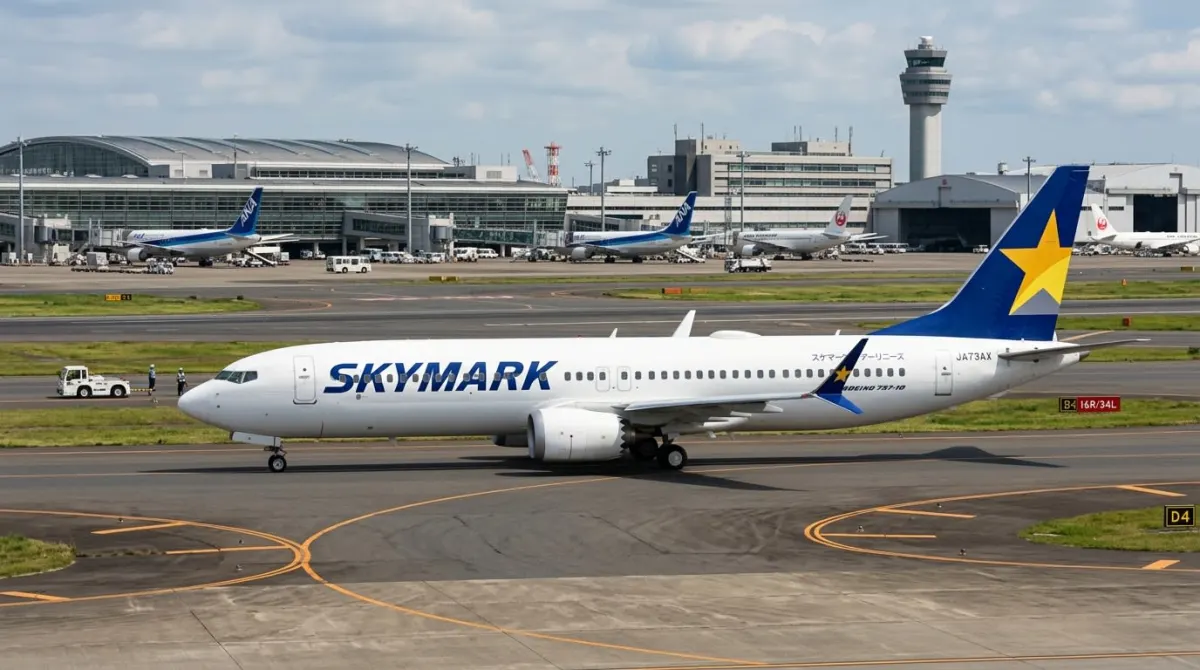
Skymark Airlines signed lease agreements with ACG for seven Boeing 737-10 aircraft, boosting capacity by 30 seats on key domestic routes.
Key Takeaways
- •Skymark Airlines leased seven Boeing 737-10 aircraft from ACG.
- •Deliveries of the new narrowbody jets are scheduled to start in 2028.
- •New 207-seat configuration increases capacity by 17% per flight.
- •Up-gauging will maximize passenger throughput at Tokyo Haneda.
Japanese carrier Skymark Airlines has finalized an Aviation Capital Group lease agreement for seven Boeing 737 MAX 10 aircraft, marking a major step in the Japanese airline fleet modernization effort. Deliveries of the high-capacity narrowbody jets are scheduled to begin in 2028, allowing the carrier to expand its footprint at key domestic hubs.
The transaction leverages aircraft leasing to bypass manufacturer backlogs and secure near-term delivery slots. By introducing the 737-10 (the formal designation of the Boeing 737 MAX 10), Skymark aims to address severe Tokyo Haneda capacity constraints. The airline plans to configure the new aircraft with 207 seats, representing a significant narrowbody up-gauging strategy to maximize passenger throughput without requiring additional airport slots.
According to the Aviation Capital Group (ACG) press release, the seven leased aircraft will join Skymark's existing fleet of 30 Boeing 737-800 and 737-8 aircraft. The transition to the larger variant represents a 30-seat (approximately 17%) capacity increase over the airline's current 177-seat Boeing 737-800 configuration. This capacity expansion is particularly critical for Skymark's operations at Tokyo Haneda Airport (HND), its primary slot-constrained home base.
"For airlines serving high-density markets from slot-constrained airports, the ability to add capacity, improve efficiency, and maximize revenue opportunities is critical," said Thomas Baker, Chief Executive Officer and President of Aviation Capital Group. "As the largest aircraft in the 737 MAX family, the 737-10 offers a high-capacity configuration and significant operational flexibility, making it a strong fit for Skymark's needs and growth ambitions."
Yoshihiro Miwa, President and Representative Director of Skymark Airlines, stated that the airline looks forward to operating the variant and welcoming more passengers.
The aircraft's deployment remains subject to regulatory milestones. The Federal Aviation Administration (FAA) is currently conducting the Boeing 737-10 Type Certification process, which must be completed before ACG can deliver the aircraft to Skymark in 2028.
Historically, Skymark has utilized the Boeing 737 family as the backbone of its domestic network. In May 2026, Skymark became the first Japanese airline to introduce the Boeing 737-8 into commercial service, debuting it on the Tokyo Haneda-Fukuoka route. This operational milestone established the technical and training foundation for the airline's transition to the MAX family, easing the future integration of the larger 737-10.
To illustrate the operational shift, the following table outlines the technical differences between the incoming 737-10 and Skymark's current workhorse, the 737-800:
Boeing 737-10 vs. Boeing 737-800: Key Specifications
| Metric | Boeing 737-10 | Boeing 737-800 |
|---|---|---|
| Length | 43.8m | 39.5m |
| Seating Capacity (Skymark Configuration) | 207 seats | 177 seats |
| Per-Seat Fuel Consumption | ~19% reduction | Baseline |
Up-Gauging Economics at Tokyo Haneda
The lease agreement reflects a broader industry trend of narrowbody up-gauging at slot-constrained hubs. As major airports like Tokyo Haneda reach absolute runway and departure limits, airlines can no longer rely on increasing flight frequencies to drive growth. Instead, operators must maximize the revenue potential of each individual slot. Transitioning from a 177-seat 737-800 to a 207-seat 737-10 provides Skymark with a 17% increase in passenger capacity per departure. Combined with an estimated 19% reduction in per-seat fuel consumption compared to previous-generation aircraft, this fleet evolution alters the airline's unit cost curve, allowing it to absorb rising operating costs while maintaining competitive fares in highly contested domestic corridors.
Delivery and Fleet Transition Milestones
The integration of the new aircraft will follow a multi-year timeline structured around key regulatory and operational milestones:
- FAA Type Certification of the Boeing 737-10: The aircraft must secure its airworthiness certification from the Federal Aviation Administration before deliveries can commence.
- First Boeing 737-10 delivery to Skymark Airlines: Scheduled to begin in 2028 under the lease agreement with ACG.
- Phased retirement of older Boeing 737-800s: Expected to begin from 2028 onward as the new high-capacity MAX aircraft enter active service.
Why Slot-Constrained Efficiency Matters
This fleet modernization program is vital for Skymark's ability to remain competitive against Japan's larger network carriers. By securing early delivery slots through a major global lessor, the airline bypasses direct manufacturer backlogs to quickly deploy more efficient, high-capacity assets. For passengers and stakeholders, this transition ensures greater seat availability on high-density domestic routes while supporting the airline's long-term environmental and financial sustainability goals.
Frequently Asked Questions
- When will Skymark Airlines receive its Boeing 737-10 aircraft?
- Skymark Airlines is scheduled to begin receiving its leased Boeing 737-10 aircraft in 2028. The seven aircraft are being leased from Aviation Capital Group.
- How many seats will Skymark Airlines have on its Boeing 737-10?
- Skymark Airlines plans to configure its Boeing 737-10 aircraft with 207 seats. This represents a 30-seat capacity increase over its current Boeing 737-800 fleet.
- Why is Skymark Airlines introducing the Boeing 737-10?
- The airline is introducing the high-capacity variant to maximize passenger throughput at its slot-constrained home base of Tokyo Haneda Airport. This up-gauging strategy allows Skymark to increase passenger capacity by approximately 17% per flight without needing additional takeoff and landing slots.
Get breaking commercial aviation news and expert airline analysis at omniflights.com. For airline finances, mergers, and industry strategy, visit the Business category at omniflights.com/business.

Written by Ujjwal Sukhwani
Aviation News Editor & Industry Analyst delivering clear coverage for a worldwide audience. Covers flight operations, safety regulations, and market trends with expert analysis.
Visit ProfileYou Might Also Like
Southwest Reports Record Q3 Revenue Amid Transformation
American Airlines Reports Record Q3 Revenue Amid Fuel Costs
American Airlines Projects 2026 Loss on Rising Fuel Costs
American Airlines to Nearly Triple Premium 787-9 Fleet
Airline Shares Rise Following United Revenue Guidance