Singapore Airlines 737 MAX 8 Suffers Tyre Burst at KLIA

Co-Founder & CEOAviation News Editor delivering trusted coverage across the global aviation industry.
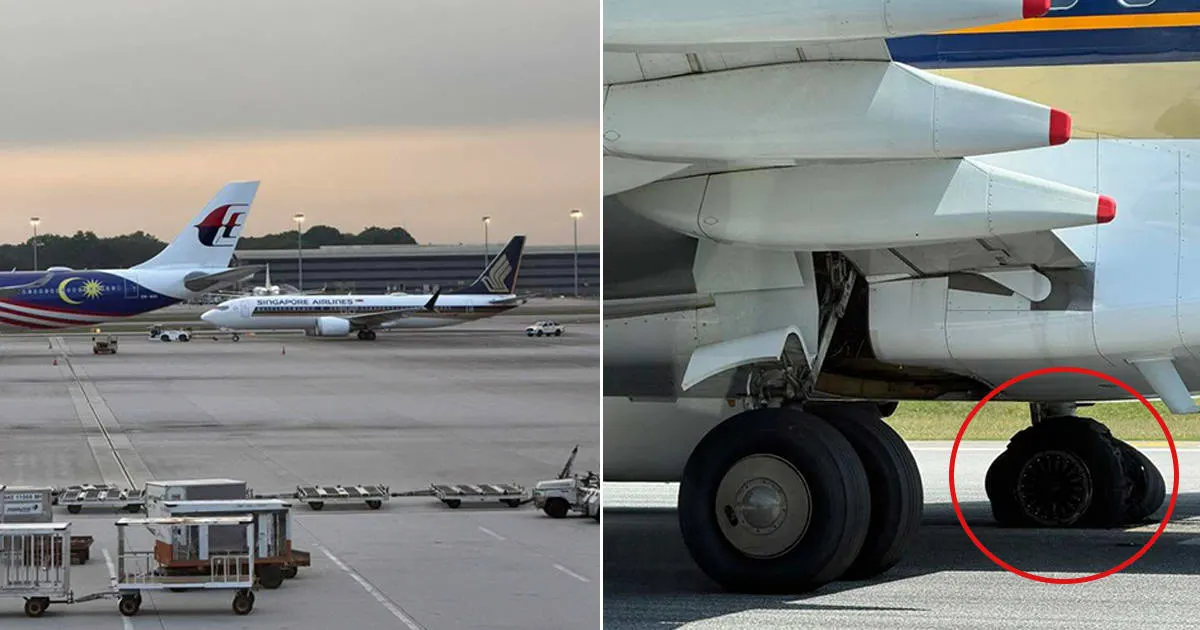
A Singapore Airlines Boeing 737 MAX 8 experienced a double tyre burst at Kuala Lumpur International Airport, causing a six-hour runway closure.
Key Takeaways
- •Singapore Airlines Boeing 737 MAX 8 suffered a double tyre burst at KLIA.
- •The incident at KLIA resulted in a six-hour runway closure on June 13, 2026.
- •Return flight SQ113 was cancelled due to the aircraft being disabled on-runway.
- •CAAM is expected to publish a preliminary investigation report by late 2026.
A Singapore Airlines (SIA) flight experienced a significant Singapore Airlines tyre burst incident upon landing at Kuala Lumpur International Airport (KLIA) on Saturday, June 13, 2026. The SQ114 landing incident involved a Boeing 737 MAX 8 aircraft, which suffered a double tyre failure on its left main landing gear. The aircraft touched down at approximately 1:27 PM local time before the gear failure immobilized the jet on the runway.
Operational Impact at KLIA
The disabled aircraft remained stationary on the runway for nearly six hours, necessitating a temporary closure of one of the airport's three parallel runways. According to ground operations data, the aircraft was not towed to a gate until approximately 7:15 PM. The KLIA runway closure forced Malaysia Airports Holdings Berhad (MAHB) to manage peak-hour traffic with reduced capacity, leading to holding patterns and delays for other carriers. Passengers on flight SQ114 remained on the aircraft during the recovery process, while the return flight, SQ113, was cancelled. Further information on facility status is available via the Malaysia Airports Holdings Berhad official portal.
Regulatory and Safety Context
The Civil Aviation Authority of Malaysia (CAAM) oversees the investigation into the Boeing 737 MAX landing gear failure. Regulatory protocols under the CAAM mandate thorough inspections for Foreign Object Debris (FOD) and potential pavement damage before a runway can resume commercial operations following such an event. While the aircraft is part of a fleet of 21 Boeing 737 MAX 8s operated by Singapore Airlines, the carrier has not yet released specific technical findings regarding the cause of the tyre burst. The incident mirrors industry trends where high-frequency regional routes rely heavily on narrowbody aircraft, making such gear-related failures a significant source of network-wide disruption.
Historical Precedents and Comparisons
This event follows a pattern of tyre-related incidents on the Boeing 737 MAX airframe. In January 2025, an American Airlines Boeing 737 MAX 8 experienced a nearly identical double tyre burst on its left main landing gear during landing, which also resulted in a temporary airport closure. More severely, a Ryanair Boeing 737 MAX 8-200 incident in October 2024 resulted in 450 meters of pavement damage, highlighting the potential for significant infrastructural impact. The following table summarizes recent gear-related events:
| Incident | Aircraft | Outcome |
|---|---|---|
| American Airlines (Jan 2025) | 737 MAX 8 | Double tyre burst; runway closure |
| Ryanair (Oct 2024) | 737 MAX 8-200 | Four-tyre blowout; pavement damage |
| Alaska Airlines (Apr 2025) | 737 MAX 9 | Single tyre blowout; secondary debris damage |
Investigation and Future Reporting
The Civil Aviation Authority of Malaysia is expected to release a preliminary incident investigation report by late 2026. This process will likely involve coordination with Boeing and the relevant tyre suppliers to determine if the failure was isolated to maintenance factors or indicative of a systemic issue with the landing gear assembly. Stakeholders, including lessors and insurers, are monitoring the investigation to assess whether the incident requires fleet-wide technical bulletins or accelerated inspection cycles for the 737 MAX regional fleet.
Why This Matters for Regional Operations
For major hubs like KLIA, the loss of one-third of runway capacity during peak operating hours creates cascading delays that impact the entire regional network. The incident underscores the vulnerability of high-frequency narrowbody operations to seemingly minor mechanical failures. As airlines continue to shift toward mixed widebody and narrowbody models, the ability of airport operators to perform rapid recovery and debris clearance remains a critical factor in maintaining trans-regional connectivity.
Frequently Asked Questions
- What caused the Singapore Airlines flight disruption at KLIA?
- The disruption was caused by a double tyre burst on the left main landing gear of a Singapore Airlines Boeing 737 MAX 8 upon landing at Kuala Lumpur International Airport.
- How long was the runway closed following the SQ114 incident?
- The runway remained closed for nearly six hours while the disabled aircraft was recovered and the pavement was inspected for debris.
Stay ahead of the airline industry with commercial aviation news from omniflights.com. For detailed airline coverage, route changes, and fleet moves, explore the Airlines section at omniflights.com/airlines.
Written by Hardik Vishwakarma
Co-Founder & Aviation News Editor leading initiatives that improve trust and visibility across the global aviation industry. Covers airlines, airports, safety, and emerging technology.
Visit ProfileYou Might Also Like
Discover more aviation news based on similar topics
Ryanair Flight RK514 Diverts to Birmingham After Emergency
Ryanair flight RK514 diverted to Birmingham Airport on September 13, 2026, following a medical emergency involving a passenger.
Amazon Suspends 21 Air After Fatal Miami 767 Runway Overrun
Amazon has suspended operations with 21 Air following a fatal Boeing 767 runway overrun at Miami International Airport that resulted in five deaths.
FAA Proposes A220 Fuel Line Inspections for US Operators
The FAA issued a proposed directive requiring inspection of motive-flow fuel lines on 13 US-registered Airbus A220s to prevent potential leaks.
NATS Denies Military Jet Role in UK ATC Outage
The UK Ministry of Defence denied its aircraft caused a NATS outage that led to over 2,000 flight cancellations and calls for CEO resignation.
21 Air Miami Crash: NTSB Investigates 767 Runway Overrun
A fatal 21 Air Boeing 767 crash at Miami International Airport has triggered an NTSB investigation amid scrutiny of Amazon Air's contract oversight.

Amazon Cargo Plane Crash: 5 Remembered After MIA Excursion
Five cleaning crew members died after an Amazon-contracted Boeing 767 overran the runway at Miami International Airport at 158 knots.