Ryanair Partners With Google Cloud in 5-Year AI Deal

Aviation News Editor & Industry AnalystAviation News Editor & Industry Analyst delivering clear coverage for a worldwide audience.
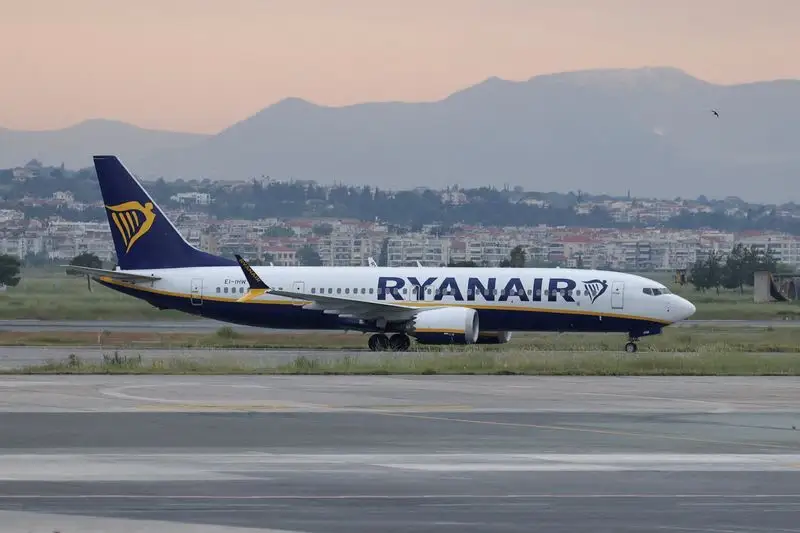
Ryanair launched a five-year Google Cloud partnership to deploy Gemini AI tools to 35,000 employees to improve operational efficiency.
Key Takeaways
- •Ryanair signs five-year cloud partnership with Google Cloud.
- •Gemini AI tools will deploy to 35,000 Ryanair employees.
- •Dual-cloud strategy with AWS mitigates IT outage risks.
- •Technology supports Ryanair's 2034 passenger growth goals.
Irish low-cost carrier Ryanair has announced a new five-year Ryanair Google Cloud partnership to deploy Gemini AI airline operations tools and Google DeepMind aviation models across its operations. The agreement will scale Alphabet's Google Workspace and Google Cloud services to 35,000 employees. This technological integration is designed to support the airline's long-term growth objective of carrying 300 million passengers annually by 2034.
Optimizing Low-Cost Fleet Logistics
The deployment of Artificial Intelligence (AI) underpins Ryanair's operational strategy to optimize crew scheduling, automate internal decision-making, and minimize flight disruptions. By integrating advanced generative AI and machine learning models, Europe's largest airline by passenger numbers aims to increase its structural resilience. The transition also marks a shift toward a diversified IT environment, helping the carrier protect its high-frequency schedule against systemic IT failures.
Under the terms of the five-year agreement, Ryanair will utilize Gemini Enterprise to build custom AI agents. These digital agents will automate routine administrative tasks, improve flight crew logistics, and mitigate the impact of day-to-day operational disruptions. Additionally, the carrier will deploy specialized Google DeepMind forecasting and optimization models, including Google DeepMind's WeatherNext repository and AlphaEvolve, to support fleet operations and maintenance scheduling. Financial terms of the agreement were not disclosed by either party.
Multi-Cloud Infrastructure and Stakeholder Impact
The implementation represents a multi-layered stakeholder impact across the aviation value chain. For Ryanair operations and crew, the transition will introduce AI-driven scheduling tools to manage complex shift patterns. For Google Cloud, securing a major European airline client expands its market footprint in the highly competitive aviation sector. Meanwhile, Amazon Web Services (AWS) will now share Ryanair's overall IT infrastructure footprint, shifting its status from sole cloud provider to a partner in a multi-provider setup.
While the airline anticipates significant efficiency gains, alternative perspectives exist. Some aviation labor unions and operational safety analysts have argued that over-reliance on AI for crew scheduling and operational decisions may inadvertently introduce new systemic risks or reduce the human flexibility required during complex disruptions.
Mitigating Single-Point IT Failures
Ryanair's new dual-cloud strategy, which pairs Google Cloud with its existing AWS infrastructure, reflects a broader industry trend toward operational IT resilience and risk management. This approach aligns with informal standards advocated by the European Union Aviation Safety Agency (EASA) regarding operational IT resilience and risk management.
The shift is heavily informed by historical precedents. In July 2024, the CrowdStrike global IT outage resulted in massive flight cancellations and manual check-ins worldwide — a pattern that supports the current situation because Ryanair's dual-cloud strategy aims to mitigate similar single-point technology failures. By distributing critical operational systems across two distinct cloud architectures, the carrier reduces the probability of a total system blackout.
Furthermore, data from the Société Internationale de Télécommunications Aéronautiques (SITA) and the International Air Transport Association (IATA) indicates that airlines worldwide are rapidly expanding their IT budgets for AI-driven customer service, flight operations, and predictive maintenance.
The Resilience Mechanics of a Dual-Cloud Strategy
The decision to build a dual-cloud environment represents a major shift in how low-cost carriers manage operational risk. Historically, airlines favored single-vendor cloud agreements to minimize integration costs and simplify software deployments. However, the increasing frequency of global software outages has exposed the vulnerability of centralized IT infrastructures. By splitting core operations between AWS and Google Cloud, Ryanair ensures that a localized failure at one provider does not ground its entire fleet of over 500 aircraft. This strategy allows the carrier to run redundant systems for crew rostering, flight planning, and maintenance tracking, ensuring continuous operation even during severe network disruptions.
The 2034 Passenger Target Milestone
Ryanair's technology roadmap is directly tied to its aggressive fleet and passenger expansion plans. The airline is expected to reach its milestone of carrying 300 million annual passengers by 2034, representing an approximate 50% increase from its current traffic levels. To manage this volume, the airline must scale its scheduling and maintenance capabilities without a proportional increase in administrative overhead. The deployment of Gemini Enterprise and DeepMind models is expected to begin immediately, with a phased rollout across its European bases over the next 18 months.
Why Dual-Cloud Infrastructure Matters for Low-Cost Carriers
For ultra-low-cost carriers, operational efficiency is the primary driver of profitability. Even minor flight delays or crew scheduling conflicts can cascade through a tight, point-to-point route network, resulting in millions of euros in passenger compensation and airport fees. By investing in resilient AI infrastructure, Ryanair is positioning itself to maintain its low-cost advantage while safeguarding its network against systemic technology failures.
Frequently Asked Questions
- What is Ryanair's dual-cloud strategy?
- Ryanair is partnering with Google Cloud while maintaining its existing infrastructure on Amazon Web Services. This dual-cloud approach reduces the risk of single-point technology failures and global IT outages.
- How will Ryanair use Google Gemini AI?
- Ryanair plans to deploy Gemini Enterprise to develop custom artificial intelligence agents. These agents will automate operational decisions, optimize crew scheduling, and minimize flight disruptions.
- What is Ryanair's passenger traffic goal for 2034?
- Ryanair aims to carry 300 million passengers annually by the year 2034, supported by its new digital infrastructure and fleet expansion.
Get breaking commercial aviation news and expert airline analysis at omniflights.com. Get the latest updates on major hubs, regional terminals, and airport operations via the Airports section at omniflights.com/airports.
Written by Ujjwal Sukhwani
Aviation News Editor & Industry Analyst delivering clear coverage for a worldwide audience. Covers flight operations, safety regulations, and market trends with expert analysis.
Visit ProfileYou Might Also Like
Discover more aviation news based on similar topics
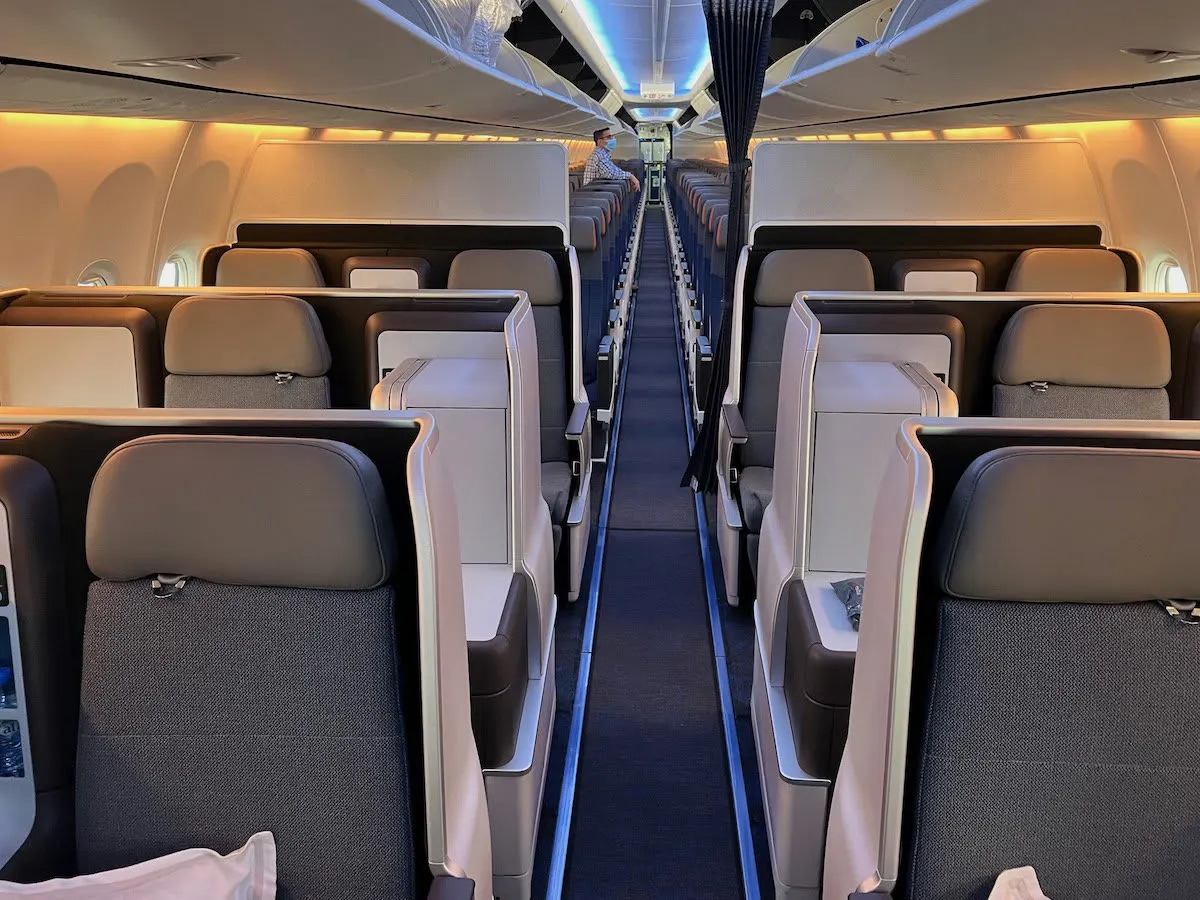
Flydubai Upgrading 21 Boeing 737 MAX 8s to Flat Bed Seats
Flydubai is retrofitting 21 Boeing 737 MAX 8 aircraft with lie-flat business class seats to standardize its premium product by late 2027.
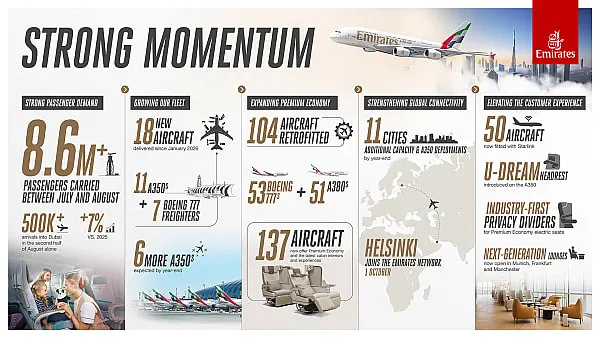
Emirates Winter Booking Momentum Grows Amid Fleet Expansion
Emirates carried 8.6 million passengers this summer and enters winter with strong demand as it accelerates fleet retrofits and network growth.
Air Arabia Consortium Gains AOC for New Dammam Budget Airline
A Saudi GACA-led consortium including Air Arabia has secured an AOC to launch a new budget airline based at Dammam's King Fahd International Airport.

Turkish Airlines Exits Luanda as Angola Hub Struggles
Turkish Airlines dropped its Luanda route as Angola's new airport struggles to attract traffic, handling only 756,028 passengers in 2025.

Red Sea Airlines Leases Two 737 MAX 8s for 2027 Expansion
Red Sea Airlines signed a lease for two Boeing 737 MAX 8 aircraft from SMBC Aviation Capital, arriving in 2027 to support its 14-aircraft fleet goal.
Avelo CEO Warns Airfares May Rise on Jet Fuel Price Spikes
Avelo Airlines CEO Andrew Levy warns that rising fuel costs may force fare increases as global jet fuel prices reach $171.01 per barrel.