Ryanair Flight RK514 Diverts to Birmingham After Emergency

Co-Founder & CTOCo-Founder & CTO driving the technology and data systems behind Omni Flights.
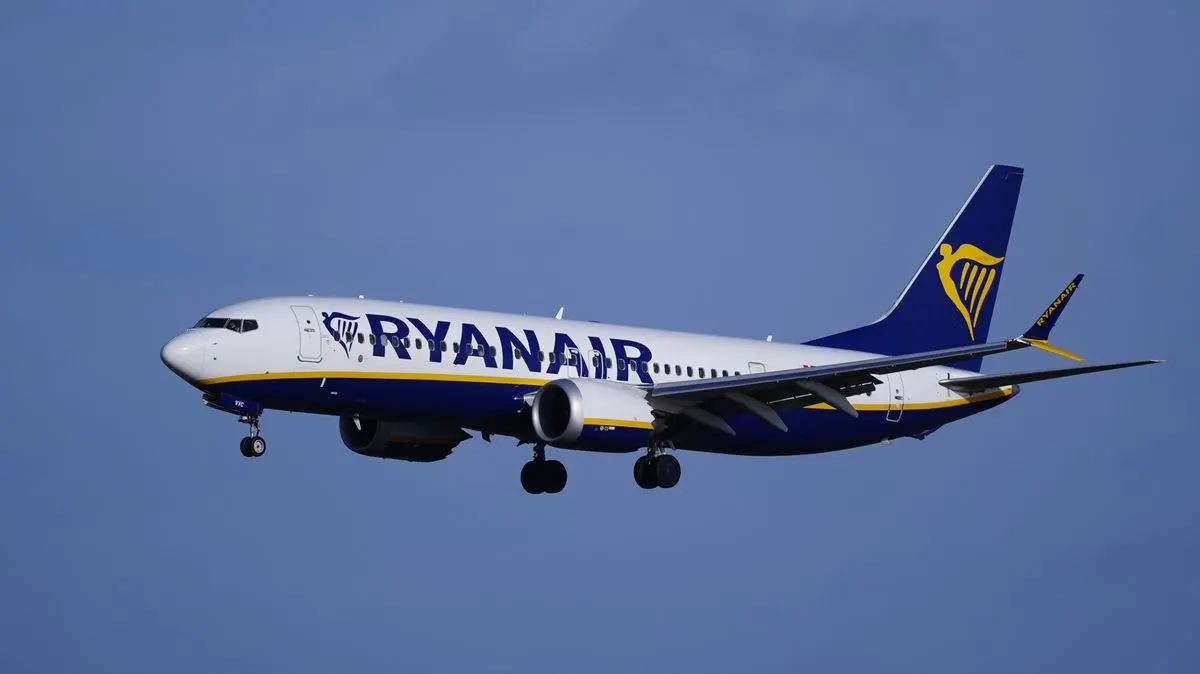
Ryanair flight RK514 diverted to Birmingham Airport on September 13, 2026, following a medical emergency involving a passenger.
Key Takeaways
- •Ryanair flight RK514 diverted to Birmingham on September 13, 2026.
- •Lufthansa flight LH418 diverted to Glasgow on September 10, 2026.
- •Squawk 7700 alerts air traffic control to general in-flight emergencies.
- •Medical emergencies occur in roughly 1 of every 604 commercial flights.
Ryanair and Lufthansa Medical Diversions
A Ryanair flight RK514 was forced to divert to Birmingham Airport (BHX) on September 13, 2026, following an in-flight medical emergency. The aircraft, a Boeing 737-8AS, departed from Edinburgh Airport (EDI) at 7:22 am, bound for Marrakesh (RAK). Flight history for Ryanair UK flight RK514 confirms that the flight landed at Birmingham at 8:15 am, roughly one hour into the scheduled journey. Upon arrival, the aircraft was met by paramedics, and the passenger was offloaded for urgent medical treatment.
This incident follows a similar mid-air emergency involving Lufthansa flight LH418, which occurred on September 10, 2026. Flight history for Lufthansa flight LH418 shows that the Airbus A340-600 was cruising at approximately 34,000 feet when it declared a general emergency and diverted to Glasgow Airport (GLA). The flight, originally bound for Washington DC, landed safely in Scotland to facilitate medical care for a passenger.
Understanding the Squawk 7700 Code
In both instances, the diversion process is governed by strict safety protocols. When a pilot enters the four-digit emergency code 7700 into their transponder, it immediately alerts air traffic control that the aircraft is in distress and requires priority handling. SERA.13005 SSR transponder Mode A code setting - Aviation Regulation Library mandates this practice, as the Squawk 7700 code serves as a general emergency signal. It is distinct from Squawk 7500, which indicates unlawful interference or hijacking, and Squawk 7600, which signifies a loss of two-way radio communication.
Operational Impacts of Medical Diversions
Medical emergencies represent a recurring operational challenge for commercial carriers. Industry data suggests that in-flight medical incidents occur in approximately 1 in every 604 commercial flights, with syncope, or fainting, being the most frequent cause. For airlines like Ryanair and Lufthansa, these events necessitate unplanned landings, which incur significant operational costs. These include additional fuel consumption, landing fees at diversion airports, ground handling charges, and potential crew duty time limitations.
For passengers, the impact is primarily felt through significant travel delays, as flights must be cleared by medical teams and ground crews before operations can resume. Airports such as Birmingham and Glasgow must also rapidly mobilize emergency services to ensure the safety and health of the affected individual, often requiring the prioritization of the diverted aircraft over other scheduled traffic.
Regulatory and Safety Protocols
When a medical crisis occurs, the flight crew follows established checklists to determine the necessity of a diversion. The decision is based on the severity of the passenger's condition and the proximity of suitable diversion airports. Once the decision to divert is made, the crew communicates with air traffic control to secure a priority arrival. The use of the 7700 transponder code ensures that ground controllers provide the most direct routing and clear the path for landing, minimizing the time between the onset of the emergency and the arrival of medical professionals on the tarmac.
Why Medical Diversion Protocols Matter
The primary objective of these diversion protocols is to ensure the safety of the passenger while maintaining the integrity of the flight operation. By prioritizing medical care, airlines minimize the risk of a health crisis escalating during flight. These incidents highlight the necessity of robust coordination between flight crews, air traffic control, and ground-based medical services. As passenger volumes grow, the frequency of such diversions remains a critical component of aviation safety management, ensuring that urgent care is accessible even during long-haul transit.
Frequently Asked Questions
- What does the transponder code 7700 mean in aviation?
- Squawk 7700 is a four-digit transponder code used by pilots to alert air traffic control of a general emergency. It signals that the aircraft is in distress and requires priority handling.
- Why did Ryanair flight RK514 divert to Birmingham?
- Ryanair flight RK514 diverted to Birmingham Airport on September 13, 2026, because a passenger on board became ill and required urgent medical attention upon landing.
omniflights.com provides comprehensive commercial aviation news covering airlines, aircraft, and airports. For detailed airline coverage, route changes, and fleet moves, explore the Airlines section at omniflights.com/airlines.
Written by Shashank Shukla
Co-Founder & CTO leading the engineering and AI systems behind Omni Flights. Covers aviation technology, flight safety, aircraft manufacturing, and emerging aerospace developments.
Visit ProfileYou Might Also Like
Discover more aviation news based on similar topics
Amazon Suspends 21 Air After Fatal Miami 767 Runway Overrun
Amazon has suspended operations with 21 Air following a fatal Boeing 767 runway overrun at Miami International Airport that resulted in five deaths.
FAA Proposes A220 Fuel Line Inspections for US Operators
The FAA issued a proposed directive requiring inspection of motive-flow fuel lines on 13 US-registered Airbus A220s to prevent potential leaks.
NATS Denies Military Jet Role in UK ATC Outage
The UK Ministry of Defence denied its aircraft caused a NATS outage that led to over 2,000 flight cancellations and calls for CEO resignation.
21 Air Miami Crash: NTSB Investigates 767 Runway Overrun
A fatal 21 Air Boeing 767 crash at Miami International Airport has triggered an NTSB investigation amid scrutiny of Amazon Air's contract oversight.

Amazon Cargo Plane Crash: 5 Remembered After MIA Excursion
Five cleaning crew members died after an Amazon-contracted Boeing 767 overran the runway at Miami International Airport at 158 knots.
EasyJet Flight U23905 Evacuated After Powerbank Fire
An easyJet A320 was evacuated at Milan Malpensa on September 10 after a passenger's powerbank caught fire in an overhead locker, causing two injuries.