Ryanair CEO Disputes Passenger Account of Window Blowout

Co-Founder & CTOCo-Founder & CTO driving the technology and data systems behind Omni Flights.
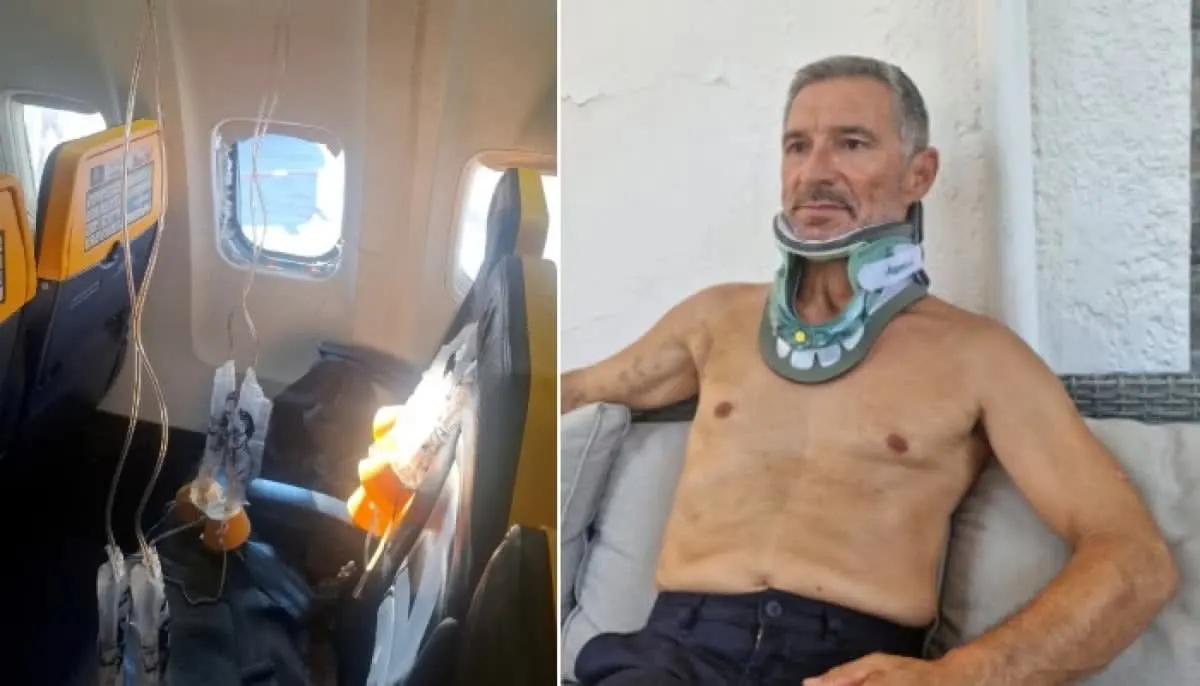
Ryanair CEO Michael O'Leary challenged claims that a passenger was partially ejected during a July 2026 engine failure on a Boeing 737.
Key Takeaways
- •Ryanair CEO disputes claims of passenger ejection during July engine failure.
- •NTSB is investigating the engine failure aboard a Boeing 737-8AS.
- •Engine recorded four suspected bird strikes in the 12 months prior.
- •Final accident investigation report is expected by late 2027.
Ryanair CEO Disputes Passenger Account of Window Blowout
Ryanair CEO Michael O’Leary has publicly challenged the account of Ljubisa Karovic, a 61-year-old passenger who sustained severe injuries during a Ryanair window blowout incident on July 10, 2026. The event occurred aboard a Boeing 737-8AS operated by Malta Air (Flight 1879), during which a No. 2 engine fan-blade-out (FBO) failure sent debris into the fuselage, shattering a window and causing sudden cabin depressurization. According to the National Transportation Safety Board (NTSB), which is leading the investigation (DCA26FA274), the aircraft was carrying 149 passengers at the time of the failure.
The Disputed Account and Legal Implications
Following the company's Annual General Meeting (AGM) on September 10, 2026, O'Leary addressed the incident, asserting that while the passenger was pulled toward the window, he was not partially ejected from the aircraft. The passenger’s legal counsel maintains that Karovic’s head and right arm were pulled outside the fuselage before other passengers intervened to pull him back inside. Karovic has stated that he believes his seatbelt prevented a total ejection after he lost consciousness. The disparity between these accounts carries significant implications for personal injury liability and potential compensation claims against Ryanair Holdings.
Technical Investigation and Engine Integrity
Preliminary investigation data indicates that the aircraft’s engine had experienced four suspected bird strikes in the 12 months preceding the accident. The NTSB is currently investigating whether these prior events caused micro-fractures in the fan blades that were not detected during standard ultrasonic inspections. GE Aerospace and Boeing are participating in the probe, which is focused on whether current inspection intervals are sufficient to maintain fan blade integrity after foreign object ingestion. Former NTSB investigator Jeff Guzzetti emphasized that the inquiry will focus on the efficacy of historical inspection procedures and their role in the current mechanical failure.
Regulatory Context and Precedents
This incident shares striking similarities with the 2018 Southwest Airlines Flight 1380 accident, where a CFM56-7B engine failure led to a window blowout and the fatal partial ejection of a passenger. That precedent resulted in mandatory, more stringent ultrasonic inspection requirements for the industry. The current Ryanair investigation is governed by ICAO (International Civil Aviation Organization) Annex 13 protocols. Notably, the NTSB previously issued a formal reprimand to O’Leary in July 2026 for discussing active investigation details, which violated established international rules for technical advisers. The final report detailing the root cause is expected by late 2027.
Why This Matters for Aviation Safety
For CFM International and global aviation regulators, including the FAA (Federal Aviation Administration) and EASA (European Union Aviation Safety Agency), the investigation represents a critical inflection point in engine maintenance standards. If the NTSB determines that existing ultrasonic testing protocols failed to identify bird-strike-induced damage, the industry may face new, mandatory airworthiness directives. The outcome will likely reshape how airlines manage engine health monitoring following bird strike incidents, directly impacting operational safety and maintenance costs for operators of the Boeing 737 fleet.
Frequently Asked Questions
- What caused the window blowout on the Ryanair flight?
- The incident was caused by a No. 2 engine fan-blade-out (FBO) failure, which sent engine debris into the fuselage and shattered a cabin window.
- Why is the NTSB investigating a Ryanair flight in Europe?
- Although the incident occurred in Greece, the Hellenic Air and Railway Safety Investigation Authority formally delegated the investigation to the U.S. National Transportation Safety Board on July 16, 2026.
Visit omniflights.com for the latest commercial aviation news and airline industry updates. Discover how innovation is shaping aviation through aircraft systems, avionics, and digital tools at omniflights.com/technology.
Written by Shashank Shukla
Co-Founder & CTO leading the engineering and AI systems behind Omni Flights. Covers aviation technology, flight safety, aircraft manufacturing, and emerging aerospace developments.
Visit ProfileYou Might Also Like
Discover more aviation news based on similar topics
Ryanair Flight RK514 Diverts to Birmingham After Emergency
Ryanair flight RK514 diverted to Birmingham Airport on September 13, 2026, following a medical emergency involving a passenger.
Amazon Suspends 21 Air After Fatal Miami 767 Runway Overrun
Amazon has suspended operations with 21 Air following a fatal Boeing 767 runway overrun at Miami International Airport that resulted in five deaths.
FAA Proposes A220 Fuel Line Inspections for US Operators
The FAA issued a proposed directive requiring inspection of motive-flow fuel lines on 13 US-registered Airbus A220s to prevent potential leaks.
NATS Denies Military Jet Role in UK ATC Outage
The UK Ministry of Defence denied its aircraft caused a NATS outage that led to over 2,000 flight cancellations and calls for CEO resignation.
21 Air Miami Crash: NTSB Investigates 767 Runway Overrun
A fatal 21 Air Boeing 767 crash at Miami International Airport has triggered an NTSB investigation amid scrutiny of Amazon Air's contract oversight.

Amazon Cargo Plane Crash: 5 Remembered After MIA Excursion
Five cleaning crew members died after an Amazon-contracted Boeing 767 overran the runway at Miami International Airport at 158 knots.