Qatar Airways Backs Operational Readiness With $4B MRO Hub

Aviation News Editor & Industry AnalystAviation News Editor & Industry Analyst delivering clear coverage for a worldwide audience.
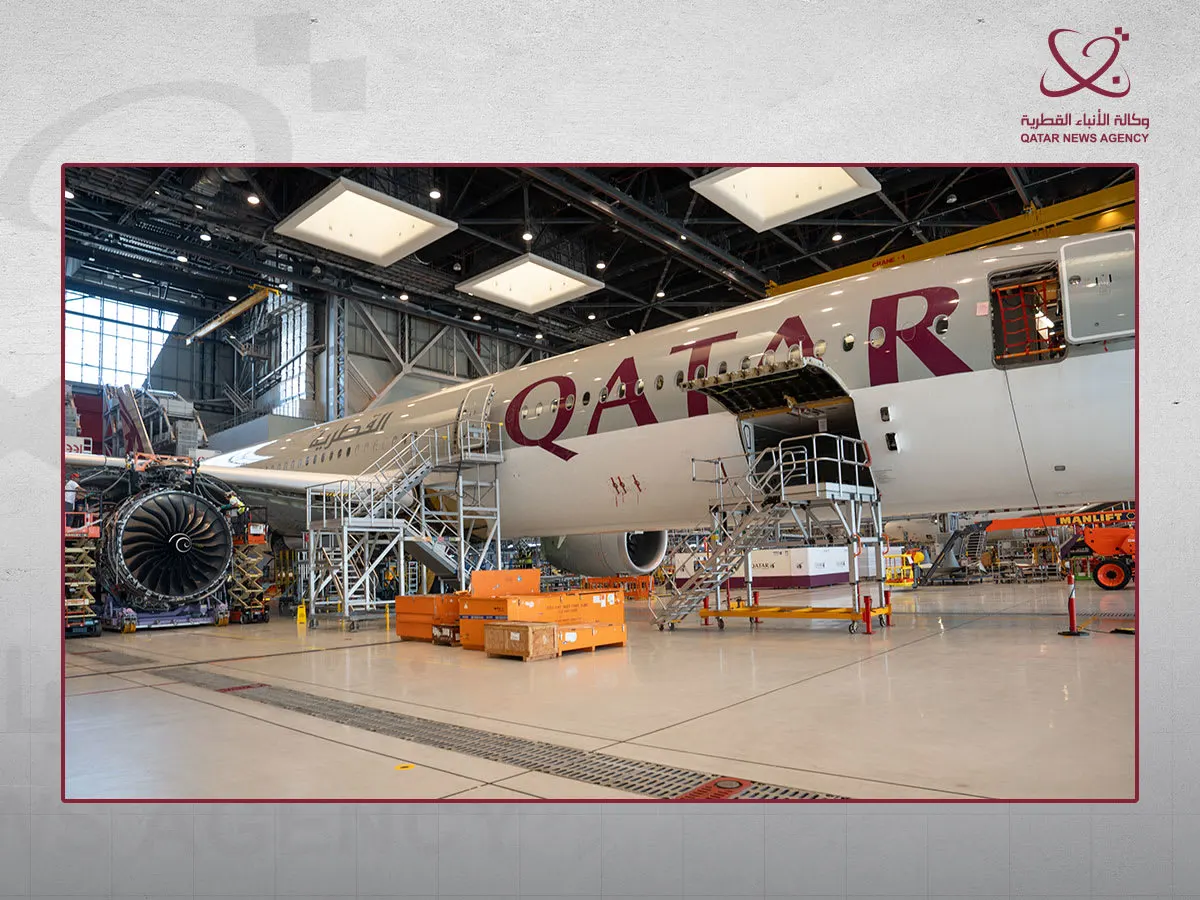
Qatar Airways maintains a $4 billion Maintenance, Repair, and Overhaul hub at Hamad International Airport to secure its global operational readiness.
Key Takeaways
- •Qatar Airways operates a $4 billion MRO hub at Hamad International Airport.
- •The facility manages nearly 600 daily flights and 160 global destinations.
- •Maintenance center assets include a $2 billion engine inventory of 80 units.
- •The MRO hub performs 170 heavy maintenance events annually across 22 shops.
Qatar Airways MRO Strategy and Operational Readiness
Qatar Airways has reinforced its long-term Aviation Operational Readiness by centralizing technical support at a massive Global Maintenance Hub located at Hamad International Airport (HIA). According to Qatar News Agency (QNA), the airline has navigated significant industry volatility by investing in proactive contingency planning and state-of-the-art infrastructure. This strategy ensures the carrier maintains its schedule for nearly 600 daily flights to more than 160 destinations worldwide.
The Scale of the Qatar Airways MRO Facility
The Qatar Airways MRO (Maintenance, Repair, and Overhaul) center serves as the technical lynchpin for the airline’s fleet. The facility spans an area equivalent to 13 football fields, housing advanced repair shops and warehouse infrastructure. The total value of the center's assets and inventory is approximately $4 billion, excluding the value of the aircraft housed there. This investment is critical to the airline’s ability to manage its fleet independently, particularly as supply chain constraints continue to impact the broader aviation sector.
Inventory and Maintenance Capacity
To mitigate global supply chain bottlenecks, the airline has stockpiled a massive inventory of components. The facility houses a spare parts warehouse valued between $1.5 billion and $2 billion. Furthermore, the hub maintains an engine facility containing nearly 80 spare engines, with a combined valuation of approximately $2 billion.
Operationally, the center can accommodate 14 aircraft simultaneously. Staff perform approximately 170 heavy maintenance events and 15,000 light maintenance events annually across 22 specialized workshops. These shops include dedicated sections for electrical systems, safety components, and airframe structures, supporting the airline's commitment to safety and operational continuity.
Fleet Modernization and Innovation
Beyond technical maintenance, the facility supports Qatar Airways' broader fleet modernization efforts. The airline is currently deploying the latest cabin technologies, including the flagship Qsuite seats and the ongoing rollout of high-speed Starlink Wi-Fi. These upgrades are integrated into the airline's routine maintenance cycles to ensure product consistency across the global network. The airline’s focus on workforce development also aligns with the Qatar National Vision 2030, which encourages state-owned enterprises to develop local technical leadership.
Regional Maintenance Trends and Competition
Qatar Airways' investment reflects a wider trend of mega-MRO projects across the Middle East. Competitors such as Emirates Engineering and Saudia Technic are also investing billions in massive maintenance infrastructure to secure operational autonomy. In May 2026, Emirates broke ground on a facility in Dubai South capable of handling 28 wide-body aircraft, while Saudia’s 1-million-square-meter MRO village in Jeddah highlights the regional push to capture aftermarket demand.
This trend follows historical precedents where Gulf carriers have utilized state-backed funding to establish maintenance hubs that reduce reliance on external providers. According to aviation industry analysts, this shift is a direct response to global parts shortages, which have necessitated unprecedented levels of spare inventory stockpiling among major international carriers.
Why This Matters for Global Operations
For Qatar Airways Operations, this infrastructure is a strategic buffer against the instability of the global aerospace supply chain. By holding over $3.5 billion in spare parts and engine inventory, the airline ensures high fleet availability and protects its hub-and-spoke model from the disruptions that have grounded peers. For original equipment manufacturers, the carrier’s focus on massive, in-house inventory management guarantees a steady stream of high-volume aftermarket orders, positioning the airline as a dominant force in the regional aviation landscape.
Frequently Asked Questions
- What is the total value of the Qatar Airways maintenance hub?
- The total value of the Qatar Airways MRO center's assets and inventory is approximately $4 billion, excluding the value of the aircraft housed there.
- How many aircraft can the Qatar Airways MRO facility accommodate?
- The maintenance center at Hamad International Airport is capable of accommodating 14 aircraft simultaneously.
- Why is Qatar Airways investing in a massive spare parts inventory?
- The airline is stockpiling spare parts and engines to secure operational independence and shield its fleet from global aerospace supply chain bottlenecks.
From airline operations to fleet updates, commercial aviation news lives at omniflights.com. For reporting on UAP sightings, investigations, and aviation-related encounters, see the UAPs section at omniflights.com/uaps.
Written by Ujjwal Sukhwani
Aviation News Editor & Industry Analyst delivering clear coverage for a worldwide audience. Covers flight operations, safety regulations, and market trends with expert analysis.
Visit ProfileYou Might Also Like
Discover more aviation news based on similar topics

Red Sea Airlines Leases Two 737 MAX 8s for 2027 Expansion
Red Sea Airlines signed a lease for two Boeing 737 MAX 8 aircraft from SMBC Aviation Capital, arriving in 2027 to support its 14-aircraft fleet goal.

Avelo CEO Warns Airfares May Rise on Jet Fuel Price Spikes
Avelo Airlines CEO Andrew Levy warns that rising fuel costs may force fare increases as global jet fuel prices reach $171.01 per barrel.
IndiGo, Air India Battle for Mumbai-Delhi Route Dominance
IndiGo and the Air India group are competing for dominance on the Mumbai-Delhi air route, which saw 13.9 percent capacity growth this September.

Delta Air Lines Trims 5 Routes, Cuts Las Vegas Capacity
Delta Air Lines will end five domestic routes from New York and Las Vegas this winter as part of a seasonal network capacity adjustment.

FLY91 Orders 40 ATR 72-600s for Regional Fleet Expansion
Indian startup FLY91 has placed a firm order for 40 ATR 72-600 aircraft, valued at $1 billion, to scale its regional fleet to 60 planes by 2032.

SWISS Takes Delivery of Third Airbus A350-900 Named 'Zug'
Swiss International Air Lines has welcomed its third Airbus A350-900, which will feature the new 'SWISS Senses' cabin on select long-haul routes.