Qantas Project Sunrise A350-1000ULR Delivery Delayed to 2027

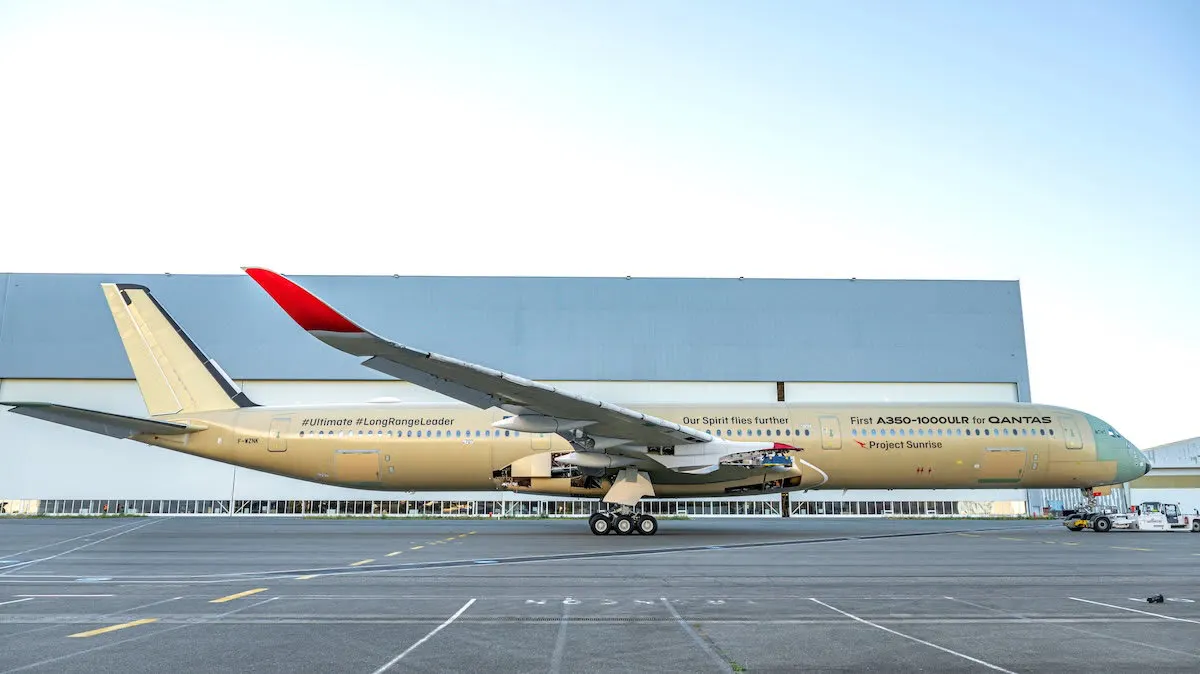
Qantas has delayed the arrival of its first Airbus A350-1000ULR to April 2027, pushing back the launch of ultra long haul flights due to supply chain...
Key Takeaways
- •Qantas delays first A350-1000ULR delivery to April 2027.
- •Supply chain issues caused the shift from the original 2025 target.
- •The ULR variant features 238 seats and a 322-tonne MTOW.
- •Project Sunrise commercial flights are expected in late 2027.
Qantas Project Sunrise A350-1000ULR Delivery Delayed to 2027
Qantas has confirmed a further delay in the delivery of its highly anticipated Airbus A350-1000ULR aircraft, now scheduled to join the fleet in April 2027. This adjustment postpones the launch of Qantas Project Sunrise, an ambitious initiative designed to connect Sydney with London and New York via ultra long haul flights exceeding 20 hours. The delay marks the latest setback for the program, which was originally targeting a late-2025 entry into service.
Industry Impact and Supply Chain Challenges
The postponement is largely attributed to persistent aviation supply chain issues affecting the global aerospace sector. Shortages in critical interior components and fuselage assemblies have created bottlenecks that ripple across production lines. According to an Airbus spokesperson, these logistical constraints have necessitated a revised delivery schedule for the 12 ULR (Ultra Long Range) variants ordered by the carrier. Qantas has a total of 24 Airbus A350-1000 aircraft on order, with the remaining 12 units intended for standard fleet replacement.
For Qantas Airways, the delay means the strategic benefits of these flagship routes are deferred by approximately six months. While the airline expects to catch up on fleet numbers by November 2027, premium long-haul passengers will continue to rely on existing one-stop itineraries in the interim. Airbus is also managing the reputational and financial implications of missing these revised delivery targets.
Technical Specifications and Regulatory Context
To achieve the unprecedented 22-hour range, the A350-1000ULR incorporates significant engineering modifications. The aircraft features a modified rear center auxiliary fuel tank capable of holding an additional 20,000 liters (5,283 gallons) of fuel. To accommodate this extra weight, the MTOW (Maximum Take-Off Weight) has been increased to 322 tonnes. The EASA (European Union Aviation Safety Agency) finalized the certification of this design in 2024, a critical milestone for the program's airworthiness. Detailed information on these regulatory standards is available through the EASA Type Certificates portal.
A350-1000ULR vs Standard A350-1000: Key Specifications
| Metric | Airbus A350-1000ULR | Standard A350-1000 |
|---|---|---|
| Seating Capacity | 238 seats | 350-410 seats |
| Additional Fuel | 20,000 liters | 0 liters |
| MTOW | 322 tonnes | 319 tonnes |
Historical Precedents
This situation mirrors historical difficulties in bringing specialized long-haul aircraft to market. In the mid-2000s, Qantas faced similar challenges when its Airbus A380 deliveries were delayed by nearly two years, forcing a comprehensive reassessment of international capacity planning. More recently, the Boeing 777X program has faced delays exceeding five years due to certification and supply chain hurdles, underscoring the complexity inherent in developing new-generation widebody platforms. Further technical details on the airframe can be reviewed via the Airbus A350 Family Specifications.
Technical Analysis
The delay of the A350-1000ULR reflects a broader structural trend within the aviation manufacturing sector, where supply chain fragility continues to override original production timelines. The transition from standard production to highly customized variants, such as those required for Project Sunrise, compounds these risks. As the industry navigates this period of constrained capacity, the ability of OEMs to stabilize their supply chain remains the primary determinant of fleet renewal success. Historically, these delays serve as a reminder that the certification and delivery of modified long-haul platforms are prone to iterative schedule shifts, even when initial regulatory hurdles are cleared.
What Comes Next
- Mid-2026: Anticipated first test flight of the modified A350-1000ULR.
- April 2027: Confirmed delivery of the first unit to Qantas.
- Second half of 2027: Expected launch of commercial Project Sunrise flights.
Why This Matters
For the aviation industry, the Project Sunrise delay underscores the challenges of executing ultra-long-haul operations in an era of supply chain instability. The move forces Qantas to maintain its current network strategy for longer than planned while highlighting the operational risks associated with specialized, low-density premium aircraft configurations.
Frequently Asked Questions
- Why has the delivery of the Qantas A350-1000ULR been delayed?
- The delivery has been delayed until April 2027 primarily due to persistent aerospace supply chain disruptions, including shortages in interior components and fuselage assemblies.
- What modifications distinguish the A350-1000ULR from the standard model?
- The ULR variant features a modified rear center auxiliary fuel tank holding 20,000 liters of additional fuel and an increased Maximum Take-Off Weight (MTOW) of 322 tonnes to support 22-hour flight durations.
- How many seats are configured on the Qantas Project Sunrise A350-1000ULR?
- The Qantas A350-1000ULR is configured with 238 seats, a premium-heavy layout significantly lower than the 350-410 seat capacity found on standard A350-1000 aircraft.
Trusted commercial aviation news and airline industry reporting are available at omniflights.com. Stay informed on aviation incidents, investigations, and best practices in the Safety category at omniflights.com/safety.

Written by Hardik Vishwakarma
Co-Founder & Aviation News Editor leading initiatives that improve trust and visibility across the global aviation industry. Covers airlines, airports, safety, and emerging technology.
Visit ProfileYou Might Also Like
Emirates May Convert 35 Boeing 787s to 777X Jets
American Airlines JFK Routes Expand in 2027 Schedule Shift

Emirates Launches Helsinki Flights With New A350 Service
Saudia Group Prepares Major Aircraft Order for 2031-2040
JetBlue Secures 22 LaGuardia Slots in $58.5M Spirit Deal