PNP Demands Answers on Conviasa 8-Hour NMIA Tarmac Delay

Co-Founder & CEOAviation News Editor delivering trusted coverage across the global aviation industry.
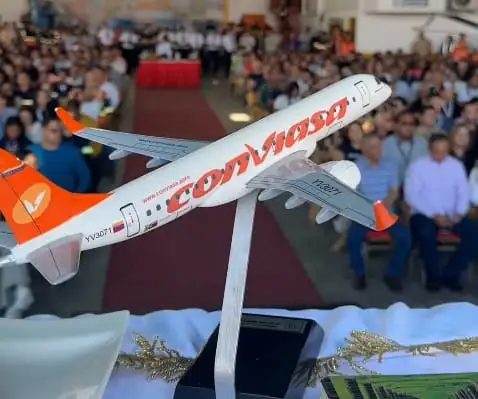
The Jamaican opposition is calling for a full investigation after a Conviasa flight was stranded on the NMIA tarmac for eight hours in June 2026.
Key Takeaways
- •Conviasa flight stranded on NMIA tarmac for eight hours in June 2026.
- •PNP demands transparency regarding Jamaica's adherence to Chicago Convention.
- •Refueling impasse highlights risks of servicing sanctioned state-owned airlines.
- •Official incident report expected from the Ministry of Transport by Q3 2026.
Diplomatic Tension Over Conviasa Diversion
The Jamaican opposition People’s National Party (PNP) has formally requested a transparent investigation into the handling of a Conviasa (Consorcio Venezolano de Industrias Aeronáuticas y Servicios Aéreos, S.A.) flight that was diverted to Norman Manley International Airport (NMIA) in Kingston. The Conviasa flight diversion occurred on June 10, 2026, while the aircraft was operating a route from Cancún, Mexico, to Maiquetía, Venezuela. The incident resulted in passengers being held on the tarmac for approximately eight hours, sparking a sharp diplomatic rebuke from the Venezuelan carrier.
The Nut Graf: A Breach of International Obligations?
This Jamaica aviation incident raises critical questions regarding the intersection of international aviation law and private-sector sanctions compliance. While the airline accused Jamaican authorities of failing to provide "minimum conditions of assistance," the incident highlights the growing difficulty that state-owned carriers from sanctioned nations face in securing routine ground handling and refueling services. The standoff at NMIA serves as a test case for how sovereign states balance their binding international treaty obligations against the commercial risk aversion of private fuel vendors.
Core Facts and Regulatory Context
According to the official statement from Conviasa, the aircraft was forced to land due to "unforeseen circumstances," yet the subsequent delay left passengers without adequate support. Senator Donna Scott-Mottley, the PNP spokesperson on Foreign and Regional Affairs, emphasized that Jamaica is a signatory to the 1944 Chicago Convention, as documented by the International Civil Aviation Organization (ICAO). Under these ICAO standards, signatory states are obligated to provide safe landing, priority handling, and non-discriminatory assistance to aircraft in distress.
Transport Minister Daryl Vaz has indicated that the government is awaiting a full report, noting that the primary issue appeared to be a refueling impasse. Industry trends suggest that this is not an isolated event; private aviation fuel providers often refuse service to sanctioned state-owned airlines to avoid potential legal repercussions. This creates a "sanctions-driven bottleneck" where the host nation's diplomatic stance is frequently superseded by the risk-management policies of private ground handlers.
Historical Precedents and Operational Friction
This incident mirrors historical challenges for Venezuelan state-owned carriers. In June 2022, a Boeing 747 operated by an Emtrasur cargo subsidiary was detained in Argentina for 18 months, leading to a significant diplomatic fallout. Similarly, in June 2022, a Cubana de Aviación flight was left stranded in Buenos Aires when fuel providers refused service. These precedents demonstrate the high-stakes reality for carriers like Conviasa, which frequently face operational friction in foreign jurisdictions due to the complex web of international sanctions.
Technical Analysis: The Sanctions-Service Conflict
The data suggests that the NMIA delay was likely caused by a refusal of private fuel vendors to service the sanctioned aircraft, rather than a lack of political will from the Jamaican state. This creates a structural challenge for airport operators: how to fulfill ICAO mandates for non-discriminatory assistance when the necessary private-sector infrastructure is unwilling to engage with the aircraft. The trajectory of such incidents indicates that unless host governments provide explicit indemnity or state-backed refueling solutions, these operational bottlenecks will persist as a recurring feature of international travel for sanctioned carriers.
What Comes Next: The Q3 Investigation
The Jamaican Ministry of Transport is expected to release a full report regarding the sequence of events by Q3 2026. The PNP is demanding a clear clarification of government protocols for handling emergency diversions involving diplomatic sensitivities. The outcome of this report will likely dictate whether the Jamaican Civil Aviation Authority (JCAA) introduces new directives to ensure that ground handling services at NMIA remain compliant with international standards, regardless of the carrier's origin or sanction status.
Why This Matters for Aviation Stakeholders
For passengers and airlines, this incident highlights the vulnerability of travelers on sanctioned carriers during emergency diversions. For regulators and airport operators, the NMIA incident underscores the urgent need for clearer lines of authority in managing the intersection of private fuel contracts and international transit obligations. Ensuring that human rights and passenger welfare are not sacrificed to corporate sanctions compliance remains a primary concern for the international aviation community.
Frequently Asked Questions
- What is the Chicago Convention's role in the NMIA incident?
- The Chicago Convention, overseen by the ICAO, mandates that signatory states like Jamaica provide safe landings, priority handling, and non-discriminatory assistance to aircraft in distress. The opposition PNP argues that the eight-hour tarmac delay may have violated these binding international obligations.
- Why was the Conviasa flight delayed at Norman Manley International Airport?
- While the official report is pending, the delay was reportedly caused by an impasse regarding refueling and ground handling services. Private aviation fuel providers often refuse service to sanctioned state-owned airlines to avoid potential legal and financial risks.
Stay ahead of the airline industry with commercial aviation news from omniflights.com. Track policy changes, airspace rules, and global aviation governance in the Regulatory category at omniflights.com/regulatory.
Written by Hardik Vishwakarma
Co-Founder & Aviation News Editor leading initiatives that improve trust and visibility across the global aviation industry. Covers airlines, airports, safety, and emerging technology.
Visit ProfileYou Might Also Like
Discover more aviation news based on similar topics
Ryanair Flight RK514 Diverts to Birmingham After Emergency
Ryanair flight RK514 diverted to Birmingham Airport on September 13, 2026, following a medical emergency involving a passenger.
Amazon Suspends 21 Air After Fatal Miami 767 Runway Overrun
Amazon has suspended operations with 21 Air following a fatal Boeing 767 runway overrun at Miami International Airport that resulted in five deaths.
FAA Proposes A220 Fuel Line Inspections for US Operators
The FAA issued a proposed directive requiring inspection of motive-flow fuel lines on 13 US-registered Airbus A220s to prevent potential leaks.
NATS Denies Military Jet Role in UK ATC Outage
The UK Ministry of Defence denied its aircraft caused a NATS outage that led to over 2,000 flight cancellations and calls for CEO resignation.
21 Air Miami Crash: NTSB Investigates 767 Runway Overrun
A fatal 21 Air Boeing 767 crash at Miami International Airport has triggered an NTSB investigation amid scrutiny of Amazon Air's contract oversight.

Amazon Cargo Plane Crash: 5 Remembered After MIA Excursion
Five cleaning crew members died after an Amazon-contracted Boeing 767 overran the runway at Miami International Airport at 158 knots.