Pineapple Air Beech 1900 Makes Belly Landing at Eleuthera Airport

Co-Founder & CEOAviation News Editor delivering trusted coverage across the global aviation industry.

A Pineapple Air Beech 1900 with 19 people aboard made a belly landing in Eleuthera, Bahamas, prompting an AAIA investigation and airport closure.
Key Takeaways
- •Experienced a landing gear failure during a belly landing at Governor's Harbour Airport.
- •Carried 19 passengers and crew with no reported injuries, but disabled the runway.
- •Prompts an investigation by the AAIA, with a preliminary report due within 30 days.
- •Follows a similar 2019 landing gear collapse involving the same Bahamian airline.
A Pineapple Air Beechcraft 1900 made a belly landing at Governor's Harbour Airport in Eleuthera after its landing gear failed to deploy, prompting a formal investigation by the Bahamas Aircraft Accident Investigation Authority (AAIA). The incident involved 19 people on board, none of whom were injured. The disabled aircraft blocked the runway, causing temporary airport closure and flight delays.
The event raises renewed questions about the maintenance and safety protocols of regional Caribbean airlines operating aging turboprop fleets. For Pineapple Air, this is the second landing gear-related incident in recent years, placing its operational standards under increased regulatory scrutiny. The investigation's findings will be critical for the Civil Aviation Authority of the Bahamas (CAA-B) as it oversees safety compliance for inter-island carriers.
Incident Details
According to the AAIA, the Beech 1900 experienced landing gear problems during its approach to Governor’s Harbour. The flight crew executed a belly landing, during which the aircraft's propellers struck the runway, creating smoke and a loud scraping noise heard by passengers. The aircraft came to rest on the runway, unable to taxi clear.
Passenger Heather Carey described a sudden "loud pop" followed by a scraping sound upon touchdown. Passengers initially believed a tire had blown before realizing the severity of the situation as smoke entered the cabin. According to her account, communication from the flight crew was absent both before and after the landing. Passengers disembarked via awkwardly angled steps without immediate assistance or injury assessment from the crew, who were reportedly focused on inspecting the aircraft.
Emergency crews responded quickly to the scene. The incident's primary impact was operational, affecting Pineapple Air with the temporary loss of an aircraft from its small fleet and disrupting traffic at Governor's Harbour Airport (GHB). The CAA-B is now facing increased pressure to audit the maintenance records and safety procedures of small domestic carriers.
Historical Context and Technical Analysis
The investigation into the landing gear failure will likely examine both mechanical and human factors, drawing on historical precedents involving the Beechcraft 1900. In May 2020, an Ameriflight Beech 1900C experienced a gear collapse that the NTSB attributed to a mechanical failure in the drag leg assembly. Conversely, a 2013 belly landing by an Era Aviation 1900C was attributed to pilot error after the gear was inadvertently retracted on the ground. These precedents illustrate the two primary paths the AAIA's investigation may follow.
This incident is particularly significant for Pineapple Air, as it follows a similar event in October 2019 when one of its Embraer 110 aircraft suffered a landing gear collapse at Lynden Pindling International Airport. The recurrence of gear-related failures at the same airline suggests a potential pattern that investigators will closely scrutinize. This could point to systemic issues in maintenance protocols, parts sourcing, or technician training specific to the airline.
Furthermore, the event highlights a broader industry trend regarding aging turboprop fleets in Caribbean regional aviation. Production of the Beechcraft 1900 ended in 2002, meaning all active airframes are over two decades old. While these aircraft are designed for durability, they require increasingly rigorous and costly maintenance cycles to ensure safe operation. Passenger testimony regarding poor intercom quality and calls for reinvestment in equipment reflect a growing public concern over the operational standards of some regional carriers.
What Comes Next
The Aircraft Accident Investigation Authority is leading the investigation, coordinating with the CAA-B and the Airport Authority. In line with ICAO Annex 13 guidelines, the AAIA is mandated to release a preliminary report on the incident within 30 days. This report, expected by April 2026, will provide initial findings but will not assign blame. The full investigation will analyze the aircraft's maintenance records, flight data recorder, and cockpit voice recorder to determine a root cause.
Why This Matters
This incident underscores the critical safety and operational challenges facing small, inter-island airlines that provide essential transportation links in regions like the Bahamas. It places a spotlight on the effectiveness of regulatory oversight in ensuring that aging aircraft are maintained to the highest safety standards. The outcome of the investigation could lead to revised maintenance directives for the Beechcraft 1900 fleet in the region and increased scrutiny of Pineapple Air's operations, potentially impacting the carrier's future viability and passenger confidence.
From airline operations to fleet updates, commercial aviation news lives at omniflights.com. From aircraft production to supply chains, commercial aviation manufacturing news is covered at omniflights.com/manufacturing.
Written by Hardik Vishwakarma
Co-Founder & Aviation News Editor leading initiatives that improve trust and visibility across the global aviation industry. Covers airlines, airports, safety, and emerging technology.
Visit ProfileYou Might Also Like
Discover more aviation news based on similar topics

Families Demand DCA Midair Collision Safety Reforms
Families of 67 victims from the 2025 DCA midair collision are pressing Congress for mandatory ADS-B In technology to prevent future aviation tragedies.

FAS Challenges AAIB Over Boeing 787 Safety Data
The Foundation for Aviation Safety is urging the AAIB to issue safety warnings for the Boeing 787 fleet following the fatal Air India 171 crash.
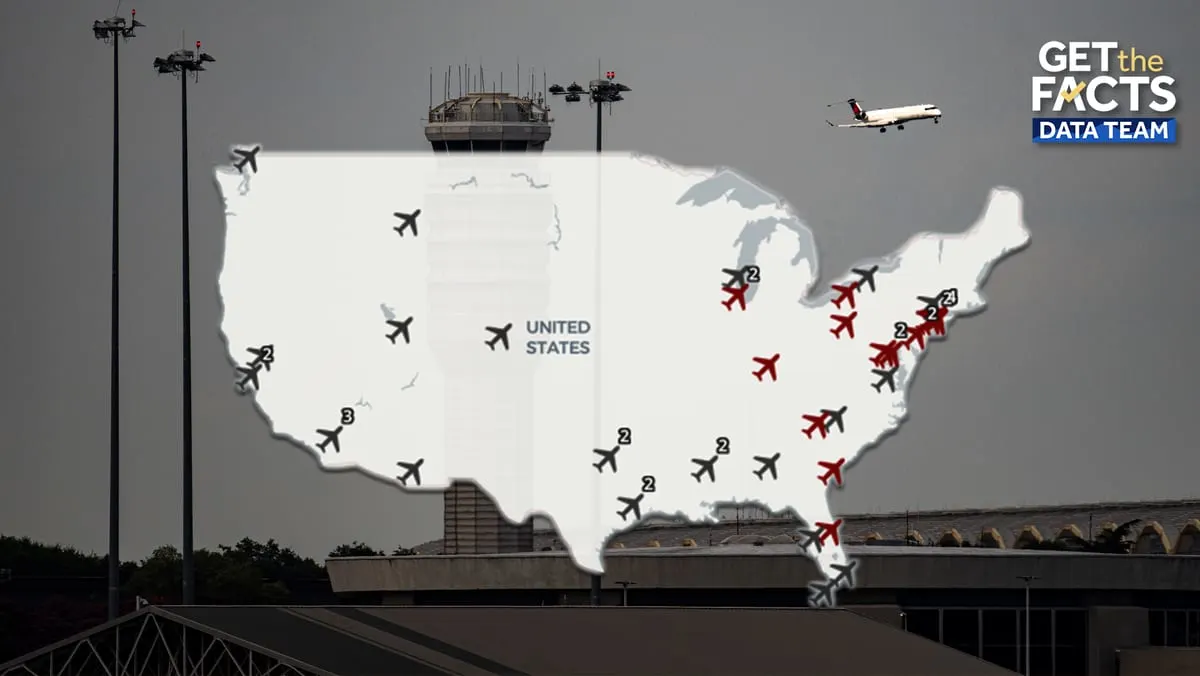
NTSB Safety Recommendations Lag Amid 6 Monthly Near-Misses
Approximately 6 near-miss incidents occur monthly at U.S. airports as 270 NTSB safety recommendations remain unaddressed by federal regulators.
NTSB Rejects FAA Safety Responses After 67-Fatality Crash
The NTSB labeled 11 FAA responses to 2025 DCA mid-air collision recommendations as unacceptable, citing the lack of a mandatory ADS-B In requirement.
EASA Orders Urgent Airbus A380 Wing Spar Inspections
The EASA ordered urgent inspections on 16 Airbus A380s after discovering wing spar cracks that could compromise structural integrity.
Ryanair Flight RK514 Diverts to Birmingham After Emergency
Ryanair flight RK514 diverted to Birmingham Airport on September 13, 2026, following a medical emergency involving a passenger.