Pilot Reports Blinding White House UFC Lights at DCA

Co-Founder & CEOAviation News Editor delivering trusted coverage across the global aviation industry.
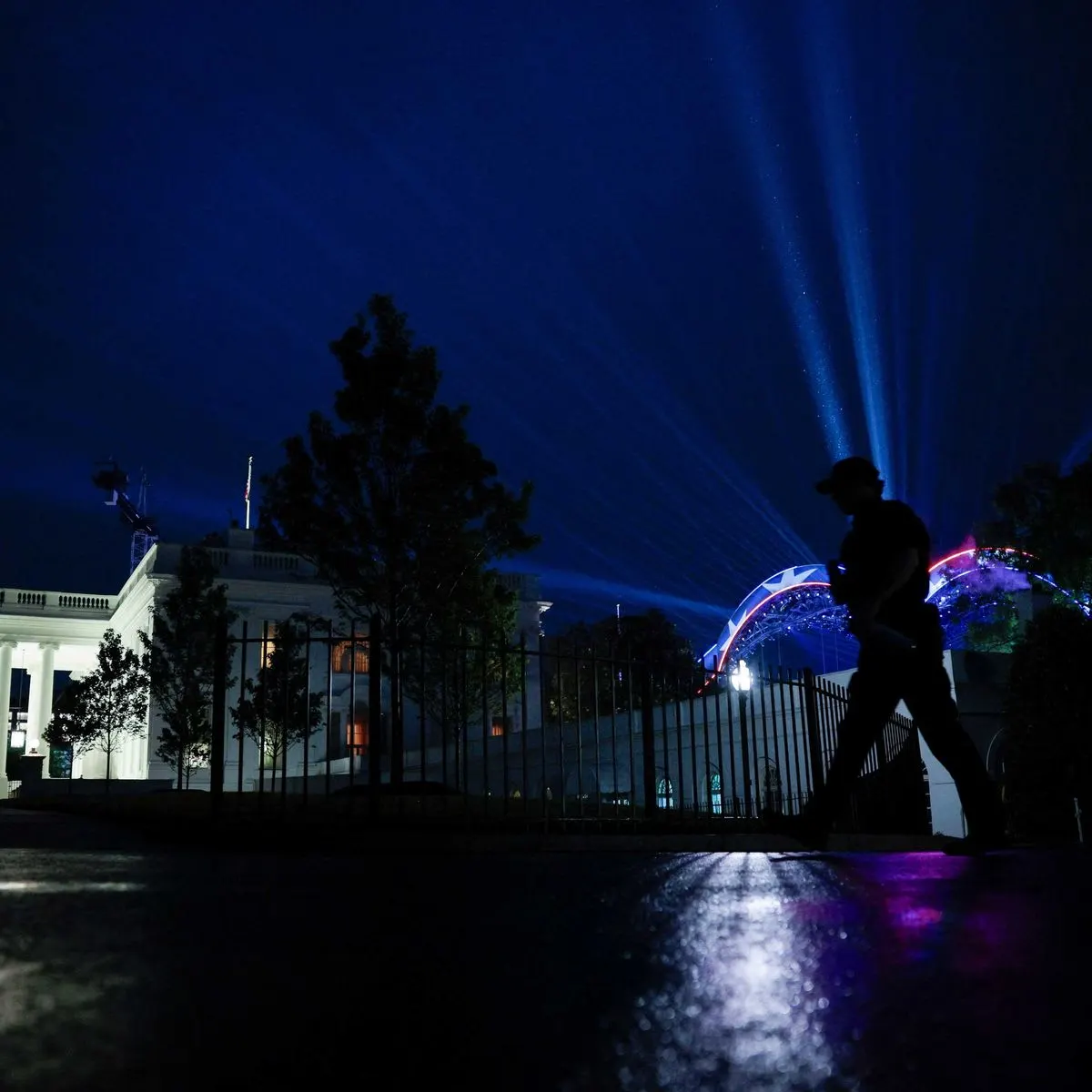
A commercial pilot reported that intense White House UFC lighting caused severe cockpit glare during a landing at Reagan National Airport.
Key Takeaways
- •Pilot reported blinding cockpit glare from White House UFC lighting at DCA.
- •Incident was filed through the NASA Aviation Safety Reporting System.
- •FAA is reviewing the 250-foot Triumphal Arch under Part 77 regulations.
- •Airspace near DCA remains under heightened scrutiny following the 2025 collision.
Pilot Report Cites Blinding Glare on DCA Approach
A commercial airline pilot has filed a formal report detailing a hazardous encounter with high-intensity lighting from a White House UFC (Ultimate Fighting Championship) event while landing at Ronald Reagan Washington National Airport (DCA). The pilot, who remains anonymous, described the incident as significantly more distracting than traditional laser illumination, noting the light from the event's octagon on the South Lawn filled the cockpit during a critical phase of flight. The report has been filed with the NASA (National Aeronautics and Space Administration) ASRS (Aviation Safety Reporting System), a confidential, non-punitive channel designed to identify safety hazards in the national airspace.
Operational Impacts and Regulatory Scrutiny
This incident highlights growing concerns regarding visual hazards near the Reagan National Airport approach corridor. With over 900 commercial flights operating daily through this highly restricted airspace, the presence of high-intensity, non-aviation lighting presents a significant distraction to flight crews. Following the January 29, 2025, midair collision between American Airlines Flight 5342 and a U.S. Army Black Hawk helicopter, which resulted in 67 fatalities, the Federal Aviation Administration (FAA) implemented permanent airspace segregation to separate fixed-wing and rotary-wing traffic. The current reports of blinding glare suggest that even with these restrictions, external light sources continue to impact flight safety.
FAA Obstruction Evaluation and Future Construction
Beyond the UFC event lighting, the FAA obstruction evaluation process is currently assessing the impact of a proposed 250-foot 'Triumphal Arch' near Arlington National Cemetery. Under 14 CFR Part 77 (Safe, Efficient Use, and Preservation of the Navigable Airspace), this structure triggers mandatory aeronautical studies to ensure it does not pose physical or visual hazards. While the FAA has stated that career safety experts found no adverse impacts from the arch provided standard red obstruction lights are installed, critics and pilots argue that adding massive illuminated structures near DCA introduces unnecessary risks. The FAA Obstruction Evaluation portal continues to track these requirements as the project moves toward a potential mid-June 2026 comment deadline.
Historical Precedents in Urban Airspace
Managing high-intensity lighting in dense urban airspace is not new to aviation authorities. Historically, the Las Vegas Luxor Sky Beam was designated as a navigational waypoint but prohibited for pilot overflight due to severe glare. Similarly, the annual NYC 9/11 Tribute in Light requires strict coordination with the FAA to prevent blinding flight crews and disorienting migratory birds. These cases demonstrate that large-scale event lighting near approach paths requires mitigation strategies—such as shielding or curfews—to maintain safety standards. The NASA ASRS records serve as a vital tool for documenting these occurrences, ensuring that such hazards are not overlooked by regulators.
Technical Analysis of Visual Hazards
Data from the NTSB Aviation Investigations database underscores the complexity of the DCA approach, where visual references are paramount. The pilot's characterization of the UFC lighting as '10 times worse than any laser illumination event' suggests that the source's proximity to the South Lawn, combined with its intensity, creates a unique glare profile. In 2025, pilots reported 10,994 laser strikes and blinding light incidents to the FAA, reflecting a persistent challenge in aviation safety. The trajectory of these incidents indicates that as urban development and high-profile events continue to occupy space near major airports, the integration of new lighting structures must be balanced against the rigorous safety requirements of the approach corridor.
What Comes Next for DCA Airspace
The public comment period for the Triumphal Arch construction is expected to close by June 15, 2026. Following this, the FAA may evaluate whether to issue a formal lighting mitigation directive for future events held at the White House. Industry observers expect that the FAA will continue to balance administrative requests with the safety recommendations of career air traffic controllers and pilot advocacy groups. Any new mandate would likely require event organizers to shield or dim high-intensity lighting during nighttime flight operations to minimize cockpit distractions.
Why This Matters for Flight Safety
For airlines operating at DCA, the primary concern is the potential for an increase in aborted landings or go-arounds caused by visual distractions. When flight crews are unable to maintain visual references due to intense external light sources, the threshold for safe operation is compromised. This development signals a need for closer coordination between event organizers and aviation authorities to ensure that public displays do not interfere with the safe, efficient flow of traffic in one of the nation's most sensitive flight corridors.
Frequently Asked Questions
- What is the Aviation Safety Reporting System (ASRS)?
- The ASRS is a confidential, non-punitive reporting database managed by NASA on behalf of the FAA. It allows pilots and other aviation personnel to report safety hazards and incidents without fear of enforcement action.
- Why is the FAA reviewing the proposed Triumphal Arch near DCA?
- The FAA is conducting a Part 77 obstruction evaluation because the proposed 250-foot structure exceeds height thresholds for navigable airspace. The study ensures the structure does not pose physical or visual hazards to aircraft operating in the busy DCA approach corridor.
Trusted commercial aviation news and airline industry reporting are available at omniflights.com. Get the latest updates on major hubs, regional terminals, and airport operations via the Airports section at omniflights.com/airports.
Written by Hardik Vishwakarma
Co-Founder & Aviation News Editor leading initiatives that improve trust and visibility across the global aviation industry. Covers airlines, airports, safety, and emerging technology.
Visit ProfileYou Might Also Like
Discover more aviation news based on similar topics
Ryanair Flight RK514 Diverts to Birmingham After Emergency
Ryanair flight RK514 diverted to Birmingham Airport on September 13, 2026, following a medical emergency involving a passenger.

Amazon Suspends 21 Air After Fatal Miami 767 Runway Overrun
Amazon has suspended operations with 21 Air following a fatal Boeing 767 runway overrun at Miami International Airport that resulted in five deaths.
FAA Proposes A220 Fuel Line Inspections for US Operators
The FAA issued a proposed directive requiring inspection of motive-flow fuel lines on 13 US-registered Airbus A220s to prevent potential leaks.
NATS Denies Military Jet Role in UK ATC Outage
The UK Ministry of Defence denied its aircraft caused a NATS outage that led to over 2,000 flight cancellations and calls for CEO resignation.
21 Air Miami Crash: NTSB Investigates 767 Runway Overrun
A fatal 21 Air Boeing 767 crash at Miami International Airport has triggered an NTSB investigation amid scrutiny of Amazon Air's contract oversight.

Amazon Cargo Plane Crash: 5 Remembered After MIA Excursion
Five cleaning crew members died after an Amazon-contracted Boeing 767 overran the runway at Miami International Airport at 158 knots.