Pegasus Airlines Flight Returns to Manchester After Lightning

Co-Founder & CEOAviation News Editor delivering trusted coverage across the global aviation industry.
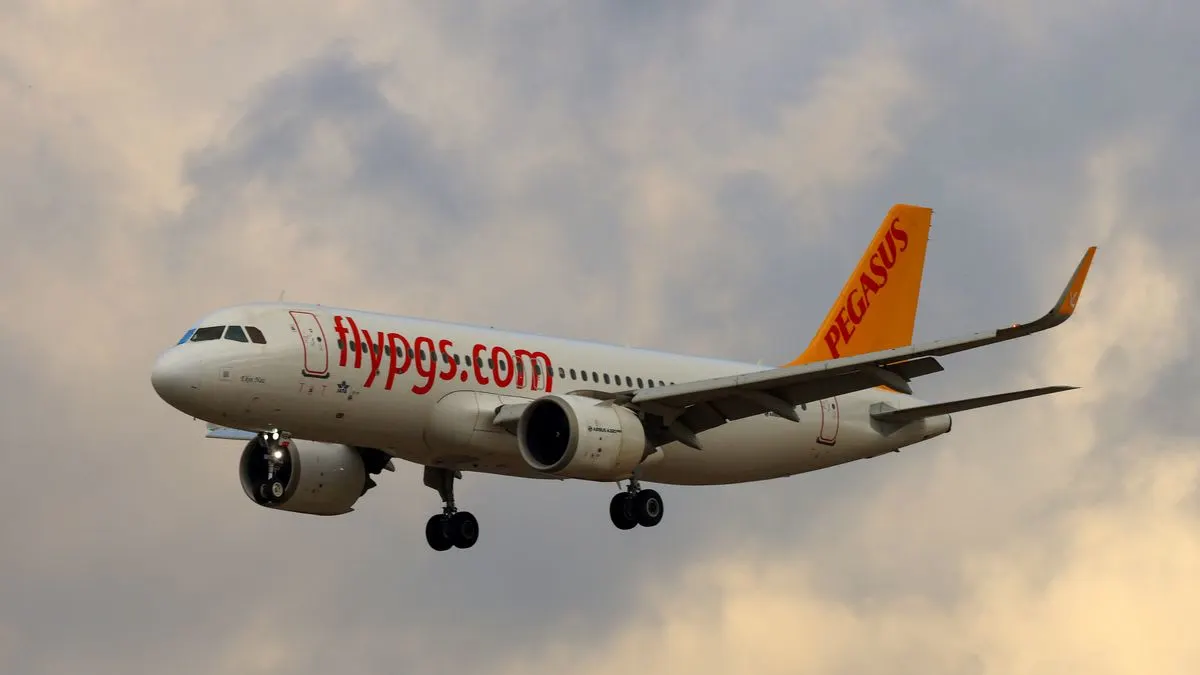
A Pegasus Airlines flight returned to Manchester Airport following a lightning strike; a separate Jet2 flight also diverted due to adverse weather.
Key Takeaways
- •Pegasus Airlines flight returned to Manchester after a lightning strike.
- •Jet2 flight LS219 diverted to Manchester 29 minutes after takeoff.
- •Aircraft require mandatory structural inspections following lightning strikes.
- •Passengers were issued £42 vouchers during the delay.
A Pegasus Airlines flight departing from Manchester Airport (MAN) was forced to return to the gate on Tuesday, June 9, 2026, following a mid-air lightning strike shortly after takeoff. The incident, which occurred as the aircraft climbed toward its cruising altitude, prompted the flight crew to execute a precautionary return to the airport. According to passenger Nassar Massalha, who was aboard the flight bound for Istanbul, the event was marked by a sound described as a 'massive explosion' and a bright flash on the aircraft's exterior.
Operational Impact and Passenger Response
The aircraft circled in a holding pattern for approximately 40 minutes before safely landing back at the airport. Following the landing, Pegasus Airlines initiated standard precautionary procedures, transferring passengers to a replacement aircraft. Passengers were provided with £42 vouchers to cover food and expenses during the delay, a measure consistent with the UK Civil Aviation Authority (CAA) Flight Delays and Cancellations Guidance. The airline confirmed that all crew and passengers remained unharmed throughout the event. This incident coincides with a broader period of convective weather in the region, which also forced a Jet2 flight—LS219—to divert to Manchester. The Boeing 737-800 (registration G-JZBF) had departed from Leeds Bradford Airport (LBA) before broadcasting a 7700 emergency squawk and diverting just 29 minutes into its flight.
Engineering and Regulatory Requirements
Under European Union Aviation Safety Agency (EASA) regulations, specifically AMM Chapter 05, any aircraft suspected of sustaining a lightning strike must undergo a mandatory conditional inspection. Maintenance crews are required to conduct a thorough visual and structural assessment of the aircraft's skin, radome, and static wicks before the frame can be released back into service. While modern commercial airliners are designed to act as Faraday cages—safely conducting electrical charges along the exterior skin and discharging them through static wicks—these inspections are critical to identifying potential micro-damage to avionics or flight control sensors.
Historical Context of Weather Disruptions
Lightning strikes are a routine occurrence in commercial aviation, with industry data suggesting an average of one strike per 1,000 flight hours. Historically, these events are safely managed; however, they occasionally necessitate diversions if flight control systems are impacted. In December 2014, the Loganair Flight 6780 lightning strike resulted in significant safety recommendations regarding autopilot disconnect systems. Conversely, the 2019 Aeroflot Flight 1492 incident serves as a stark reminder of the risks associated with mismanaged emergency returns, where a lightning strike was followed by a fatal hard landing. These precedents underscore why flight crews prioritize precautionary returns when weather conditions exceed standard operating envelopes.
What Comes Next: Maintenance and Rescheduling
Following the precautionary return, Pegasus Airlines scheduled a replacement flight for departure at approximately 11:00 PM on Tuesday. The grounded aircraft is currently undergoing the required engineering assessments, with a return to service expected between June 10 and June 11, 2026, pending successful certification by maintenance teams. For passengers, the disruption highlights the logistical complexities of managing summer seasonal weather patterns at busy hubs like Manchester.
Why This Matters for Airline Operations
For airlines, these events represent a recurring operational challenge involving unplanned landing fees, fuel burn during holding patterns, and the deployment of backup aircraft. While the impact on individual passengers is often limited to delays and voucher compensation, the cumulative effect on airport ground operations and air traffic control slots can be significant during peak summer months. The ability of airlines to effectively manage these 'extraordinary' weather events while maintaining passenger safety remains a fundamental metric of operational resilience.
Frequently Asked Questions
- What happens to an aircraft after a lightning strike?
- Under European Union Aviation Safety Agency regulations, the aircraft must undergo a mandatory conditional inspection of its skin, radome, and static wicks before it can be cleared for further service.
- Why did the Pegasus Airlines flight return to Manchester?
- The flight returned to Manchester Airport as a precautionary measure after the crew reported a lightning strike shortly after takeoff, which necessitated a safety inspection of the aircraft.
Stay ahead of the airline industry with commercial aviation news from omniflights.com. From aircraft production to supply chains, commercial aviation manufacturing news is covered at omniflights.com/manufacturing.
Written by Hardik Vishwakarma
Co-Founder & Aviation News Editor leading initiatives that improve trust and visibility across the global aviation industry. Covers airlines, airports, safety, and emerging technology.
Visit ProfileYou Might Also Like
Discover more aviation news based on similar topics
Ryanair Flight RK514 Diverts to Birmingham After Emergency
Ryanair flight RK514 diverted to Birmingham Airport on September 13, 2026, following a medical emergency involving a passenger.
Amazon Suspends 21 Air After Fatal Miami 767 Runway Overrun
Amazon has suspended operations with 21 Air following a fatal Boeing 767 runway overrun at Miami International Airport that resulted in five deaths.
FAA Proposes A220 Fuel Line Inspections for US Operators
The FAA issued a proposed directive requiring inspection of motive-flow fuel lines on 13 US-registered Airbus A220s to prevent potential leaks.
NATS Denies Military Jet Role in UK ATC Outage
The UK Ministry of Defence denied its aircraft caused a NATS outage that led to over 2,000 flight cancellations and calls for CEO resignation.
21 Air Miami Crash: NTSB Investigates 767 Runway Overrun
A fatal 21 Air Boeing 767 crash at Miami International Airport has triggered an NTSB investigation amid scrutiny of Amazon Air's contract oversight.

Amazon Cargo Plane Crash: 5 Remembered After MIA Excursion
Five cleaning crew members died after an Amazon-contracted Boeing 767 overran the runway at Miami International Airport at 158 knots.