NTSB Safety Recommendations Lag Amid 6 Monthly Near-Misses

Co-Founder & CTOCo-Founder & CTO driving the technology and data systems behind Omni Flights.
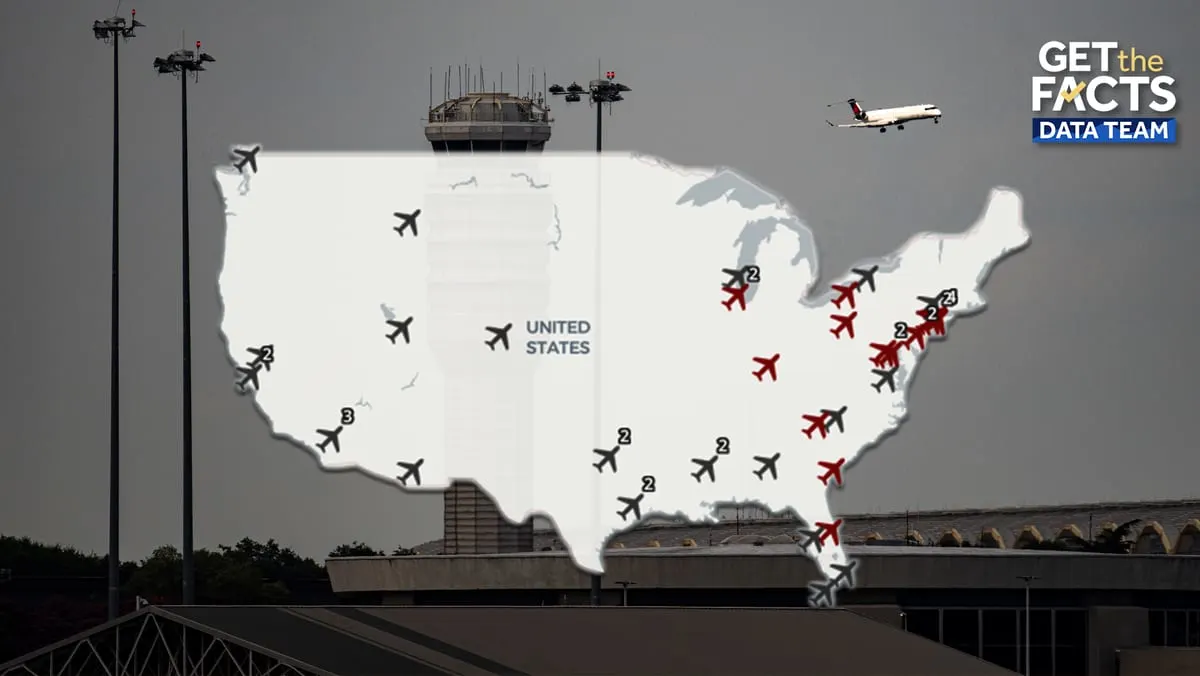
Approximately 6 near-miss incidents occur monthly at U.S. airports as 270 NTSB safety recommendations remain unaddressed by federal regulators.
Key Takeaways
- •Approximately 6 near-miss incidents occur monthly at U.S. airports.
- •270 NTSB safety recommendations remain unimplemented by the FAA.
- •51 safety recommendations from the January 2025 crash remain open.
- •FAA airspace design updates are expected between late 2026 and 2027.
Systemic Safety Delays in U.S. Airspace
Approximately 6 near-miss incidents are reported at U.S. airports each month, according to an analysis of voluntary data from the ASRS (Aviation Safety Reporting System). These findings arrive as the NTSB (National Transportation Safety Board) reports a significant backlog in safety improvements, with 270 recommendations currently awaiting formal adoption by the FAA (Federal Aviation Administration). The persistent gap between safety identification and regulatory implementation remains a critical point of concern for aviation stakeholders.
The January 2025 Midair Collision Legacy
The urgency of this safety backlog is underscored by the aftermath of a fatal January 2025 midair collision near DCA (Ronald Reagan Washington National Airport). The accident, which involved a commercial aircraft and a military helicopter, resulted in 67 fatalities. Following the investigation, the NTSB issued 52 specific safety recommendations to prevent recurrence. The official NTSB investigation report confirms that 51 of these critical safety improvements remain open, highlighting the slow pace of reform regarding airspace design and visual separation standards.
NTSB Chairwoman Jennifer Homendy has expressed public frustration with the current rate of progress. During the final board meeting for the investigation, Homendy noted that the conditions for the tragedy existed long before the accident, warning that the industry remains no closer to closing several identified safety gaps six months after the initial recommendations were issued.
Regulatory and Operational Friction
The FAA faces intense pressure to overhaul airspace management, particularly in the National Capital Region. However, the path to implementation is complicated by the intersection of civilian and military operations. According to perspectives from the Pentagon and the U.S. House of Representatives, there is concern that forcing military aircraft to adhere to the exact same civilian safety mandates and routing protocols could negatively impact national defense readiness and operational flexibility. This friction contributes to the broader aviation safety backlog, which historical data suggests can sometimes span decades.
Historical Precedents and Industry Trends
| Metric | Historical Context | Current Status |
|---|---|---|
| Rule Adoption Speed | 30+ years (USAir 427) | 4.5 years avg delay |
| Airspace Oversight | Post-1986 reforms (TCAS) | Systemic gaps reported |
Historically, events such as the 1994 crash of USAir Flight 427 resulted in safety mandates that took over 30 years to reach full implementation. Conversely, the 1986 collision of Aeroméxico Flight 498 successfully drove rapid, systemic adoption of technology like TCAS (Traffic Collision Avoidance System). The current environment, with 95 near-miss incidents reported between January 2025 and May 2026, reflects a trend of heightened scrutiny on runway incursions and terminal airspace congestion.
Future Regulatory Milestones
The FAA is expected to move toward implementing revised airspace design changes and updated visual separation rules for the DCA area between late 2026 and 2027. These regulatory policy shifts are intended to address the specific safety recommendations stemming from the January 2025 accident. The success of these measures depends on the FAA's ability to balance commercial safety mandates with civil-military airspace integration requirements.
Why This Matters for Aviation Safety
For commercial operators and regional carriers, the current regulatory environment means flight crews must continue to navigate congested terminal airspace with known structural safety gaps. The inability to close the NTSB recommendation backlog signals a broader challenge in aviation oversight: the difficulty of modernizing safety rules in an era of increasing flight volume and complex, multi-agency airspace usage. The resolution of these 270 open recommendations will be a primary indicator of the FAA's capacity to address systemic risks before they manifest as future incidents.
Frequently Asked Questions
- How many NTSB safety recommendations are currently waiting for implementation?
- There are currently 270 aviation safety recommendations issued by the NTSB that remain open and unimplemented by the FAA.
- What is the status of the recommendations from the January 2025 midair collision?
- Following the January 2025 midair collision near Washington, D.C., the NTSB issued 52 safety recommendations. Of those, 51 recommendations remain open and unaddressed.
Get breaking commercial aviation news and expert airline analysis at omniflights.com. Follow aviation sustainability efforts, emissions research, and green initiatives in the Environmental section at omniflights.com/environmental.
Written by Shashank Shukla
Co-Founder & CTO leading the engineering and AI systems behind Omni Flights. Covers aviation technology, flight safety, aircraft manufacturing, and emerging aerospace developments.
Visit ProfileYou Might Also Like
Discover more aviation news based on similar topics
NTSB Rejects FAA Safety Responses After 67-Fatality Crash
The NTSB labeled 11 FAA responses to 2025 DCA mid-air collision recommendations as unacceptable, citing the lack of a mandatory ADS-B In requirement.
EASA Orders Urgent Airbus A380 Wing Spar Inspections
The EASA ordered urgent inspections on 16 Airbus A380s after discovering wing spar cracks that could compromise structural integrity.
Ryanair Flight RK514 Diverts to Birmingham After Emergency
Ryanair flight RK514 diverted to Birmingham Airport on September 13, 2026, following a medical emergency involving a passenger.

Amazon Suspends 21 Air After Fatal Miami 767 Runway Overrun
Amazon has suspended operations with 21 Air following a fatal Boeing 767 runway overrun at Miami International Airport that resulted in five deaths.
FAA Proposes A220 Fuel Line Inspections for US Operators
The FAA issued a proposed directive requiring inspection of motive-flow fuel lines on 13 US-registered Airbus A220s to prevent potential leaks.
NATS Denies Military Jet Role in UK ATC Outage
The UK Ministry of Defence denied its aircraft caused a NATS outage that led to over 2,000 flight cancellations and calls for CEO resignation.