NTSB: Boeing Ignored 10 Bearing Flaws Before Fatal UPS Crash

Co-Founder & CEOAviation News Editor delivering trusted coverage across the global aviation industry.
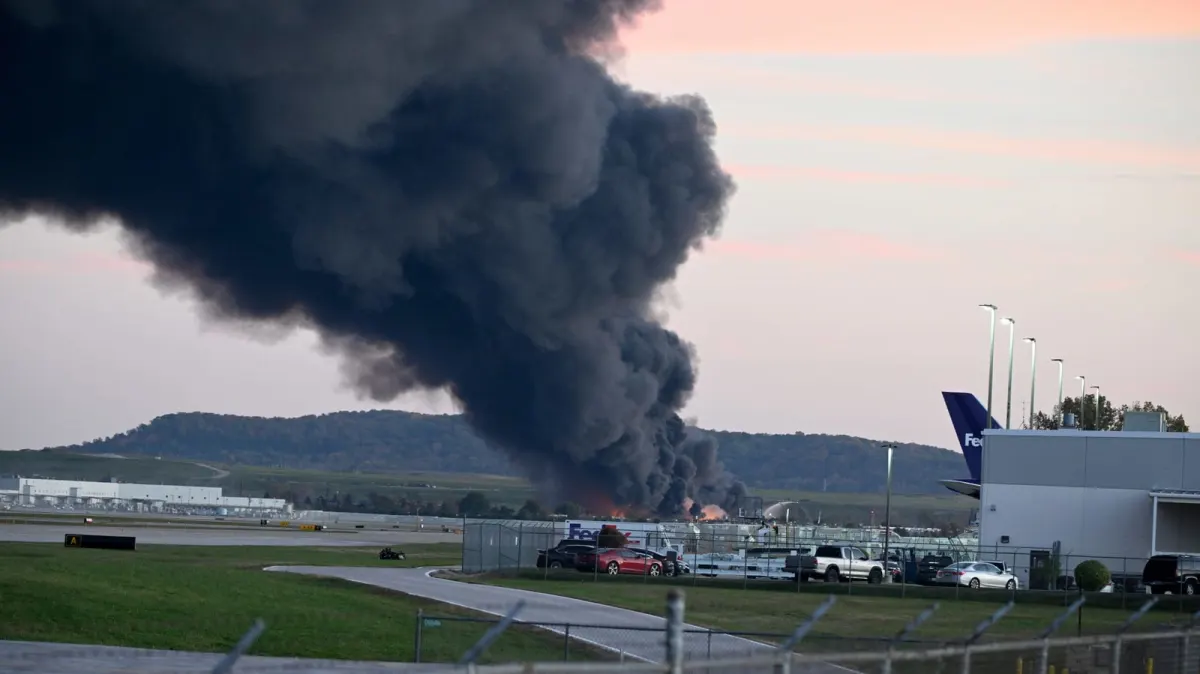
The NTSB investigation reveals Boeing recorded 10 prior engine pylon bearing failures before the fatal November 2025 crash of a UPS MD-11F in Kentucky.
Key Takeaways
- •NTSB hearing reveals 10 prior bearing failures went unreported to the FAA.
- •UPS retired its entire MD-11 fleet following the November 2025 crash.
- •FAA reduced pylon lug inspection intervals from 2,900 to 450 flight cycles.
- •Investigation examines if the failed bearing should have been a PSE.
The UPS Flight 2976 Investigation
The ongoing National Transportation Safety Board (NTSB) hearing into the crash of UPS Flight 2976 has revealed critical gaps in how structural component failures were managed prior to the November 4, 2025, disaster. The accident, which involved a McDonnell Douglas MD-11F, resulted in 15 fatalities—including three crew members and 12 individuals at a local auto parts recycling center—and left 23 others injured. The investigation is currently focusing on the aft pylon spherical bearing, which failed during takeoff, leading to the detachment of the left engine.
According to testimony presented during the NTSB hearing, Boeing records indicated 10 previous instances of aft pylon bearing failures on MD-11 aircraft between 2002 and 2022. Despite these occurrences, the manufacturer did not classify the component as a Principal Structural Element (PSE). This classification is vital under 14 CFR Part 25 Damage Tolerance Requirements, as it dictates the level of rigorous inspection and safety monitoring required for critical load-bearing parts.
Industry and Regulatory Impact
Following the crash, the Federal Aviation Administration (FAA) acted swiftly to address the systemic risk. On November 8, 2025, the agency issued Emergency Airworthiness Directive (AD) 2025-23-51, which grounded all US-registered Boeing MD-11 and MD-11F aircraft for immediate engine pylon inspections. This was followed on November 14, 2025, by Emergency AD 2025-23-53, expanding the mandate to include McDonnell Douglas DC-10 and MD-10 variants. The FAA also drastically reduced the mandatory inspection interval for engine pylon lugs from 2,900 flight cycles to 450 flight cycles to ensure continued safety.
For UPS Airlines, the crash prompted an immediate fleet strategy shift. During its Q4 2025 earnings call, the carrier announced the accelerated retirement of its remaining MD-11 fleet, opting instead to transition to 18 Boeing 767 freighters over a 15-month period. This move highlights a broader industry trend of phasing out aging tri-jet architectures in favor of more modern twin-engine platforms.
Technical Analysis
The investigation into the MD-11 engine mount failure reflects broader challenges within the Continued Operational Safety (COS) framework. FAA engineer Melanie Violette testified that had the agency recognized the potential for bearing failures to cause catastrophic damage to pylon lugs, the original safety certification would have been fundamentally different. Historically, similar structural failures have led to significant regulatory interventions. In 1979, the crash of American Airlines Flight 191 resulted in a month-long grounding of all DC-10s to address pylon maintenance procedures. Similarly, the 1992 crash of El Al Flight 1862 necessitated a mandatory redesign of engine fuse pins and pylon attachments on the Boeing 747.
MD-11F vs. Boeing 767-300F: Key Specifications
| Metric | McDonnell Douglas MD-11F | Boeing 767-300F |
|---|---|---|
| Engines | 3 (Tri-jet) | 2 (Twin-jet) |
| Max Payload | ~202,000 lbs | ~116,000 lbs |
| Engine Placement | Wing and tail mounted | Wing mounted only |
What Comes Next
The NTSB is expected to release its final accident report for UPS Flight 2976 by mid-to-late 2027. Meanwhile, the FAA is working toward a final rule for an Airworthiness Directive concerning MD-11 and DC-10 engine mounts, expected by late 2026. These milestones will likely solidify new standards for structural integrity monitoring across the legacy freighter fleet.
Why This Matters
This development signals a turning point in how regulators and OEMs categorize structural fatigue in older aircraft. For aviation professionals, the focus on the PSE classification underscores the necessity of proactive safety management systems over reactive maintenance bulletins. The case serves as a sober reminder of the catastrophic potential inherent in unaddressed component failure trends.
For more information on the regulatory response, see the FAA Airworthiness Directives Portal. Detailed investigative documents can be accessed via the NTSB Accident Docket Search, while corporate impacts are detailed on the UPS Investor Relations page.
Frequently Asked Questions
- What caused the UPS Flight 2976 crash in Louisville?
- The investigation focuses on the failure of an aft pylon spherical bearing, which caused the left engine of the MD-11F to detach during takeoff.
- Why did the FAA ground the MD-11 and DC-10 fleets?
- The FAA issued Emergency Airworthiness Directives to ground these fleets for immediate engine pylon inspections after discovering that prior bearing failures were not properly classified as critical structural elements.
Visit omniflights.com for the latest commercial aviation news and airline industry updates. For reporting on UAP sightings, investigations, and aviation-related encounters, see the UAPs section at omniflights.com/uaps.

Written by Hardik Vishwakarma
Co-Founder & Aviation News Editor leading initiatives that improve trust and visibility across the global aviation industry. Covers airlines, airports, safety, and emerging technology.
Visit ProfileYou Might Also Like
Discover more aviation news based on similar topics

Flydubai FZ1073: Co-pilot Used Axe in Hijacking Attempt
A co-pilot on Flydubai Flight FZ1073 attacked the captain with a crash axe, triggering an attempted hijacking investigation by the UAE authorities.

FlyDubai FZ1073 Co-Pilot Had Prior Extremism Concerns
FlyDubai flight FZ1073 co-pilot Hamam Al-Hammami, who attacked his captain with an ax, was previously barred from Oman Air for extremist views.
Flydubai FZ1073: Pilot Attempted Terrorist Act, UAE Says
Flydubai flight FZ1073 was targeted in an attempted terrorist act by co-pilot Hamam al-Hammami, who was subdued by the captain during the flight.
Flydubai FZ1073 Cockpit Attack: Inside the Terror Attempt
Flydubai flight FZ1073 diverted to Tabuk after co-pilot Hamam al-Hammami attacked Captain Smit Machchhar in a confirmed terrorist act.
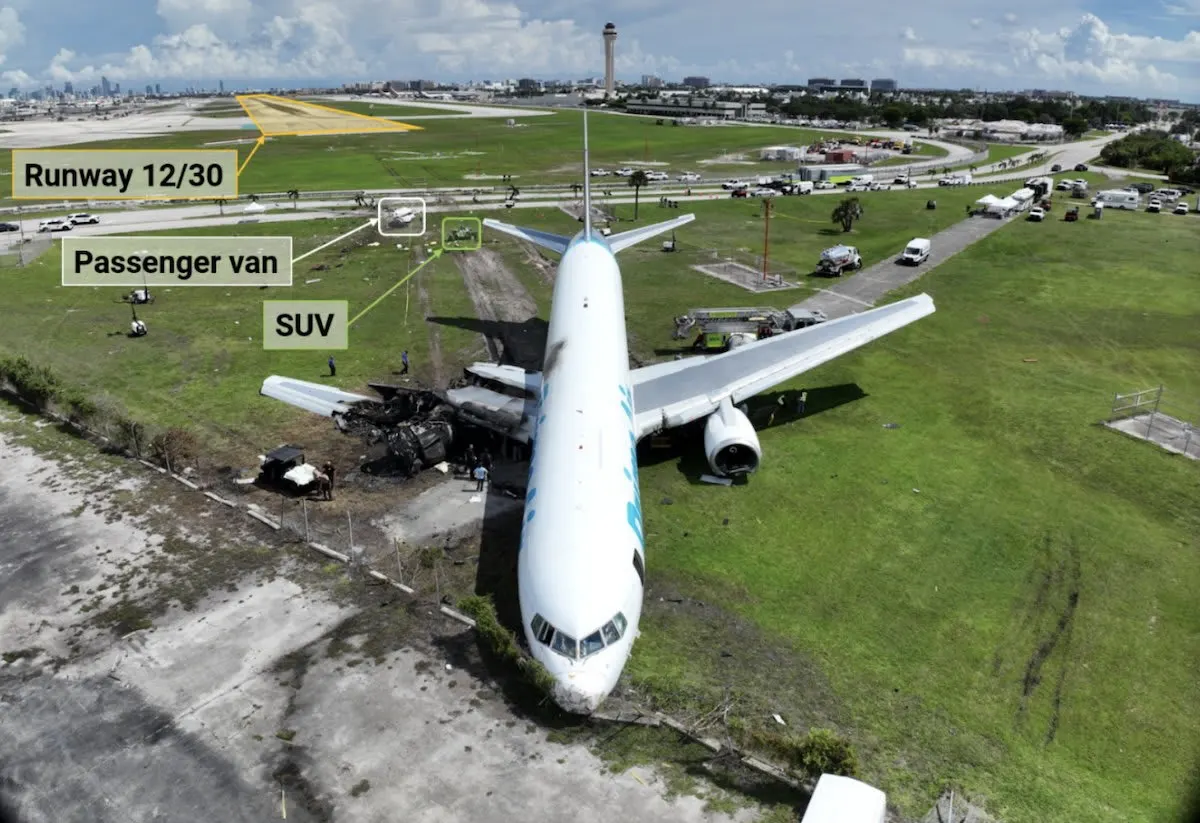
21 Air 767 Crash: NTSB Report Details Fatal MIA Overrun
The NTSB preliminary report on the 21 Air 767 crash at Miami International Airport confirms five ground fatalities following a late, high-speed landing.
Flydubai FZ1073 Hijacker Flagged as Security Risk by Oman
A Flydubai co-pilot accused of attempting to crash flight FZ1073 had been previously barred from flying in Oman due to extremist concerns.