Nigeria Moves Safety Bureau NSIB to Presidency for Independence

Co-Founder & CEOAviation News Editor delivering trusted coverage across the global aviation industry.
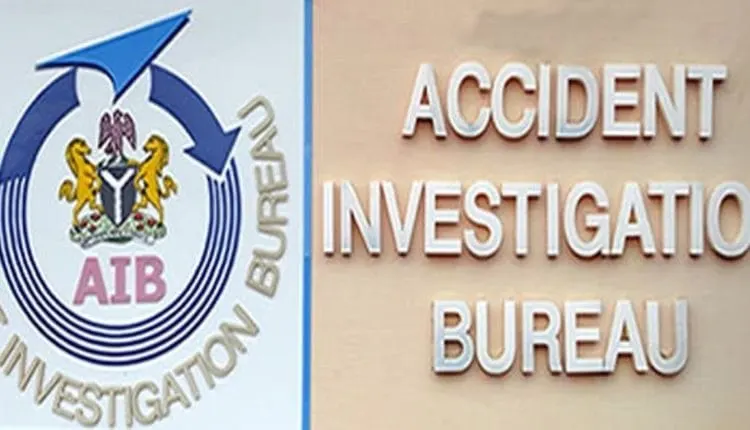
Nigeria's President Tinubu has moved the NSIB to the Presidency, enhancing its independence for multimodal accident investigations beyond just aviation.
Key Takeaways
- •Moves Nigeria's multimodal safety bureau directly under the Presidency for independence.
- •Aligns the NSIB with global standards like the US NTSB and UK AAIB.
- •Expands investigative authority beyond aviation to marine, rail, and road transport.
- •Directs the Attorney General to amend the NSIB Establishment Act 2022 to formalize the change.
In a significant regulatory overhaul, Nigerian President Bola Ahmed Tinubu has approved the repositioning of the Nigerian Safety Investigation Bureau (NSIB) to report directly to the Presidency. The move, aimed at ensuring operational independence and aligning with global best practices, removes the bureau from the supervision of the Ministry of Aviation and Aerospace Development. The presidential approval was signed on March 5, 2026, and transmitted for implementation on March 11, 2026, according to Nigerian State House correspondence.
This structural change addresses long-standing concerns about the NSIB's placement within the aviation ministry, which experts argued was illogical following its expanded mandate. The bureau's effectiveness was seen as being hindered by this structure, especially since its jurisdiction now covers marine, rail, and road transport in addition to aviation. The Office of the Attorney General of the Federation has been directed to amend the NSIB Establishment Act 2022 to formalize the new reporting line.
Background and Rationale
The NSIB was established in 2022, replacing the defunct Accident Investigation Bureau (AIB). This transition, codified in the NSIB Act 2022, broadened the agency's scope from a single mode (aviation) to a multimodal body responsible for investigating serious incidents and accidents across all major transport sectors. The AIB had previously operated under the Civil Aviation Act 2006. The fundamental objective of the NSIB, according to the bureau, is to improve transportation safety by determining accident causes and providing safety recommendations, not to apportion blame.
Discussions about relocating the agency began shortly after its multimodal mandate was established. During a July 2025 public hearing, the Ministry of Aviation opposed the move, with Permanent Secretary Dr. Abubakar Kana advocating for retaining the NSIB while strengthening its functional independence through legal frameworks. However, proponents of the bill, including representatives from the Office of the Secretary to the Government of the Federation (OSGF), argued that the Presidency offered a more suitable, centralized coordination structure for a multimodal agency. The core of the argument centered on the need for the bureau to operate with complete independence to ensure efficiency and professionalism.
Aligning with Global Standards
This restructuring brings Nigeria in line with an established international trend of creating independent, multimodal safety boards. By removing the NSIB from a specific transport ministry, the government aims to prevent potential conflicts of interest and ensure uniform investigative standards. This model is exemplified by globally recognized bodies such as the National Transportation Safety Board (NTSB) in the United States and the Air Accidents Investigation Branch (AAIB) in the United Kingdom.
The US NTSB operates as a fully autonomous agency reporting to Congress, a structure established by the Independent Safety Board Act of 1975 to ensure unbiased investigations separate from the Department of Transportation. Similarly, the AAIB functions with a high degree of independence. Adopting this structure is intended to enhance the credibility and efficiency of Nigeria's accident investigation processes. More details on the NSIB's mandate can be found on its official website, while the NTSB's structure serves as a key benchmark.
Industry Impact and Expert Commentary
The decision has been widely praised by transportation experts. The primary impact falls on the Federal Ministry of Aviation and Aerospace Development, which loses direct supervisory control. Conversely, the NSIB gains significant operational autonomy and a broader jurisdictional reach without an aviation-centric bias. Other sectors, including marine, rail, and road transport, are expected to benefit from dedicated investigative resources and the same level of independent scrutiny previously focused on aviation.
Professor Ibe Callistus, a transport management expert, described the decision as the best one for promoting transportation safety. "The bureau is now a multimodal investigation agency and it should be under the Presidency," he stated, emphasizing that the move enables the NSIB to investigate all transport modes effectively. Aviation analyst Capt. Samuel Caulcrick noted that the relocation is logical and could lead to better funding for the bureau. He suggested that being under the Presidency could provide access to Service-Wide Votes for emergencies, which are less constrained than regular ministerial budgets.
What Comes Next
With the presidential directive issued, the next critical step is the legal amendment of the NSIB Establishment Act 2022. The Office of the Attorney General of the Federation is tasked with drafting the proposed changes for submission to the National Assembly. This legislative process is expected to be completed by mid-to-late 2026. Experts have urged lawmakers to expedite the amendment to quickly implement the new structure and solidify the bureau's independence.
Operationally, the NSIB will need to establish corresponding desks for each transport sector to build expertise and manage investigations in the marine, rail, and road domains. Capt. Caulcrick noted that overlapping experiences from these sector desks would be a significant advantage for comprehensive accident investigations in the future.
Why This Matters
This regulatory shift represents a maturation of Nigeria's approach to transport safety governance. By prioritizing investigative independence over ministerial oversight, the government signals a strong commitment to preventing future accidents through impartial, root-cause analysis. The move not only enhances the NSIB's domestic credibility but also strengthens Nigeria's standing within the international aviation and transportation community by adopting proven safety structures.
From airline operations to fleet updates, commercial aviation news lives at omniflights.com. For airline finances, mergers, and industry strategy, visit the Business category at omniflights.com/business.
Written by Hardik Vishwakarma
Co-Founder & Aviation News Editor leading initiatives that improve trust and visibility across the global aviation industry. Covers airlines, airports, safety, and emerging technology.
Visit ProfileYou Might Also Like
Discover more aviation news based on similar topics

FAA Faces $3.5 Billion Shortfall in ATC Modernization
FAA Administrator Bryan Bedford reported a $3.5 billion shortfall for the Brand New Air Traffic Control System, totaling $16 billion for Phase One.
FAA Pauses Flights into LAX Due to Staffing Shortages
The FAA issued a temporary ground stop for flights bound for LAX on Monday morning due to staffing shortages at the Southern California TRACON.

FAA Proposes Ending Overland Supersonic Flight Ban
The FAA has proposed a new performance-based noise standard to replace the 1973 ban on overland supersonic flight, enabling future commercial travel.

DOT Rule Exempts Airlines From Cyberattack Delay Costs
Starting October 19, 2026, the DOT will allow airlines to withhold meal and hotel vouchers for delays caused by cyberattacks and nine other events.

Wizz Air, Ryanair Demand NATS Reform After ATC Failure
Wizz Air and Ryanair are calling for urgent NATS reform after a September 8 system failure caused over 1,000 flight cancellations across the UK.

US Treasury Iran Sanctions Target 27 Airlines, Mahan Air
The U.S. Treasury sanctioned 36 entities, including 27 Iranian airlines, to disrupt illicit procurement networks used by the Iranian government.