MC-21-310 Completes Fully Import-Substituted Flight

Co-Founder & CTOCo-Founder & CTO driving the technology and data systems behind Omni Flights.

The first import-substituted Yakovlev MC-21-310 completed a 1-hour, 23-minute maiden flight, marking a key step for Russian aviation.
Key Takeaways
- •Yakovlev MC-21-310 completes 1-hour, 23-minute maiden flight in Irkutsk.
- •Russian-made PD-14 engines successfully power the newly localized narrowbody.
- •Rosaviatsiya type certification is expected to conclude in 2027.
- •Aeroflot remains the launch customer for the import-substituted jet.
The first serial-produced, import-substituted MC-21 completed its historic MC-21 maiden flight on August 3, 2026, marking a pivotal milestone for the Russian aviation industry. The Yakovlev MC-21-310 (serial MC.0014, tail number 73362) took off from the Irkutsk Aviation Plant for a flight that lasted 1 hour and 23 minutes, demonstrating the viability of Russia's localized narrowbody program under intense international sanctions.
This successful test flight represents a critical step in Russia's strategy to bypass Western aerospace supply chains. By replacing foreign-made systems, including avionics and propulsion, with domestic alternatives, the program aims to secure the operational future of Russian commercial carriers. The flight's success directly impacts state-owned airlines that can no longer acquire or easily maintain European and American aircraft.
Flight Test Parameters and Fleet Scale-Up
According to flight data released by the United Aircraft Corporation (UAC), the parent company of Yakovlev, the aircraft reached an altitude of 6,000 meters (approximately 19,700 feet) and achieved an indicated airspeed of 600 km/h (324 knots) during the test. The aircraft was powered by Russian-made PD-14 (Perspektivny Dvigatel 14) high-bypass turbofan engines, which were developed by Aviadvigatel to replace Western powerplants.
The Irkutsk Aviation Plant is currently manufacturing an initial batch of 18 MC-21 (Magistralny Samolyot 21 veka) aircraft to support the ramp-up of domestic production. The Ministry of Industry and Trade of the Russian Federation has indicated that the MC-21 certification flight test program is currently about 50% complete.
For the launch customer, Aeroflot, the successful progression of this program is highly critical. The airline is heavily dependent on the MC-21-310 to modernize its aging narrowbody fleet, as international sanctions prevent the procurement of new Airbus or Boeing passenger jets. Meanwhile, Aviadvigatel faces the challenge of scaling up its domestic manufacturing capacity to meet its role as the exclusive engine supplier for the entire MC-21 production run. Conversely, Western aerospace suppliers, such as Pratt & Whitney, have permanently lost long-term supply contracts and aftermarket maintenance revenue for the program.
Despite the milestone, alternative perspectives exist. Western aviation analysts have expressed skepticism regarding Russia's ability to maintain a stable, high-volume production rate—initially targeted at 36 aircraft per year—without access to the mature global aerospace supply chain.
Precedents and Technical Comparisons
The push for localization follows a precedent set in August 2023, when a modified version of the Sukhoi Superjet 100 (SJ-100) completed its maiden flight utilizing domestically produced systems in place of imported parts. That event established the technical blueprint for the Russian aerospace sector's transition away from Western components.
To understand how the MC-21-310 positions itself in the global narrowbody market, it is useful to compare its baseline specifications with its primary Western competitor, the Airbus A320neo.
Yakovlev MC-21-310 vs. Airbus A320neo: Key Specifications
| Metric | Yakovlev MC-21-310 | Airbus A320neo |
|---|---|---|
| Passenger Capacity | 163-211 | 150-194 |
| Propulsion | Aviadvigatel PD-14 | CFM LEAP-1A / P&W PW1100G |
The Engineering Transition to Domestic Systems
The transition from Western systems to a fully localized supply chain represents a massive structural shift for Russian aerospace manufacturing. Historically, commercial aircraft development has relied on globalized tier-one suppliers to distribute development costs and ensure component reliability. By forcing a near 100% localization of the MC-21-310, the program must absorb these capital requirements domestically.
The integration of the PD-14 engine and Russian avionics into the MC.0014 airframe demonstrates that domestic engineering can replicate basic narrowbody performance. However, the long-term challenge lies in component life cycles and maintenance intervals. Without the support of established global supply networks, the domestic supply chain must prove it can manufacture high-precision components at scale while maintaining safety levels equivalent to international standards. This development accelerates the trajectory established by the 2023 Superjet testing, signaling a permanent decoupling of Russian commercial aviation from Western technology partners.
Certification and Delivery Timelines
The aircraft must now complete a rigorous flight-test campaign to satisfy regulatory requirements. Rosaviatsiya (Russian Federal Agency for Air Transport) is expected to oversee the completion of the Type Certification for Import-Substituted Variant by 2027.
According to the UAC, the following key milestones are projected for the program:
- Completion of MC-21-310 Type Certification: Expected in 2027 under the authority of Rosaviatsiya.
- First serial delivery to Aeroflot: Expected in 2027, allowing the state carrier to begin commercial operations with the type.
MC-21 Chief Designer Vitaly Naryshkin emphasized that the maiden flight served a dual purpose, stating that practicing key procedures of the final production stages and test flight station operations during the certification campaign will help reduce the time between certificate issuance and the beginning of serial deliveries.
Why Fleet Localization Matters
For Russian aviation, the MC-21-310 is not merely a new aircraft but a sovereign necessity to maintain domestic air connectivity. The success of this program will determine whether Russia can sustain a modern commercial fleet independent of foreign original equipment manufacturers. For global markets, it represents a complete structural decoupling, proving that geopolitical shifts can permanently reshape long-standing aerospace supply chains.
Frequently Asked Questions
- What is the significance of the MC-21-310 maiden flight?
- The flight marks the first time a serial-produced MC-21-310, built entirely with domestic components to replace sanctioned Western parts, has successfully flown.
- What engines power the import-substituted MC-21-310?
- The aircraft is powered by Russian-made Aviadvigatel PD-14 high-bypass turbofan engines, which replace the originally planned Pratt & Whitney PW1000G engines.
- When will the MC-21-310 enter commercial service?
- The aircraft is expected to complete its Rosaviatsiya type certification in 2027, with the first serial deliveries to launch customer Aeroflot scheduled for the same year.
Stay ahead of the airline industry with commercial aviation news from omniflights.com. Stay informed on aviation incidents, investigations, and best practices in the Safety category at omniflights.com/safety.
Written by Shashank Shukla
Co-Founder & CTO leading the engineering and AI systems behind Omni Flights. Covers aviation technology, flight safety, aircraft manufacturing, and emerging aerospace developments.
Visit ProfileYou Might Also Like
Discover more aviation news based on similar topics

Boeing 777X Testing Spills Into 2027 Amid Certification Hurdles
Boeing expects some 777X testing to extend into 2027, though the manufacturer maintains its target for the first delivery of the aircraft that year.

Airbus A350F Completes Ground Tests Before Maiden Flight
Airbus has finished initial ground tests for the A350F, with the freighter set for a late 2026 maiden flight and a 2027 entry into service.

Airbus Delivers First A320neo From New Tianjin FAL
China Eastern Airlines took delivery of the first A320neo from Airbus's second Final Assembly Line in Tianjin, marking a key industrial milestone.

Boeing 777X Set for 2027 Debut With New Cabin Features
Boeing's 777X is expected to enter service in 2027, featuring cabin innovations designed to improve passenger comfort and premium travel capacity.
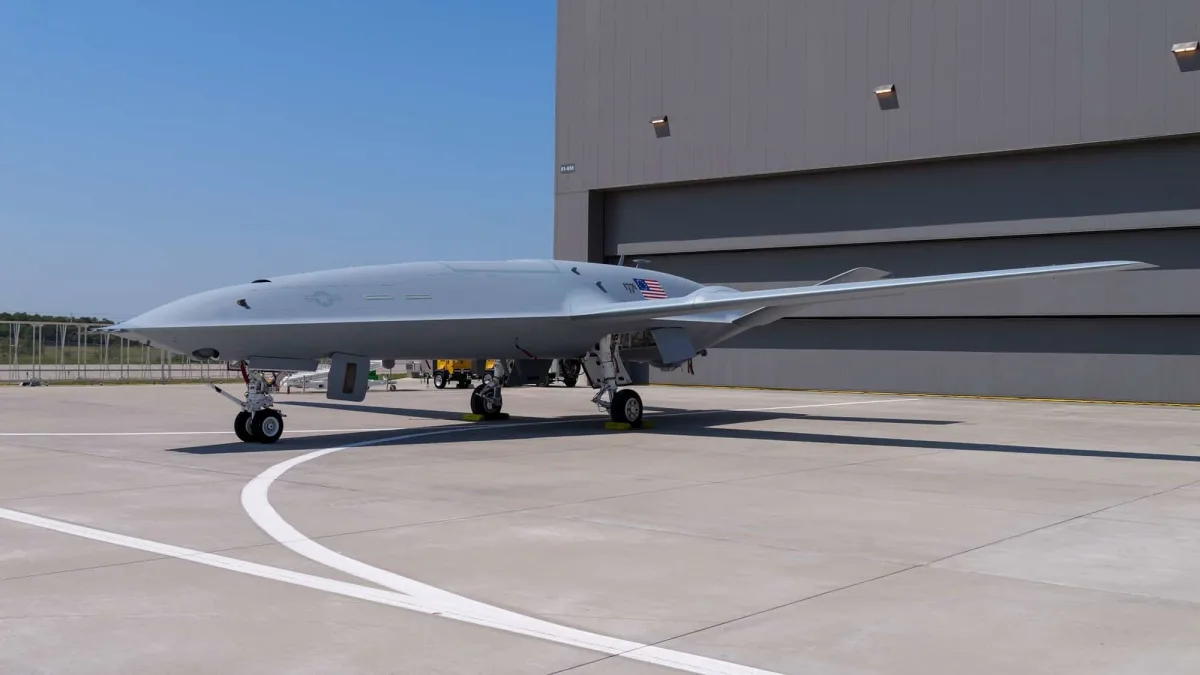
Boeing Awarded $562M Contract for MQ-25 Stingray Production
The U.S. Navy awarded Boeing a $562 million contract for the first three MQ-25 Stingray unmanned aerial refueling tankers, with deliveries expected in...

Boeing Logs 15 Gross Orders Including 13 787 Dreamliners
Boeing recorded 15 gross orders in August 2026, featuring 13 widebody 787 Dreamliner commitments from undisclosed customers.