KLM Tests e-SAF as ITA Joins Lufthansa-ANA Venture

Co-Founder & CEOAviation News Editor delivering trusted coverage across the global aviation industry.

KLM Cityhopper tested e-SAF synthetic kerosene on a Hamburg flight, while ITA Airways will join the Lufthansa-ANA Europe-Japan joint venture this autumn.
Key Takeaways
- •KLM Cityhopper tested a 5% e-SAF synthetic kerosene blend to Hamburg.
- •ITA Airways joins the Lufthansa-ANA Europe-Japan joint venture in Autumn 2026.
- •Synthetic e-SAF can reduce lifecycle CO2 emissions by up to 90%.
- •ReFuelEU mandates a 1.2% synthetic fuel blend for EU airports by 2030.
Advancing Synthetic Fuel Technology
KLM Cityhopper recently completed a commercial flight between Amsterdam and Hamburg utilizing a 5% blend of e-SAF synthetic kerosene (Electro-Sustainable Aviation Fuel). This flight, powered by fuel produced via INERATEC technology, serves as a technical validation for the aviation industry's decarbonization efforts. The fuel is manufactured through a Power-to-Liquid (PtL) process, which utilizes renewable electricity, water, and captured carbon dioxide to create a drop-in synthetic fuel. According to technical specifications, this process can reduce lifecycle CO2 emissions by up to 90% compared to conventional fossil kerosene.
Regulatory Landscape and Supply Constraints
The European Commission's ReFuelEU Aviation mandate requires a 6% overall sustainable aviation fuel blend by 2030, which includes a specific 1.2% sub-mandate for synthetic e-fuels. However, the industry faces significant hurdles in meeting these targets. While the flight demonstrates technical feasibility, current global production remains limited. Market analysts have noted that synthetic fuel currently costs approximately eight times more than fossil-based kerosene, raising concerns regarding the commercial viability of the 2030 mandate without further production scaling.
ITA Airways Joins Lufthansa-ANA Joint Venture
In a parallel development, the Lufthansa Group confirmed that ITA Airways will integrate into its existing Europe-Japan joint venture with All Nippon Airways (ANA) starting in Autumn 2026. This move follows the established blueprint used by the group to integrate subsidiary airlines, such as SWISS and Austrian Airlines, into its immunized network. By folding ITA Airways’ Rome-Tokyo capacity into the partnership, the carriers aim to optimize route networks and increase connectivity for passengers, creating significant competitive pressure for rival alliances operating on the route.
Technical Comparison: Aviation Fuel Economics
| Metric | e-SAF (Synthetic) | Conventional Fossil Kerosene |
|---|---|---|
| Lifecycle CO2 Reduction | Up to 90% | Baseline |
| Estimated Cost Multiplier | ~8x fossil equivalent | 1x |
Historical Context and Industry Trajectory
This development follows a 2021 milestone where KLM operated the world's first passenger flight using synthetic kerosene from Amsterdam to Madrid. While that initial test proved the concept, it utilized only 500 liters of fuel. The 2026 Hamburg flight represents a necessary evolution in testing, yet it underscores the persistent gap between technical success and mass-market availability. The industry remains in a precarious transition period where regulatory mandates like ReFuelEU are driving demand faster than current production capacity can accommodate. The integration of ITA Airways into the Lufthansa-ANA venture further signals a broader trend of European network consolidation, where carriers leverage immunized joint ventures to secure market share against global competitors.
ITA Airways Integration Timeline
- Autumn 2026: ITA Airways officially joins the Lufthansa-ANA Europe-Japan joint venture.
- 2030: The ReFuelEU Aviation 1.2% synthetic aviation fuel blending mandate takes effect.
Why This Matters for European Aviation
For European regulators and airline executives, these events highlight the dual challenges of operational decarbonization and market consolidation. The successful e-SAF flight provides a roadmap for meeting future mandates, though the cost disparity remains a structural barrier for carriers. Simultaneously, the inclusion of ITA Airways in the Lufthansa-ANA partnership signifies the continued importance of immunized joint ventures in optimizing long-haul capacity, particularly for trans-continental routes that remain critical to airline profitability.
Frequently Asked Questions
- What is e-SAF synthetic kerosene?
- Electro-sustainable aviation fuel, or e-SAF, is a synthetic, drop-in aviation fuel produced using power-to-liquid technology. It combines renewable electricity, water, and captured carbon dioxide to create a fuel that can reduce lifecycle CO2 emissions by up to 90% compared to fossil kerosene.
- When will ITA Airways join the Lufthansa-ANA joint venture?
- ITA Airways is scheduled to officially join the existing Europe-Japan joint venture between the Lufthansa Group and All Nippon Airways in Autumn 2026.
omniflights.com is your source for accurate commercial aviation news and global aviation updates. For reporting on UAP sightings, investigations, and aviation-related encounters, see the UAPs section at omniflights.com/uaps.
Written by Hardik Vishwakarma
Co-Founder & Aviation News Editor leading initiatives that improve trust and visibility across the global aviation industry. Covers airlines, airports, safety, and emerging technology.
Visit ProfileYou Might Also Like
Discover more aviation news based on similar topics
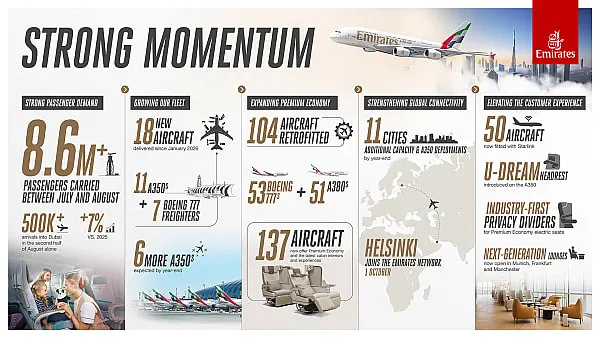
Emirates Winter Booking Momentum Grows Amid Fleet Expansion
Emirates carried 8.6 million passengers this summer and enters winter with strong demand as it accelerates fleet retrofits and network growth.

Air Arabia Consortium Gains AOC for New Dammam Budget Airline
A Saudi GACA-led consortium including Air Arabia has secured an AOC to launch a new budget airline based at Dammam's King Fahd International Airport.
Turkish Airlines Exits Luanda as Angola Hub Struggles
Turkish Airlines dropped its Luanda route as Angola's new airport struggles to attract traffic, handling only 756,028 passengers in 2025.

Red Sea Airlines Leases Two 737 MAX 8s for 2027 Expansion
Red Sea Airlines signed a lease for two Boeing 737 MAX 8 aircraft from SMBC Aviation Capital, arriving in 2027 to support its 14-aircraft fleet goal.
Avelo CEO Warns Airfares May Rise on Jet Fuel Price Spikes
Avelo Airlines CEO Andrew Levy warns that rising fuel costs may force fare increases as global jet fuel prices reach $171.01 per barrel.
IndiGo, Air India Battle for Mumbai-Delhi Route Dominance
IndiGo and the Air India group are competing for dominance on the Mumbai-Delhi air route, which saw 13.9 percent capacity growth this September.