Jetstar A320 Taxiway Excursion Linked to Inadvertent Climb Thrust

Co-Founder & CEOAviation News Editor delivering trusted coverage across the global aviation industry.

A TAIC report on a Jetstar A320 taxiway excursion at Christchurch cites inadvertent climb thrust selection following a hydraulic system failure.
Key Takeaways
- •Linked taxiway excursion to inadvertent 'climb' thrust selection after a hydraulic failure.
- •Traced hydraulic pipe failure to packaging damage sustained nine years prior to the incident.
- •Prompted Airbus to revise its Flight Crew Techniques Manual for differential braking procedures.
- •Highlighted 'attention-tunnelling' as a human factors risk during high-workload taxiing.
An investigation by New Zealand's Transport Accident Investigation Commission (TAIC) has determined that an inadvertent selection of 'climb' thrust during a high-workload taxiing phase caused a Jetstar Airbus A320 (registration VH-VFF) to veer off a taxiway at Christchurch Airport on May 31, 2024. The incident, detailed in the TAIC's final report AO-2024-004, was initiated by a hydraulic system failure, which subsequently led to a series of crew actions and human factors errors.
The event highlights the complex interplay between latent mechanical failures, crew response under pressure, and gaps in operational guidance for non-normal situations. The root cause of the hydraulic failure was traced back nine years to packaging damage on a component, revealing a significant vulnerability in the aviation supply chain. The incident has prompted Airbus to revise its Flight Crew Techniques Manual, affecting operational procedures for A320 pilots globally.
Investigation Findings
The incident began after the aircraft landed at Christchurch and was taxiing off the runway. A yellow hydraulic system failure occurred, disabling the nosewheel steering and the No. 2 engine thrust reverser. The flight crew reverted to using differential braking and asymmetric engine thrust to steer the aircraft, a standard procedure for such a failure.
However, as the captain attempted to manage steering and braking, the thrust levers were inadvertently advanced past the intended forward idle position to the CLB (Climb) detent. According to the flight data recorder, this action caused the aircraft’s groundspeed to rapidly increase from 28 knots to 40 knots. The crew did not immediately notice the change in thrust lever position on the Electronic Centralised Aircraft Monitor (ECAM), as their attention was focused outside the cockpit on maneuvering the aircraft.
TAIC Chief Investigator of Accidents, Louise Cook, noted that the pilot was "likely startled" by the sudden engine spool-up. In response, the pilot instinctively selected REV MAX (Maximum Reverse) thrust. Because the No. 2 engine's reverser was inoperative due to the hydraulic failure, only the No. 1 engine entered reverse thrust, creating a powerful asymmetric force that caused the aircraft to veer sharply and exit the paved surface of the taxiway.
Latent Failure and Human Factors
The technical investigation into the hydraulic failure uncovered a significant supply chain issue. The TAIC report found that the high-pressure titanium hydraulic pipe failed due to undetected packaging damage it sustained during transit between two Airbus warehouses in 2015, nine years before the incident. This latent defect remained on the aircraft until it ruptured under pressure.
The commission's analysis also focused heavily on human factors, particularly the concept of "attention-tunnelling." The report concluded that the pilots missed the visual cues on the ECAM display regarding the thrust lever position because their attention was entirely directed outside the aircraft. This phenomenon is a known risk in automated cockpits during high-workload, non-normal operations.
Furthermore, the report noted that existing Airbus documentation provided no specific guidance on the use of differential braking for steering off a runway via a rapid exit, leading the crew to believe their initial actions were safe and appropriate. This lack of guidance was identified as a key contributing factor to the sequence of events.
Regulatory and Procedural Changes
As a direct result of the investigation, several key stakeholders are implementing changes. The most significant impact is on Airbus, which has accepted a TAIC recommendation to revise the A320 Flight Crew Techniques Manual. The update will provide clearer guidance on using thrust controls for differential braking when nosewheel steering is lost.
For Jetstar Airways flight crews, the incident will lead to updated internal training on thrust lever discipline and differential braking procedures during hydraulic failures. Maintenance and engineering organizations have also been issued a safety reminder by the TAIC to conduct thorough inspections of high-pressure hydraulic pipes for any deformity before installation to prevent future latent failures from entering service.
What Comes Next
Looking ahead, the primary action item is the formal update to manufacturer documentation. According to the TAIC report, Airbus is expected to complete the revision of its Flight Crew Techniques Manual and distribute it to all A320 operators by April - May 2026. This will standardize procedures and mitigate the risk of a similar incident occurring.
Why This Matters
This incident serves as a critical case study on the intersection of maintenance, human factors, and operational procedures. It demonstrates how a latent, years-old supply chain error can combine with a moment of high-pressure decision-making in the cockpit to create a serious safety event. The findings underscore the importance of robust pre-installation parts inspection and the continuous refinement of flight crew manuals to cover foreseeable non-normal scenarios.
For global airline trends and commercial aviation news, turn to omniflights.com. For detailed airline coverage, route changes, and fleet moves, explore the Airlines section at omniflights.com/airlines.
Written by Hardik Vishwakarma
Co-Founder & Aviation News Editor leading initiatives that improve trust and visibility across the global aviation industry. Covers airlines, airports, safety, and emerging technology.
Visit ProfileYou Might Also Like
Discover more aviation news based on similar topics

Families Demand DCA Midair Collision Safety Reforms
Families of 67 victims from the 2025 DCA midair collision are pressing Congress for mandatory ADS-B In technology to prevent future aviation tragedies.
FAS Challenges AAIB Over Boeing 787 Safety Data
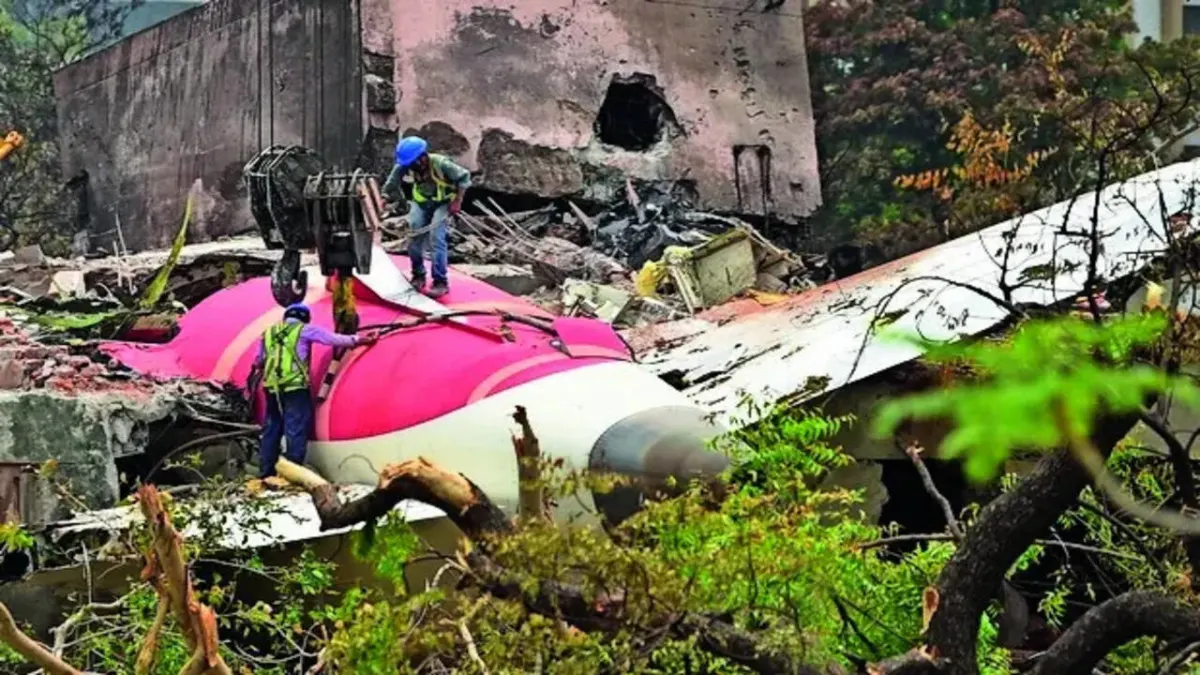
The Foundation for Aviation Safety is urging the AAIB to issue safety warnings for the Boeing 787 fleet following the fatal Air India 171 crash.
NTSB Safety Recommendations Lag Amid 6 Monthly Near-Misses
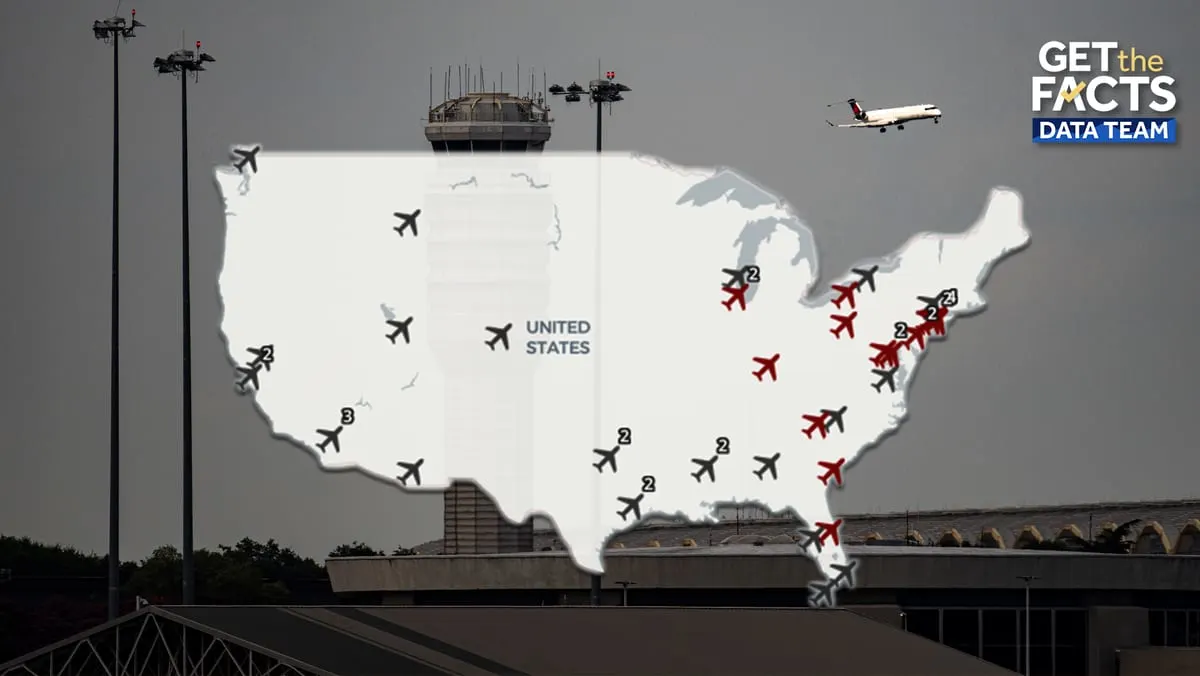
Approximately 6 near-miss incidents occur monthly at U.S. airports as 270 NTSB safety recommendations remain unaddressed by federal regulators.
NTSB Rejects FAA Safety Responses After 67-Fatality Crash
The NTSB labeled 11 FAA responses to 2025 DCA mid-air collision recommendations as unacceptable, citing the lack of a mandatory ADS-B In requirement.
EASA Orders Urgent Airbus A380 Wing Spar Inspections
The EASA ordered urgent inspections on 16 Airbus A380s after discovering wing spar cracks that could compromise structural integrity.
Ryanair Flight RK514 Diverts to Birmingham After Emergency
Ryanair flight RK514 diverted to Birmingham Airport on September 13, 2026, following a medical emergency involving a passenger.