Israel Closes Airspace; Gulf Carriers Maintain Operations Via Corridors

Co-Founder & CEOAviation News Editor delivering trusted coverage across the global aviation industry.
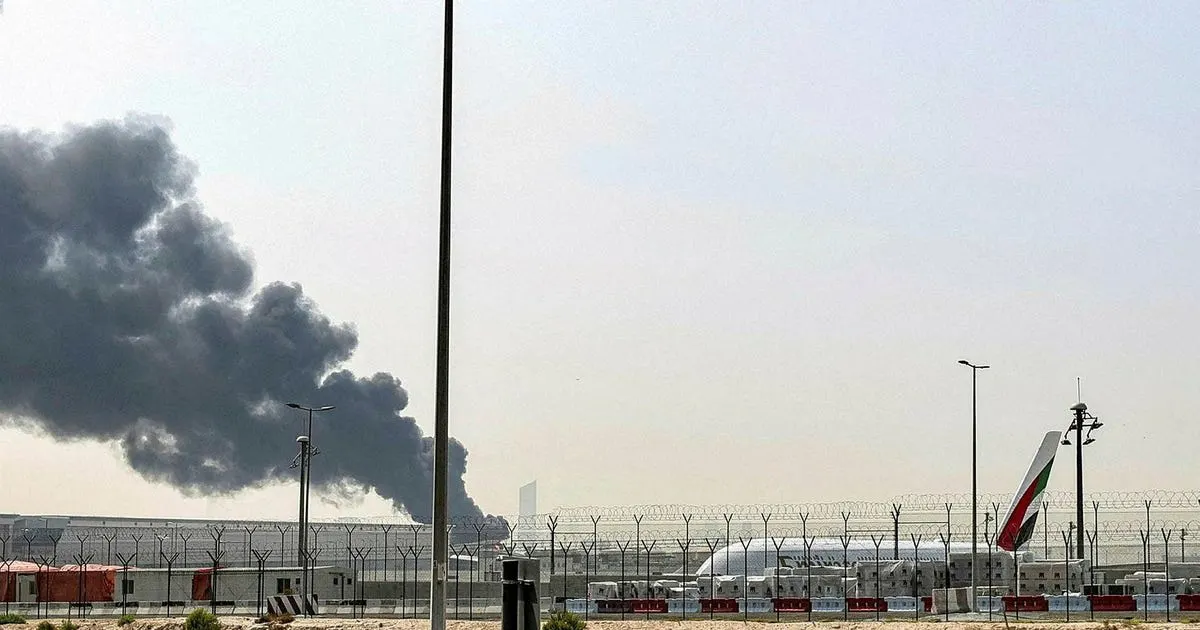
Israel has closed its Tel Aviv FIR to most traffic, while Gulf carriers continue operations using restricted corridors despite EASA conflict zone warnings.
Key Takeaways
- •Closes Tel Aviv FIR (LLLL) to all but Prior Permission Required (PPR) flights.
- •Contrasts EASA's region-wide avoidance warning with Gulf carriers' use of restricted corridors.
- •Reroutes Europe-Asia traffic north via the Caucasus or south via Egypt, increasing flight times and costs.
- •Highlights divergent risk management despite over 80% of regional threats targeting Gulf states.
Amid significant regional escalations, Israeli aviation authorities have effectively closed the nation's primary airspace, a stark contrast to the continued, albeit restricted, operations at major Gulf hubs. The Israeli Civil Aviation Authority has implemented a NOTAM closing the Tel Aviv (LLLL) Flight Information Region (FIR) to all air traffic except for flights with Prior Permission Required (PPR). This move suspends most international carrier services to Tel Aviv Ben Gurion International Airport (TLV).
This decision highlights a major divergence in regional airspace management strategies. While Israel has opted for a near-complete closure, carriers in the United Arab Emirates and Qatar, such as Emirates and Qatar Airways, maintain connectivity. They operate through tightly controlled corridors despite facing the majority of regional threats. According to a March 2026 analysis by Asharq Al-Awsat, more than 80 percent of missiles and drones have been directed at Gulf states, with approximately 2,200 projectiles aimed at the UAE compared to nearly 1,000 toward Israel in the same period.
Regulatory Divergence and Risk Assessment
The fundamental split in operational philosophy is underscored by conflicting regulatory guidance. The European Union Aviation Safety Agency (EASA) issued Conflict Zone Information Bulletin (CZIB) 2026-03-R5, which advises operators to avoid the airspace of the entire region, including Bahrain, Iran, Iraq, Israel, Jordan, Kuwait, Lebanon, Qatar, the UAE, Oman, and Saudi Arabia. Most European and Asian carriers have adhered to this guidance, ceasing or rerouting flights.
In contrast, Gulf civil aviation authorities maintain that their risk mitigation strategies are sufficient. They employ active flow management and structured routing corridors, such as the LUDID waypoint for UAE entry, to keep their hubs at Dubai (DXB) and Doha (DOH) operational. This localized approach argues that a blanket avoidance advisory from EASA does not account for specific, real-time safety measures that can be implemented locally. The current status of the Israeli airspace closure can be monitored via resources tracking the LLLL FIR and relevant EASA CZIBs.
Industry Impact and Rerouting
The airspace closures and restrictions have led to sustained airspace compression, significantly impacting long-haul routes. Traffic between Europe and Asia is now largely forced onto two main alternative paths: a northern route via the Caucasus and Afghanistan or a southern route through Egyptian and Saudi Arabian airspace. This rerouting directly affects stakeholder groups across the industry.
- European and Asian Carriers: Face significantly higher operational costs due to increased fuel burn, longer flight times, and extended crew duty periods.
- El Al Israel Airlines: Now operates as the primary air bridge for Israel, flying under the strict PPR constraints at TLV while most foreign competitors have suspended service.
- Passengers: Experience longer journeys, potential for delays, and increased ticket prices as airlines pass on the higher operational costs.
Historical Precedents Inform Current Caution
The aviation industry's current cautiousness is informed by catastrophic historical events. The July 2014 downing of Malaysia Airlines Flight 17 (MH17) over eastern Ukraine was the catalyst for the creation of EASA's CZIB system, designed to prevent a recurrence by sharing conflict zone intelligence. More recently, the January 2020 shootdown of Ukraine International Airlines Flight 752 over Tehran by Iranian air defense systems highlighted the deadly risk of misidentification in a tense military environment. These precedents form the basis for EASA's conservative guidance, prioritizing the avoidance of any airspace where advanced air defense systems are active.
What Comes Next
The next key date for the industry is April 10, 2026, when EASA is scheduled to review or renew CZIB 2026-03-R5. The agency's decision will signal whether the widespread airspace avoidance advisories will remain in place, continue to disrupt global traffic flows, or be modified to reflect the more nuanced, corridor-based approach demonstrated by Gulf states. Until then, airlines must continue to navigate the complex and costly rerouting environment.
Why This Matters
This situation represents a critical test of global versus local airspace risk management. It pits a centralized, precautionary safety advisory from a major global regulator against the operational resilience of powerful hub carriers managing risk on a local level. The outcome will have lasting implications for how the industry assesses and responds to conflict zones, impacting airline network planning, operational costs, and international passenger flow for the foreseeable future.
Frequently Asked Questions
- Why is Ben Gurion Airport closed to most flights?
- Israel's Civil Aviation Authority has closed the Tel Aviv Flight Information Region (FIR) to all flights except those with Prior Permission Required (PPR). This measure was taken in response to regional conflict escalations and is enforced via an official Notice to Air Missions (NOTAM).
- How are airlines like Emirates and Qatar Airways still flying over the Middle East?
- Despite a European Union Aviation Safety Agency (EASA) bulletin advising against it, Gulf carriers are using tightly controlled, pre-defined flight corridors to maintain operations. These routes are actively managed to mitigate risks, showcasing a different approach to airspace management than a full closure.
- What is an EASA Conflict Zone Information Bulletin (CZIB)?
- A CZIB is a warning issued by the European Union Aviation Safety Agency to airlines, advising them of high risks to civil aviation over certain airspaces due to conflict. While it is not a mandatory ban, most airlines adhere to this guidance to ensure passenger and crew safety.
Get breaking commercial aviation news and expert airline analysis at omniflights.com. Stay informed on aviation incidents, investigations, and best practices in the Safety category at omniflights.com/safety.

Written by Hardik Vishwakarma
Co-Founder & Aviation News Editor leading initiatives that improve trust and visibility across the global aviation industry. Covers airlines, airports, safety, and emerging technology.
Visit ProfileYou Might Also Like
Discover more aviation news based on similar topics

FAA Clears Boeing 737 MAX 10 Software Glitch
The FAA determined a software glitch in 737 MAX flight computers poses no safety risk, clearing a path for MAX 10 certification by late 2026.

FAA Faces $3.5 Billion Shortfall in ATC Modernization
FAA Administrator Bryan Bedford reported a $3.5 billion shortfall for the Brand New Air Traffic Control System, totaling $16 billion for Phase One.

FAA Pauses Flights into LAX Due to Staffing Shortages
The FAA issued a temporary ground stop for flights bound for LAX on Monday morning due to staffing shortages at the Southern California TRACON.

FAA Proposes Ending Overland Supersonic Flight Ban
The FAA has proposed a new performance-based noise standard to replace the 1973 ban on overland supersonic flight, enabling future commercial travel.

DOT Rule Exempts Airlines From Cyberattack Delay Costs
Starting October 19, 2026, the DOT will allow airlines to withhold meal and hotel vouchers for delays caused by cyberattacks and nine other events.

Wizz Air, Ryanair Demand NATS Reform After ATC Failure
Wizz Air and Ryanair are calling for urgent NATS reform after a September 8 system failure caused over 1,000 flight cancellations across the UK.