Gulf Air, Qatar Airways Halt Flights Amid Mideast Airspace Closures

Co-Founder & CEOAviation News Editor delivering trusted coverage across the global aviation industry.
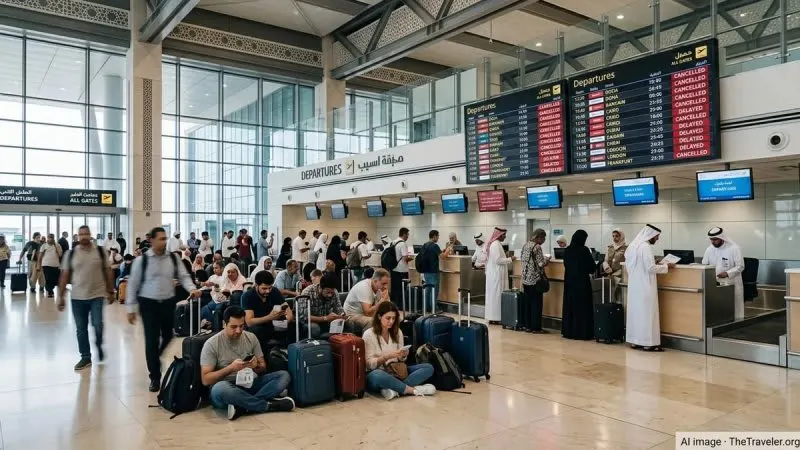
Gulf Air and Qatar Airways suspended flights amid Mideast airspace closures, causing widespread travel disruption and diverting traffic through Muscat.
Key Takeaways
- •Suspended most scheduled operations from Bahrain after the country's airspace was closed, effectively grounding the Gulf Air fleet.
- •Restricted flight schedules to limited repatriation and 'safe corridor' services, severely impacting Qatar Airways' global network.
- •Diverted significant air traffic to Muscat International Airport, causing operational strain and extended passenger delays.
- •Stranded thousands of passengers with cancelled itineraries, long rebooking queues, and sharply rising fares on alternative carriers.
Widespread airspace closures across the Middle East in March 2026 have forced Gulf Air and Qatar Airways to suspend or severely curtail operations, leading to extensive flight cancellations and regional travel disruption. According to official airline advisories, the grounding of Gulf Air's fleet follows the closure of Bahrain's airspace, while Qatar Airways is operating a limited schedule of repatriation services. The turmoil has placed significant operational pressure on Oman's Muscat International Airport (MCT), which is now functioning as a key diversion hub for the region.
The instability has created a complex and fluid situation for passengers, with thousands facing fragmented itineraries, long delays, and a scarcity of alternative travel options. The disruption highlights the vulnerability of the Gulf's interconnected aviation network to geopolitical events, placing a spotlight on the critical role of secondary hubs in maintaining regional connectivity during a crisis.
Regional Turmoil Spills Into Muscat
Operational bulletins describe Muscat as a primary regional exit and diversion point during the recent airspace shutdowns. This has placed extra pressure on the airport's ground handling, immigration, and baggage services, which have been operating near capacity. Over a single weekend, three flights operated by Gulf Air and Qatar Airways serving Muscat were cancelled, according to live schedule data. A broader pattern of extended delays, some exceeding three hours, has emerged as carriers reroute flights and reassign crews. This pattern in Muscat reflects a wider reduction in flight frequencies across the Gulf, with airlines prioritizing limited corridors for essential services, making lower-yield routes more susceptible to cancellation.
Gulf Air Grounds Fleet
The decision by Bahrain Civil Aviation Affairs (BCAA) to close the country's airspace has been a central factor in the disruption. According to a Gulf Air Official Travel Advisory, the Bahraini carrier suspended most scheduled operations in early March. This has effectively taken its primary hub at Bahrain International Airport (BAH) offline for regular commercial traffic. The grounding has immediate consequences for Muscat, which is historically connected to Bahrain by multiple weekly services. Travelers departing MCT have lost a common one-stop option to destinations in Europe, the Levant, and Asia. Stranded passengers with fragmented itineraries face repeated rebookings and uncertainty about when a stable schedule will resume.
Qatar Airways Restricts Operations
Similarly, Qatar Airways' operations have been heavily constrained following the closure and subsequent partial reopening of Qatari airspace. A statement from the airline confirmed it is operating a limited schedule of repatriation and "safe corridor" services, focusing on major capitals like London and Paris from its hub at Hamad International Airport (DOH). This has had a direct impact on passengers traveling through Muscat. Connections to Cairo and other North African destinations have been particularly affected, with flight-tracking data showing multiple cancellations on the Doha-Cairo route. For Muscat-based travelers, the loss of reliable one-stop itineraries via Doha has significantly narrowed travel options.
Passengers Face Long Delays and Rising Fares
The operational turmoil translates into long waits, uncertainty, and increased costs for travelers. For passengers of Gulf Air and Qatar Airways, the impact has been severe, with reports of cancelled itineraries, long queues at ticketing offices, and overloaded call centers. The stakeholder impact extends to Oman Airports Management Company (OAMC), which is managing the operational strain at Muscat. Tight capacity on alternative airlines, such as European and Indian carriers, has pushed fares sharply higher on remaining routes, making last-minute rebooking an expensive proposition for many. Some passengers have opted to purchase fully refundable backup tickets on other carriers while awaiting clarity from their original airline.
Context: A Pattern of Regional Volatility
This event is not without precedent. In June 2017, the Qatar Diplomatic Crisis resulted in a multi-year ban on Qatar Airways from the airspace of several neighboring countries, forcing costly and inefficient rerouting—a pattern that highlights the severe operational impact of regional airspace closures. More recently, temporary airspace closures in April 2024 across Israel, Jordan, Iraq, and Lebanon due to military actions offered a direct precursor to the current disruption, underscoring the region's long-standing aviation vulnerabilities. The current shift to limited repatriation and "safe corridor" flights also mirrors the global airline response during the March 2020 COVID-19 fleet groundings, where scheduled operations were replaced by government-coordinated services.
Outlook and Traveler Guidance
With regional conditions remaining unsettled, aviation analysts suggest disruption is likely to persist. According to predictive milestones from the Bahrain Civil Aviation Affairs and Qatar Civil Aviation Authority (QCAA), a resumption of regular scheduled operations and the full lifting of airspace restrictions are expected by early April 2026. However, full normalization is expected to be gradual. Authoritative sources like the OPSGROUP provide an ongoing operational picture for carriers navigating the complex restrictions. Passengers are advised to check flight status frequently and review flexible-change policies, which many carriers have introduced to allow date changes without additional fees. For now, MCT is expected to continue its role as a critical relief hub.
Why This Matters
This large-scale disruption underscores the fragility of Middle East air corridors to geopolitical shocks and the cascading impact on global travel networks. It highlights the strategic importance of operational flexibility and the vital role secondary airports like Muscat play in ensuring regional stability during a crisis. For airlines, it represents a significant financial and logistical challenge, while for passengers, it is a stark reminder of how regional conflicts can instantly sever critical transport links.
Access up-to-date commercial aviation news and airline industry developments via omniflights.com. Follow aviation sustainability efforts, emissions research, and green initiatives in the Environmental section at omniflights.com/environmental.
Written by Hardik Vishwakarma
Co-Founder & Aviation News Editor leading initiatives that improve trust and visibility across the global aviation industry. Covers airlines, airports, safety, and emerging technology.
Visit ProfileYou Might Also Like
Discover more aviation news based on similar topics

FAA Faces $3.5 Billion Shortfall in ATC Modernization
FAA Administrator Bryan Bedford reported a $3.5 billion shortfall for the Brand New Air Traffic Control System, totaling $16 billion for Phase One.

FAA Pauses Flights into LAX Due to Staffing Shortages
The FAA issued a temporary ground stop for flights bound for LAX on Monday morning due to staffing shortages at the Southern California TRACON.

FAA Proposes Ending Overland Supersonic Flight Ban
The FAA has proposed a new performance-based noise standard to replace the 1973 ban on overland supersonic flight, enabling future commercial travel.

DOT Rule Exempts Airlines From Cyberattack Delay Costs
Starting October 19, 2026, the DOT will allow airlines to withhold meal and hotel vouchers for delays caused by cyberattacks and nine other events.

Wizz Air, Ryanair Demand NATS Reform After ATC Failure
Wizz Air and Ryanair are calling for urgent NATS reform after a September 8 system failure caused over 1,000 flight cancellations across the UK.

US Treasury Iran Sanctions Target 27 Airlines, Mahan Air
The U.S. Treasury sanctioned 36 entities, including 27 Iranian airlines, to disrupt illicit procurement networks used by the Iranian government.