GMR Unveils Rs 300 Crore Nagpur Airport Expansion Plan

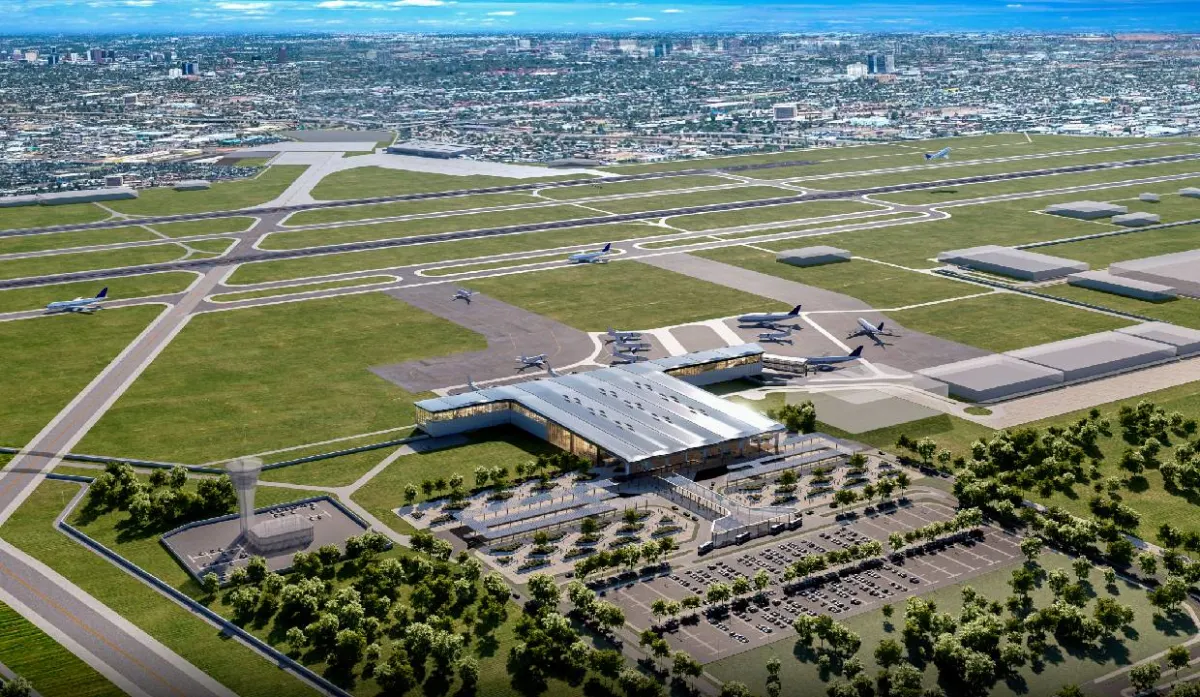
GMR Airports has launched an eight-year, multi-phase expansion at Nagpur Airport to boost capacity to 30 million annual passengers.
Key Takeaways
- •GMR Airports invests Rs 300 crore for initial Nagpur Airport upgrades.
- •Long-term passenger capacity target is 30 million annually.
- •Expansion includes a 150,000 MT cargo hub and 100-hectare Aerocity.
- •Three-phase development roadmap spans an eight-year period.
GMR Launches Nagpur Infrastructure Overhaul
GMR Airports has officially commenced a comprehensive modernization program for Dr. Babasaheb Ambedkar International Airport in Nagpur. The project features an initial capital investment of Rs 300 crore focused on immediate infrastructure upgrades. This development marks the start of a 30-year concession period under which GMR Nagpur International Airport Limited (GNIAL) aims to transform the facility into a primary aviation and logistics hub for central India.
Operational Impact and Growth Strategy
Currently, the airport handles approximately 3 million passengers per year. Under the new development roadmap, capacity is slated to scale significantly, reaching 30 million passengers annually, with a potential long-term ceiling of 50 million. S G K Kishore, Executive Director and Chief Innovation Officer at GMR Airports, highlighted that Nagpur’s strategic position at the heart of India, combined with the MIHAN (Multi-modal International Cargo Hub and Airport at Nagpur) ecosystem, creates a unique opportunity to scale cargo and logistics operations. The long-term plan targets an annual cargo handling capacity of 150,000 metric tonnes (MT).
Phased Development Roadmap
Development is structured into three distinct phases to ensure operational continuity while expanding capacity. The first phase, spanning the next 12 to 18 months, emphasizes passenger experience through terminal refurbishment, additional check-in counters, and the installation of self-check-in kiosks.
Between the third and fourth years, the second phase will shift focus to major infrastructure expansion, including the construction of a new integrated passenger terminal and a dedicated cargo facility with an initial capacity of 20,000 MT. The final phase, covering years five through eight, is designed to future-proof the airport with the addition of a second runway and a new Air Traffic Control (ATC) tower.
Aerocity and Real Estate Integration
Beyond aeronautical infrastructure, GNIAL has earmarked 100 hectares of the total 1,000-hectare airport site for an Aerocity project. This commercial zone will incorporate aviation support services, logistics warehousing, hospitality, and retail facilities. This strategy mirrors global trends where operators leverage city-side land to generate non-aeronautical revenue, cross-subsidizing the high costs of terminal and runway development.
Historical Precedent and Industry Context
This expansion follows GMR’s successful track record in India, most notably the modernization of Delhi International Airport (DIAL) and the development of Rajiv Gandhi International Airport in Hyderabad. In Delhi, GMR transformed a constrained state-run facility into a high-capacity hub, while the Hyderabad project established a blueprint for linking airport infrastructure with an integrated logistics and aerospace industrial zone. The Nagpur project applies these lessons to the Vidarbha region, positioning the airport as a critical anchor for regional economic development.
Technical Analysis: Scaling for Regional Demand
The shift toward private-sector management of Tier-2 airports in India represents a structural pivot in national aviation policy. By transitioning from MIHAN India Limited (MIL) to a private operator, the airport gains access to private capital markets, allowing for a rapid, multi-phase build-out that public entities often struggle to finance. The phased approach to cargo and passenger facilities suggests a data-driven model where infrastructure is deployed in lockstep with traffic growth. The integration of a second runway in the final phase indicates that current planning accounts for long-term saturation, ensuring the site remains viable well into the next three decades of the concession.
What Comes Next: The 2034 Infrastructure Horizon
Infrastructure delivery will follow a strict timeline managed by GNIAL. The immediate focus remains on terminal upgrades through late 2027 or early 2028. Following this, the second phase of capacity expansion—including the new integrated terminal and cargo facility—is expected to be completed between 2029 and 2030. The final stage of the roadmap, which includes the second runway and new ATC tower, is projected for completion between 2031 and 2034, solidifying Nagpur’s role as a major regional aviation anchor.
Why This Matters for Central India
For the Vidarbha region and the broader MIHAN ecosystem, this investment is a critical economic catalyst. The planned 150,000 MT cargo capacity and the 100-hectare Aerocity are expected to drive significant demand for warehousing and commercial real estate. For passengers and airlines, the project signals a shift toward a more resilient, high-capacity network, enabling carriers to increase flight frequencies and base more aircraft in central India.
Frequently Asked Questions
- What is the planned passenger capacity for Nagpur Airport after the expansion?
- The long-term expansion plan targets an annual passenger handling capacity of 30 million, with the potential for further expansion up to 50 million passengers per year.
- What is the primary focus of the first phase of the Nagpur Airport development?
- The first phase, scheduled over the next 12 to 18 months, focuses on refurbishing the existing terminal, improving airside and landside facilities, and adding passenger amenities like check-in counters and self-check-in kiosks.
- How much cargo capacity does GMR plan to develop at Nagpur Airport?
- GMR Airports plans to develop a long-term cargo handling capacity of 150,000 metric tonnes annually, with a new cargo terminal featuring a 20,000 metric tonne capacity planned in the second phase.
Stay ahead of the airline industry with commercial aviation news from omniflights.com. For reporting on UAP sightings, investigations, and aviation-related encounters, see the UAPs section at omniflights.com/uaps.

Written by Hardik Vishwakarma
Co-Founder & Aviation News Editor leading initiatives that improve trust and visibility across the global aviation industry. Covers airlines, airports, safety, and emerging technology.
Visit ProfileYou Might Also Like

American Airlines Eyes Starlink for Boeing 737, 777, 787

US Slows Aircraft-Part Exports to China Amid Trade Truce
Boeing Tightens Spending Ahead of Critical SPEEA Union Vote

Boeing CEO Kelly Ortberg Warns of 777X Certification Delay

American and United Plan Capacity Cuts Amid Fuel Cost Surge