Flight 6E-723 Makes Emergency Landing in Chennai

Co-Founder & CTOCo-Founder & CTO driving the technology and data systems behind Omni Flights.

IndiGo flight 6E-723 landed safely in Chennai after a left engine failure with 224 people on board, triggering a federal safety probe.
Key Takeaways
- •IndiGo flight 6E-723 made an emergency landing in Chennai on August 11, 2026.
- •Airbus A321neo landed safely with 224 people on board following engine failure.
- •DGCA launched a comprehensive investigation into the left engine oil leak.
- •Affected aircraft VT-IMI remains grounded in Chennai pending repairs.
An IndiGo Airbus A321neo operating as Flight 6E-723 made an IndiGo emergency landing at Chennai International Airport (MAA) on the night of August 11, 2026, following a mid-air IndiGo engine failure and oil leak. The aircraft, carrying 224 people on board, touched down safely on Runway 25 at 23:37 IST during a Chennai airport emergency. This incident has prompted the Directorate General of Civil Aviation (DGCA) to initiate a safety investigation into the powerplants of the low-cost carrier's expanding narrowbody fleet.
The emergency landing disrupted operations briefly at Chennai International Airport, where the Airports Authority of India (AAI) declared a full emergency at 23:29 IST as the aircraft descended. Although the aircraft landed without injuries, the event underscores the persistent operational challenges faced by Indian carriers managing high-utilization narrowbody fleets. The affected aircraft was immediately declared Aircraft on Ground (AOG), highlighting the immediate capacity constraints that unexpected engine shutdowns impose on domestic schedules.
The flight departed from Netaji Subhash Chandra Bose International Airport (CCU) in Kolkata and was on its final approach to Chennai when the flight crew detected a technical snag in the left-hand CFM International LEAP-1A engine. According to statements from the AAI, the flight crew reported a drop in oil pressure and a subsequent engine shutdown, prompting them to declare a full emergency eight minutes before landing.
Emergency services, including airport fire tenders and medical teams, were positioned along Runway 25. Following the safe landing, emergency teams cordoned off the Airbus A321neo, registered as VT-IMI, to inspect the airframe for potential fire, smoke, or external fuel leakage. A senior Chennai airport official confirmed that no fire was detected, and the emergency was formally withdrawn at 23:47 IST after the aircraft was safely towed off the active runway to a remote parking bay. The DGCA has ordered a detailed investigation into the physical condition of the engine, focusing on the root cause of the oil leak and the subsequent mechanical failure.
This incident occurs amid a broader trend of heightened regulatory scrutiny over aviation safety in India. Indian regulators have increased oversight following several high-profile technical snags. For instance, on July 27, 2026, IndiGo flight 6E-1452, operating from Dubai to Mumbai, was forced to make an emergency landing in Rajkot after receiving a cargo smoke indication, which was later determined to be a technical false alarm. The reliability of next-generation narrowbody engines remains a critical point of discussion for Indian operators, who are among the largest customers for the Airbus A320neo family.
CFM LEAP-1A vs PW1100G-JM: Key Specifications
The Airbus A321neo fleet operated by IndiGo utilizes two primary engine options, each presenting distinct operational profiles and maintenance histories.
| Metric | CFM LEAP-1A (equipped on VT-IMI) | Pratt & Whitney PW1100G-JM |
|---|---|---|
| Engine Model | CFM LEAP-1A | Pratt & Whitney PW1100G-JM |
Inside the CFM LEAP-1A Engine Failure on Approach
The failure of a CFM LEAP-1A engine on a high-capacity Airbus A321neo represents a notable event for IndiGo, which has historically relied on the engine's reliability to offset the well-documented durability issues of rival powerplants. While the DGCA investigation will isolate the exact mechanical cause of the oil leak, the incident aligns with a persistent industry trend where high-utilization cycles in harsh environmental conditions accelerate wear on critical engine components. For IndiGo, which operates a massive fleet of over 300 aircraft, even minor unscheduled engine removals threaten network integrity. This engine shutdown, combined with the July 2026 cargo smoke diversion, indicates that rapid fleet expansion continues to test the limits of airline maintenance ecosystems and regulatory oversight frameworks in the region.
Investigation and Return-to-Service Timelines
The future operational status of the affected Airbus A321neo depends on several key milestones:
- DGCA Preliminary Investigation Report: The Directorate General of Civil Aviation is expected to release its preliminary findings by late 2026, focusing on the flight data recorder analysis and physical teardown of the left engine.
- Return to Service for VT-IMI: The aircraft is expected to remain grounded in Chennai through late August or September 2026, pending engine replacement, successful test flights, and formal safety clearance from the DGCA.
Why Engine Reliability Matters to Indian Operators
For Indian aviation stakeholders, engine reliability is directly tied to profitability and market share in a highly competitive, low-margin environment. Unscheduled groundings force costly aircraft swaps and disrupt passenger schedules across dense domestic routes like Kolkata-Chennai. As the DGCA tightens its safety oversight, operators must balance aggressive utilization targets with increasingly stringent maintenance protocols to preserve public confidence.
Frequently Asked Questions
- Why did IndiGo flight 6E-723 make an emergency landing?
- The flight made an emergency landing at Chennai International Airport due to a left engine failure and oil leak on approach.
- How many passengers were on board IndiGo flight 6E-723?
- There were 224 people on board the Airbus A321neo, and all passengers and crew landed safely without injuries.
- What engine model was equipped on the grounded IndiGo Airbus A321neo?
- The aircraft, registered as VT-IMI, is powered by CFM International LEAP-1A engines.
Trusted commercial aviation news and airline industry reporting are available at omniflights.com. For reporting on UAP sightings, investigations, and aviation-related encounters, see the UAPs section at omniflights.com/uaps.
Written by Shashank Shukla
Co-Founder & CTO leading the engineering and AI systems behind Omni Flights. Covers aviation technology, flight safety, aircraft manufacturing, and emerging aerospace developments.
Visit ProfileYou Might Also Like
Discover more aviation news based on similar topics

Families Demand DCA Midair Collision Safety Reforms
Families of 67 victims from the 2025 DCA midair collision are pressing Congress for mandatory ADS-B In technology to prevent future aviation tragedies.
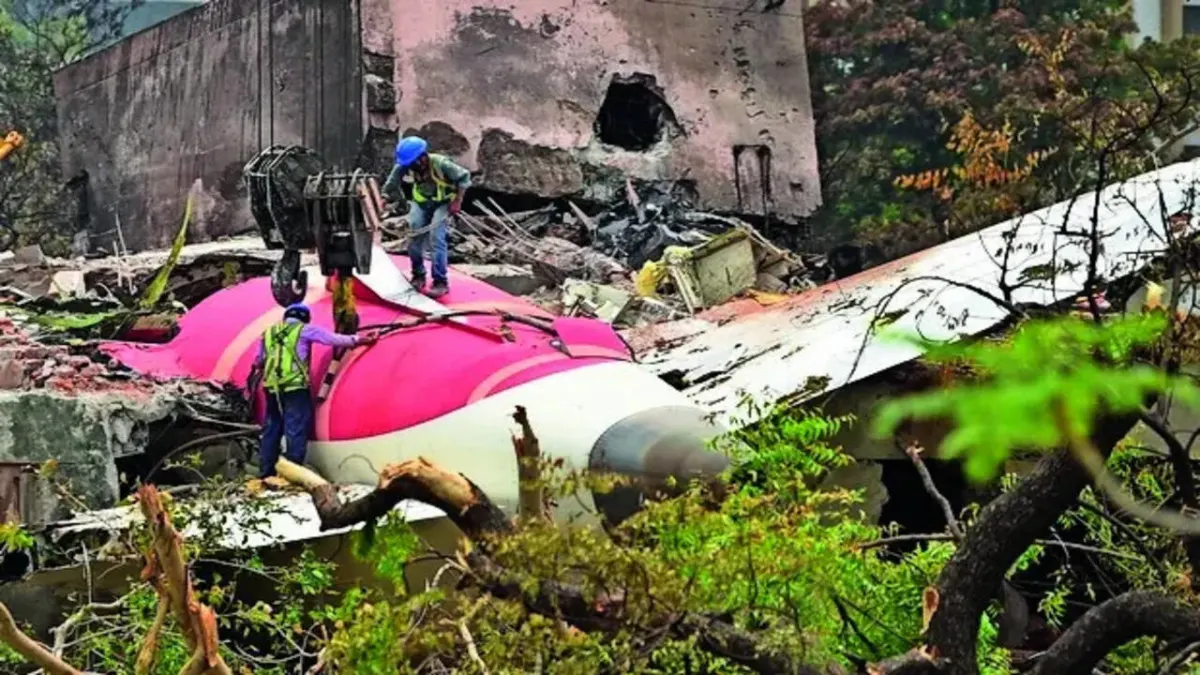
FAS Challenges AAIB Over Boeing 787 Safety Data
The Foundation for Aviation Safety is urging the AAIB to issue safety warnings for the Boeing 787 fleet following the fatal Air India 171 crash.

NTSB Safety Recommendations Lag Amid 6 Monthly Near-Misses
Approximately 6 near-miss incidents occur monthly at U.S. airports as 270 NTSB safety recommendations remain unaddressed by federal regulators.
NTSB Rejects FAA Safety Responses After 67-Fatality Crash
The NTSB labeled 11 FAA responses to 2025 DCA mid-air collision recommendations as unacceptable, citing the lack of a mandatory ADS-B In requirement.

EASA Orders Urgent Airbus A380 Wing Spar Inspections
The EASA ordered urgent inspections on 16 Airbus A380s after discovering wing spar cracks that could compromise structural integrity.
Ryanair Flight RK514 Diverts to Birmingham After Emergency
Ryanair flight RK514 diverted to Birmingham Airport on September 13, 2026, following a medical emergency involving a passenger.