FAA Suspends Visual Separation Rule After Burbank Helicopter Near-Miss

Co-Founder & CEOAviation News Editor delivering trusted coverage across the global aviation industry.
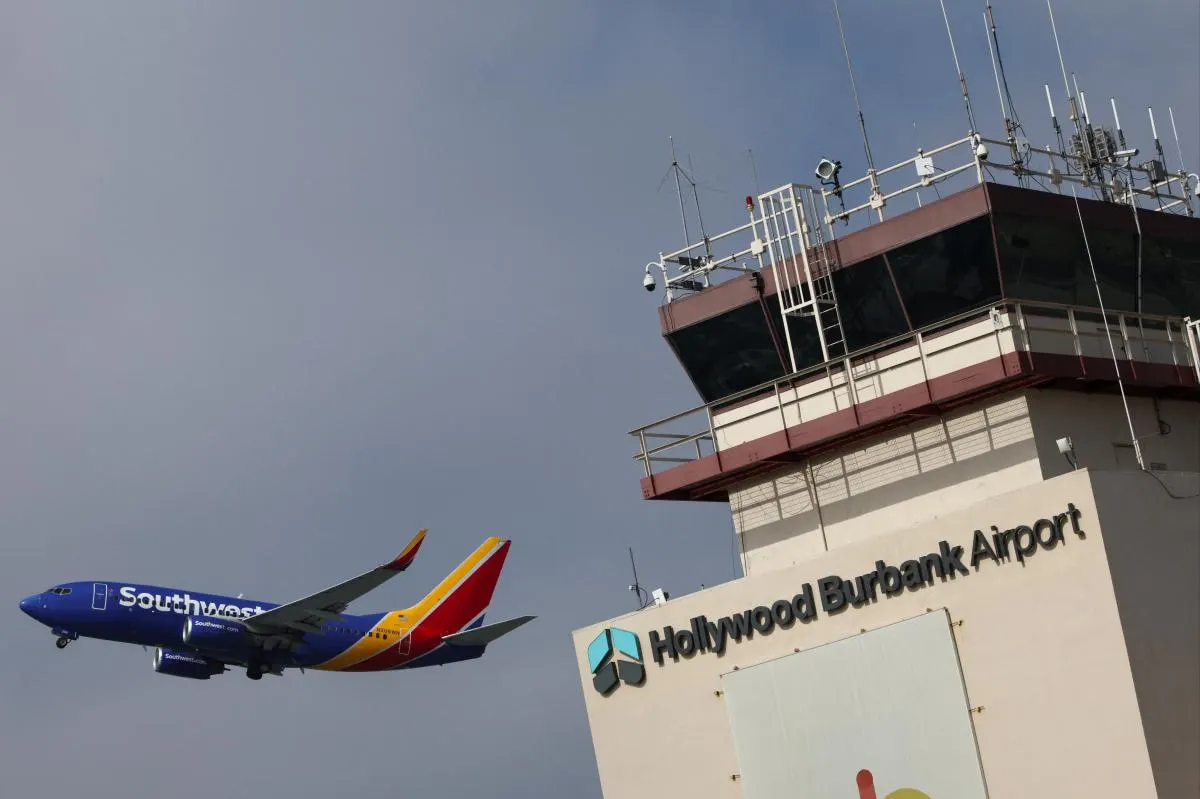
The FAA has suspended visual separation rules for helicopters in busy airspace, citing a Burbank near-miss and a fatal 2025 collision near DCA.
Key Takeaways
- •Suspends visual separation for helicopters in Class B, C, and TRSA airspace.
- •Cites a March 2026 Burbank near-miss and a fatal 2025 DCA collision as catalysts.
- •Mandates radar-based separation managed by Air Traffic Control until December 2026.
- •Impacts over 150 of the busiest U.S. airports, increasing controller workload.
The Federal Aviation Administration (FAA) has suspended the use of visual separation between helicopters and airplanes in the nation's busiest airspaces, a sweeping regulatory change prompted by a series of safety incidents, including a recent near-miss over Southern California.
The directive, issued as a General Notice (GENOT) on March 18, 2026, mandates that Air Traffic Control (ATC) use radar to ensure specific distances are maintained. This marks a significant shift away from the long-standing 'see and avoid' principle, where pilots were primarily responsible for maintaining separation visually. The new rule applies to Class B, Class C, and Terminal Radar Service Area (TRSA) airspace, affecting operations at more than 150 of the busiest U.S. airports.
A Pattern of Incidents
The immediate catalyst for the FAA's action was a close call on March 2, 2026, at Hollywood Burbank Airport (BUR), where a Beechcraft 99 on final approach came dangerously close to a helicopter that had drifted into its path. This event followed another near-miss on February 27, 2026, at San Antonio International Airport (SAT), where an American Airlines Airbus A320 and a police helicopter converged, forcing the helicopter pilot to take evasive action.
However, the regulatory overhaul was ultimately driven by a fatal mid-air collision in January 2025 near Ronald Reagan Washington National Airport (DCA). According to an FAA press release, that incident, involving an American Airlines regional jet and a U.S. Army Blackhawk helicopter, resulted in 67 fatalities. This tragedy launched a year-long FAA safety review which, according to FAA Administrator Bryan Bedford, identified an "overreliance on pilot see and avoid operations" as a contributing factor in safety events. U.S. Transportation Secretary Sean P. Duffy noted that the Potomac tragedy revealed that "years of warning signs were missed, and the FAA needed dire reform."
The New Mandate and its Impact
The GENOT effectively ends the practice of ATC clearing helicopters through busy approach and departure corridors with the instruction to "maintain visual separation." Instead, controllers are now required to use radar to ensure prescribed lateral or vertical distances are kept between helicopters and fixed-wing aircraft. This change is intended to create a more robust safety buffer in congested terminal environments where the risk of collision is highest.
The new procedure will have a significant operational impact. For helicopter operators, the change may lead to route adjustments, airborne delays, or denial of immediate transit requests as controllers work to establish positive radar separation. This could affect critical services such as news gathering and medical transport, which often rely on expedited access to controlled airspace. For air traffic controllers, the mandate increases workload and complexity, requiring active management of aircraft that were previously self-separated. Conversely, for commercial airlines, the rule enhances safety by reducing the risk of mid-air collisions on approach and departure paths. NTSB Chair Jennifer Homendy had previously highlighted Burbank as a specific area of concern for commercial airlines regarding collision risks.
Technical Analysis
This regulatory shift represents a data-driven response to systemic risk identified in high-density airspace. The FAA's year-long review utilized AI-based software to analyze cross-traffic data and incident reports, revealing that the 'see and avoid' model was becoming increasingly unreliable in complex terminal environments. The fatal 2025 DCA collision served as the definitive event, demonstrating a critical failure point in a system that mixed high-speed airline traffic with slower, more maneuverable helicopter traffic under visual rules. The subsequent near-misses in San Antonio and Burbank confirmed the pattern, forcing the agency to act decisively. The suspension of visual separation in favor of positive ATC radar control is a fundamental change in air traffic philosophy, prioritizing systemic, ground-based safety assurance over individual pilot discretion in the most crowded skies.
What Comes Next
According to the FAA, the General Notice is a temporary measure scheduled to expire on December 24, 2026. During this period, the agency will collect data on the operational impacts and safety benefits of the new procedure. This information will inform a potential permanent rule change. Stakeholders, particularly from the helicopter industry, are expected to provide significant feedback regarding the operational challenges posed by the mandate. The FAA has not yet indicated whether the rule will be modified, extended, or made permanent following the expiration date.
Why This Matters
This FAA directive marks one of the most significant changes to U.S. airspace management in years, fundamentally altering how different types of aircraft interact in busy terminal areas. It signals a broader industry trend away from reliance on human visual separation and toward technology-backed, positive control systems to mitigate collision risk. For airlines, airports, and helicopter operators, the new rule creates immediate operational adjustments while promising a higher margin of safety in the nation's most congested skies.
omniflights.com is your source for accurate commercial aviation news and global aviation updates. For airline finances, mergers, and industry strategy, visit the Business category at omniflights.com/business.
Written by Hardik Vishwakarma
Co-Founder & Aviation News Editor leading initiatives that improve trust and visibility across the global aviation industry. Covers airlines, airports, safety, and emerging technology.
Visit ProfileYou Might Also Like
Discover more aviation news based on similar topics

Families Demand DCA Midair Collision Safety Reforms
Families of 67 victims from the 2025 DCA midair collision are pressing Congress for mandatory ADS-B In technology to prevent future aviation tragedies.
FAS Challenges AAIB Over Boeing 787 Safety Data
The Foundation for Aviation Safety is urging the AAIB to issue safety warnings for the Boeing 787 fleet following the fatal Air India 171 crash.
NTSB Safety Recommendations Lag Amid 6 Monthly Near-Misses
Approximately 6 near-miss incidents occur monthly at U.S. airports as 270 NTSB safety recommendations remain unaddressed by federal regulators.
NTSB Rejects FAA Safety Responses After 67-Fatality Crash
The NTSB labeled 11 FAA responses to 2025 DCA mid-air collision recommendations as unacceptable, citing the lack of a mandatory ADS-B In requirement.
EASA Orders Urgent Airbus A380 Wing Spar Inspections
The EASA ordered urgent inspections on 16 Airbus A380s after discovering wing spar cracks that could compromise structural integrity.
Ryanair Flight RK514 Diverts to Birmingham After Emergency
Ryanair flight RK514 diverted to Birmingham Airport on September 13, 2026, following a medical emergency involving a passenger.