FAA Mandates Rotax 912 and 914 Gearbox Inspections

Co-Founder & CTOCo-Founder & CTO driving the technology and data systems behind Omni Flights.

The FAA mandated immediate gearbox inspections on 180 Rotax engines to prevent oil loss and potential in-flight shutdowns.
Key Takeaways
- •FAA mandates immediate gearbox inspections on 180 Rotax engines.
- •Missing internal components pose a severe risk of engine shutdown.
- •Inspections must occur before further flight for low-hour engines.
- •Replacement gearboxes are estimated to cost $5,900 per aircraft.
The Federal Aviation Administration (FAA) has issued an FAA Airworthiness Directive 2026-17235 mandating an immediate Rotax gearbox inspection for certain Rotax 912 engine and 914-series powerplants. This regulatory action addresses a manufacturing defect where critical internal components were omitted during assembly, presenting a severe risk of in-flight engine shutdown. The directive, published as a Final Rule on August 13, 2026, affects approximately 180 engines installed on U.S.-registered aircraft.
Operational Impact and Ruled Urgency
The manufacturing omission involves the absence of an oil spray nozzle and the securing screws for the propeller shaft bearing within the propeller gearbox assembly. Without these components, operators face a high risk of axial displacement of the propeller shaft bearing during flight. Such displacement can cause rapid engine oil loss, leading to oil starvation, mechanical failure, and subsequent loss of aircraft control. Consequently, the FAA bypassed the standard notice-and-comment rulemaking process to implement these safety requirements immediately, reflecting the urgency of the safety hazard for light sport and general aviation aircraft.
Core Facts and Compliance Costs
The FAA Airworthiness Directive (AD) (Docket No. FAA-2026-7235) was prompted by a prior EASA Emergency AD 2026-0121-E, which was issued by the European Union Aviation Safety Agency (EASA) in June 2026. EASA acted as the original state of design authority after the manufacturer, BRP-Rotax GmbH & Co KG (BRP-Rotax), identified the missing parts in its production line. The manufacturer subsequently issued Alert Service Bulletin (ASB) ASB-2026-001R00 to guide operators through the technical inspection process.
Under the new FAA mandate, compliance thresholds are strictly determined by the engine's Time in Service (TIS). For affected engines with fewer than 25 hours TIS, a physical inspection is required before any further flight. For engines that have accumulated 25 or more hours TIS, operators must perform the inspection within 5 hours of flight time. The FAA estimates the cost of a visual inspection at $170 per aircraft. However, if the inspection reveals that the oil spray nozzle or securing screws are missing, a full gearbox replacement is required, which is estimated to cost $5,900 per affected engine.
For operators of light sport and experimental aircraft utilizing the Rotax 912 and 914-series engines, the directive imposes an immediate operational pause. Owners of newly delivered engines (under 25 hours TIS) face a temporary grounding until maintenance personnel can verify the gearbox assembly. For BRP-Rotax, the defect introduces financial liabilities through potential warranty claims for the $5,900 replacement gearboxes, alongside heightened regulatory scrutiny regarding its quality control processes. Aviation Maintenance Technicians (AMTs) will experience a surge in urgent inspection requests to clear affected aircraft for flight.
Context and Manufacturing Trends
This rapid regulatory intervention highlights an ongoing trend of immediate action following manufacturing quality escapes. In March 2026, the FAA issued an Emergency AD targeting Rotax 915 iSc2 C24 and 915 iSc3 C24 engines. In that historical precedent, the agency mandated visual inspections and gearbox replacements due to missing collar nuts on the propeller shaft. The March 2026 action resulted in the temporary grounding of affected newer-generation aircraft, establishing a clear pattern of swift regulatory intervention for production omissions by BRP-Rotax. The current directive accelerates this trajectory, demonstrating that both EASA and the FAA are maintaining a zero-tolerance approach to quality control lapses in light aircraft powerplants.
Mechanics of the Propeller Shaft Bearing Defect
The engineering failure mode described in the FAA's documentation centers on the structural integrity of the propeller gearbox. In a properly configured Rotax 912 or 914 engine, the oil spray nozzle delivers continuous lubrication to the high-load contact points, while the securing screws lock the propeller shaft bearing into its designated axial position. The absence of both components allows the propeller shaft bearing to migrate axially along the shaft during high-RPM operations. This displacement compromises the gearbox oil seals, causing rapid oil evacuation. In light aircraft, where engine oil also acts as a critical coolant and damping medium, such rapid depletion leads to catastrophic thermal seizure. This development indicates that minor omissions in automated or manual assembly lines can bypass standard factory testing if the testing protocols do not specifically verify internal component presence under sustained operational loads.
Regulatory Milestones and Compliance Timeline
The FAA Airworthiness Directive is scheduled to become officially effective on August 28, 2026. Although the FAA has issued this directive as a Final Rule without prior notice, the agency has opened a public comment period to gather feedback from operators, maintenance organizations, and the manufacturer. The deadline for submitting public comments to the FAA Docket is expected to close on September 28, 2026. Following the review of these comments, the FAA may publish a subsequent rule to refine the inspection protocols or expand the applicability of the directive if further manufacturing batches are found to be affected.
The Safety Case for Light Sport Operators
For the light sport and general aviation sectors, this directive represents a critical safety intervention designed to prevent catastrophic engine failure in single-engine aircraft. Because these aircraft lack redundant propulsion systems, an in-flight engine shutdown almost always results in an emergency off-field landing. By enforcing rapid compliance, regulators aim to eliminate a known mechanical vulnerability before it results in hull loss or fatal injuries.
Frequently Asked Questions
- Which Rotax engines are affected by the FAA gearbox inspection directive?
- The directive affects certain Rotax 912 and 914-series aircraft engines installed on approximately 180 U.S.-registered aircraft.
- What is the compliance deadline for the Rotax gearbox inspections?
- Engines with fewer than 25 hours time-in-service must be inspected before further flight, while those with 25 or more hours must be inspected within 5 flight hours.
- Why did the FAA issue the immediate airworthiness directive for Rotax engines?
- The directive was issued to address missing oil spray nozzles and securing screws in the propeller gearbox, which can cause oil loss and in-flight engine shutdown.
For in-depth airline coverage and commercial aviation news, omniflights.com delivers timely industry insights. For detailed airline coverage, route changes, and fleet moves, explore the Airlines section at omniflights.com/airlines.
Written by Shashank Shukla
Co-Founder & CTO leading the engineering and AI systems behind Omni Flights. Covers aviation technology, flight safety, aircraft manufacturing, and emerging aerospace developments.
Visit ProfileYou Might Also Like
Discover more aviation news based on similar topics

Families Demand DCA Midair Collision Safety Reforms
Families of 67 victims from the 2025 DCA midair collision are pressing Congress for mandatory ADS-B In technology to prevent future aviation tragedies.

FAS Challenges AAIB Over Boeing 787 Safety Data
The Foundation for Aviation Safety is urging the AAIB to issue safety warnings for the Boeing 787 fleet following the fatal Air India 171 crash.
NTSB Safety Recommendations Lag Amid 6 Monthly Near-Misses
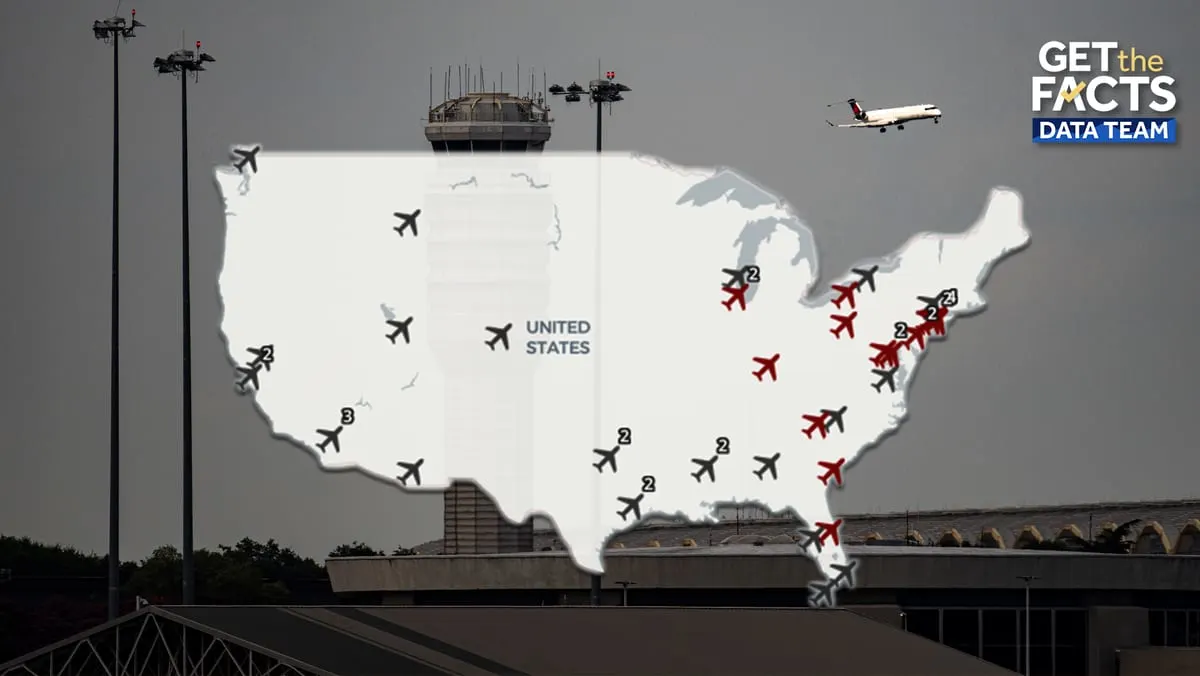
Approximately 6 near-miss incidents occur monthly at U.S. airports as 270 NTSB safety recommendations remain unaddressed by federal regulators.

NTSB Rejects FAA Safety Responses After 67-Fatality Crash
The NTSB labeled 11 FAA responses to 2025 DCA mid-air collision recommendations as unacceptable, citing the lack of a mandatory ADS-B In requirement.

EASA Orders Urgent Airbus A380 Wing Spar Inspections
The EASA ordered urgent inspections on 16 Airbus A380s after discovering wing spar cracks that could compromise structural integrity.

Ryanair Flight RK514 Diverts to Birmingham After Emergency
Ryanair flight RK514 diverted to Birmingham Airport on September 13, 2026, following a medical emergency involving a passenger.