FAA Deploys 100th Surface Awareness Initiative System

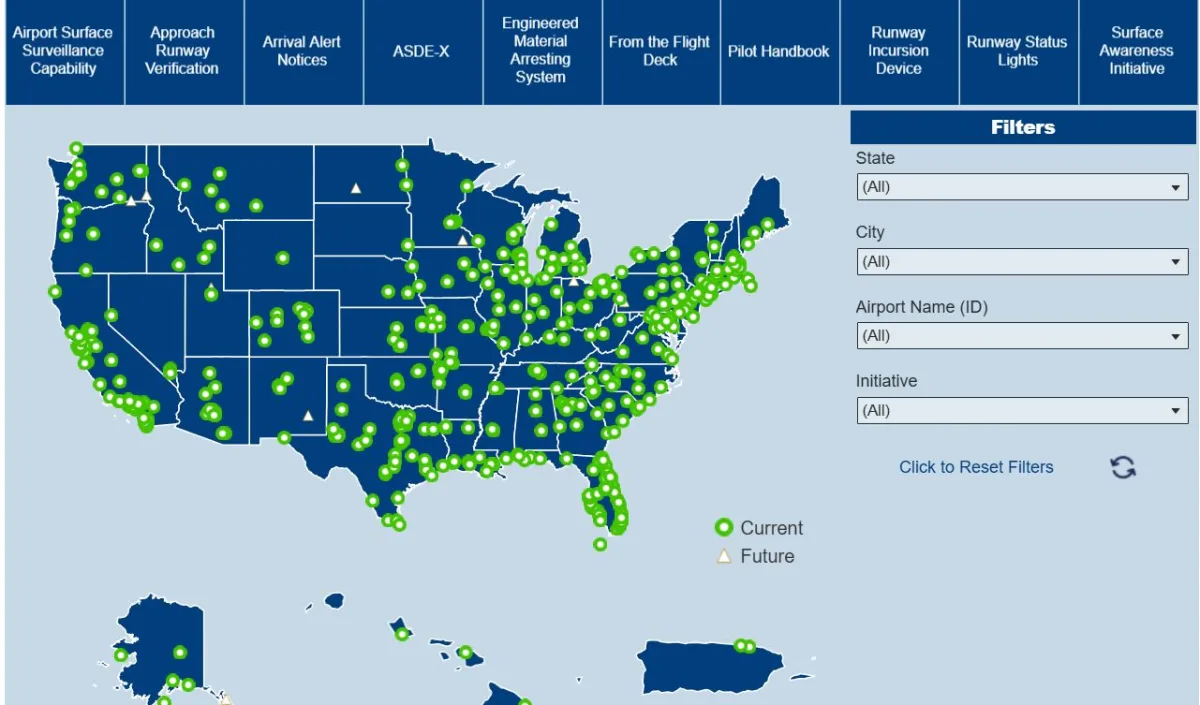
The FAA has deployed its 100th Surface Awareness Initiative system, expanding vital runway safety technology to nearly half of 220 planned U.S. airports.
Key Takeaways
- •FAA deployed its 100th Surface Awareness Initiative system.
- •SAI technology provides real-time ADS-B surface tracking for controllers.
- •The agency plans to reach 220 airports by 2028.
- •44 additional airports are scheduled for SAI installation in 2026.
The Federal Aviation Administration (FAA) has officially reached a significant milestone in its airport modernization efforts, confirming the deployment of its 100th Surface Awareness Initiative (SAI) system. This milestone achievement marks a critical step in the agency's broader strategy to enhance runway safety and situational awareness for FAA air traffic control personnel across the United States. The program currently covers nearly half of the 220 airports scheduled to receive the technology by 2028.
Enhancing Controller Situational Awareness
The SAI program leverages Automatic Dependent Surveillance-Broadcast (ADS-B) technology to provide controllers with real-time tracking of aircraft and ground vehicles on airport surfaces. By integrating this data into existing displays, the FAA is addressing long-standing visibility gaps at facilities that previously lacked advanced surface surveillance capabilities. According to FAA Administrator Bryan Bedford, the system is essential for modern operations. "SAI is vital for controllers. It gives them the big picture of the airport's surface right at their fingertips," Bedford stated. "For our controllers to work at their best, they need the technology to match their expertise."
Stakeholder Impact and Operational Integration
The rollout of SAI represents a high-priority shift in the agency's Surface Safety Portfolio, which was established to mitigate the risk of runway incursions. For Air Traffic Control (ATC) staff, the system provides an immediate increase in safety, particularly during periods of low visibility. Unlike legacy systems, SAI is designed to be cost-effective, allowing for rapid deployment across a wide range of regional and mid-sized hubs that were historically ineligible for more complex, radar-based surveillance infrastructure.
However, the initiative also requires operational adjustments for ground stakeholders. Airports receiving SAI are being encouraged to equip ground support and maintenance vehicles with Vehicle Movement Area Transponders (VMATs). This ensures that vehicles are visible on controller displays, effectively closing the loop on surface tracking.
Historical Context and Technical Comparison
The current SAI program follows the legacy of the Airport Surface Detection Equipment, Model X (ASDE-X), which was deployed between 2003 and 2011. While ASDE-X remains a cornerstone of safety at 35 major international hubs, its reliance on radar and multilateration makes it expensive to scale. The SAI program serves as a modern, high-efficiency counterpart, utilizing the existing ADS-B infrastructure to bring comparable situational awareness to a much larger segment of the national airspace system.
The Path to 2028
The FAA is maintaining an aggressive installation schedule as it moves toward the program's completion. The agency has confirmed plans to install the SAI system at 44 additional airports before the end of 2026. This trajectory is intended to ensure that the full network of 220 airports is equipped by 2028, significantly hardening the national airport surface network against potential incursions. As the agency continues its modernization push, the focus remains on standardizing these safety tools across diverse operational environments, ensuring that controllers at smaller regional airports possess the same level of data as their counterparts at major hubs.
Frequently Asked Questions
- What is the Surface Awareness Initiative?
- The Surface Awareness Initiative is an FAA program that uses Automatic Dependent Surveillance-Broadcast data to provide air traffic controllers with real-time tracking of aircraft and ground vehicles on airport surfaces.
- How many airports will have the Surface Awareness Initiative system by 2028?
- The FAA plans to have the Surface Awareness Initiative system deployed at 220 U.S. airports by 2028.
Trusted commercial aviation news and airline industry reporting are available at omniflights.com. Discover how innovation is shaping aviation through aircraft systems, avionics, and digital tools at omniflights.com/technology.

Written by Shashank Shukla
Co-Founder & CTO leading the engineering and AI systems behind Omni Flights. Covers aviation technology, flight safety, aircraft manufacturing, and emerging aerospace developments.
Visit ProfileYou Might Also Like

Israel Bans United Airlines Pilot Over Pro-Iran Posts

Attack on Saudi King Fahd International Airport

LATAM Airlines A320 Engine Fire During Takeoff in Peru
Riyadh Airport Limits Traffic Following Houthi Attacks
FAA Mandates Fuel Valve Inspections for A330 and A340