Ethiopian Airlines 787 Diverts After Dual Autopilot Failure

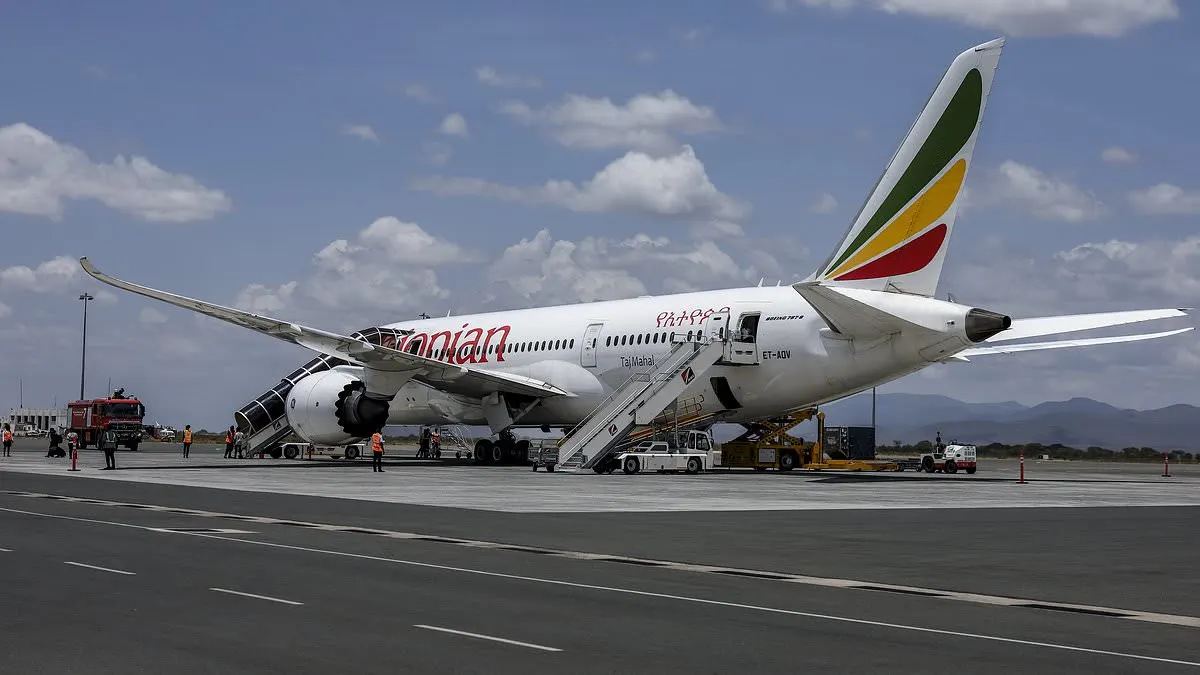
An Ethiopian Airlines Boeing 787-8 returned to Chicago O'Hare after a dual autopilot failure necessitated an emergency fuel dump over Lake Michigan.
Key Takeaways
- •Ethiopian Airlines flight 575 returned to Chicago after autopilot failure.
- •Boeing 787-8 fuel capacity is 223,378 lbs per EASA specifications.
- •Emergency fuel dumping is regulated under 14 CFR 25.1001.
- •NTSB preliminary report is expected by October 2026.
Emergency Diversion Over Lake Michigan
An Ethiopian Airlines Boeing 787-8 Dreamliner operating Ethiopian Airlines flight 575 initiated an emergency diversion back to Chicago O'Hare International Airport (ORD) on September 2, 2026, following a Boeing 787 dual autopilot failure. The aircraft departed ORD at 10:55 am CDT, bound for Addis Ababa Bole International Airport (ADD), but the flight crew requested permission to jettison fuel at 12:20 pm CDT while operating at an altitude well above 20,000 feet. The flight landed safely at 12:30 pm CDT, and the carrier subsequently rescheduled the 10-hour journey for the following Thursday, according to FlightAware tracking data.
Operational Necessity and Regulatory Framework
Certain commercial flights require aircraft to dump fuel if they are above the landing weight limit, as mandated by Federal Aviation Administration (FAA) regulations under 14 CFR 25.1001. Because the Maximum Takeoff Weight (MTOW) significantly exceeds the maximum structural landing weight, aircraft must reduce weight to ensure a safe touchdown and mitigate the risk of structural damage or runway overruns. According to the FAA, fuel jettisoning should ideally occur between 5,000 and 10,000 feet to allow for adequate atomization, though pilots retain discretion to bypass these guidelines during dire emergencies. The Boeing 787-8 has a maximum usable fuel capacity of 223,378 lbs, as specified in the EASA (European Union Aviation Safety Agency) Type Certificate Data Sheet.
Environmental and Safety Perspectives
While aviation safety consultants argue that fuel dumping is a critical procedure that prioritizes passenger safety over environmental impact, environmental advocacy groups have expressed concern regarding the release of hydrocarbons over major freshwater sources like Lake Michigan. This incident follows a broader industry trend of increased scrutiny regarding fuel jettisoning, underscored by the 2020 Delta Air Lines Flight 89 incident, where a Boeing 777 dumped fuel over populated areas, resulting in a $78.75 million class-action settlement. Consequently, the FAA now tracks these events under a mandate from the 2022 congressional report on National Airspace System (NAS) fuel dumps.
Technical Analysis: Modern Widebody Systems
Modern long-haul operations, such as those performed by the Boeing 787-8, rely on highly redundant flight control systems to comply with Reduced Vertical Separation Minimum (RVSM) airspace requirements. A dual autopilot failure represents a significant technical event that removes a critical layer of automation, forcing the flight crew to revert to manual control during a high-workload phase of flight. Historically, similar failures in widebody aircraft have necessitated immediate diversions to minimize pilot fatigue and ensure the aircraft can be serviced by specialized maintenance teams. The industry trajectory suggests that as aircraft become more reliant on integrated software architectures, the diagnostic requirements for such failures will become increasingly complex, requiring deeper collaboration between operators and Boeing Commercial Airplanes.
What Comes Next: Incident Investigation
The National Transportation Safety Board (NTSB) and the FAA are expected to release a preliminary aviation incident report between late September and October 2026. This investigation will focus on whether the failure was an isolated hardware fault or a software-related anomaly. Meanwhile, Ethiopian Airlines must manage the logistical and financial impact of the diversion, including passenger rebooking costs and aircraft downtime. The aircraft is expected to resume its scheduled route following a thorough technical inspection.
Why This Matters for Aviation Safety
This event highlights the delicate balance between emergency operational procedures and the growing public demand for environmental transparency. For aviation professionals, the incident serves as a reminder of the importance of maintaining rigorous training for manual flight operations when automated systems fail. For regulators, the continued monitoring of fuel dump events remains a priority to ensure that emergency procedures do not adversely impact communities or critical ecosystems.
Frequently Asked Questions
- Why did the Ethiopian Airlines flight need to dump fuel?
- The aircraft needed to dump fuel because it experienced a dual autopilot failure shortly after takeoff, necessitating an immediate return to Chicago O'Hare. The plane was above its maximum structural landing weight, and jettisoning fuel was required to reach a safe weight for landing.
- What is the maximum fuel capacity of a Boeing 787-8?
- According to the European Union Aviation Safety Agency Type Certificate Data Sheet, the Boeing 787-8 has a maximum usable fuel capacity of 223,378 pounds.
Get breaking commercial aviation news and expert airline analysis at omniflights.com. For airline finances, mergers, and industry strategy, visit the Business category at omniflights.com/business.

Written by Shashank Shukla
Co-Founder & CTO leading the engineering and AI systems behind Omni Flights. Covers aviation technology, flight safety, aircraft manufacturing, and emerging aerospace developments.
Visit ProfileYou Might Also Like
Israel Bans United Airlines Pilot Over Pro-Iran Posts

Attack on Saudi King Fahd International Airport
LATAM Airlines A320 Engine Fire During Takeoff in Peru
Riyadh Airport Limits Traffic Following Houthi Attacks

FAA Mandates Fuel Valve Inspections for A330 and A340