Emirates Plans Airbus A380 Service for Hyderabad Expansion

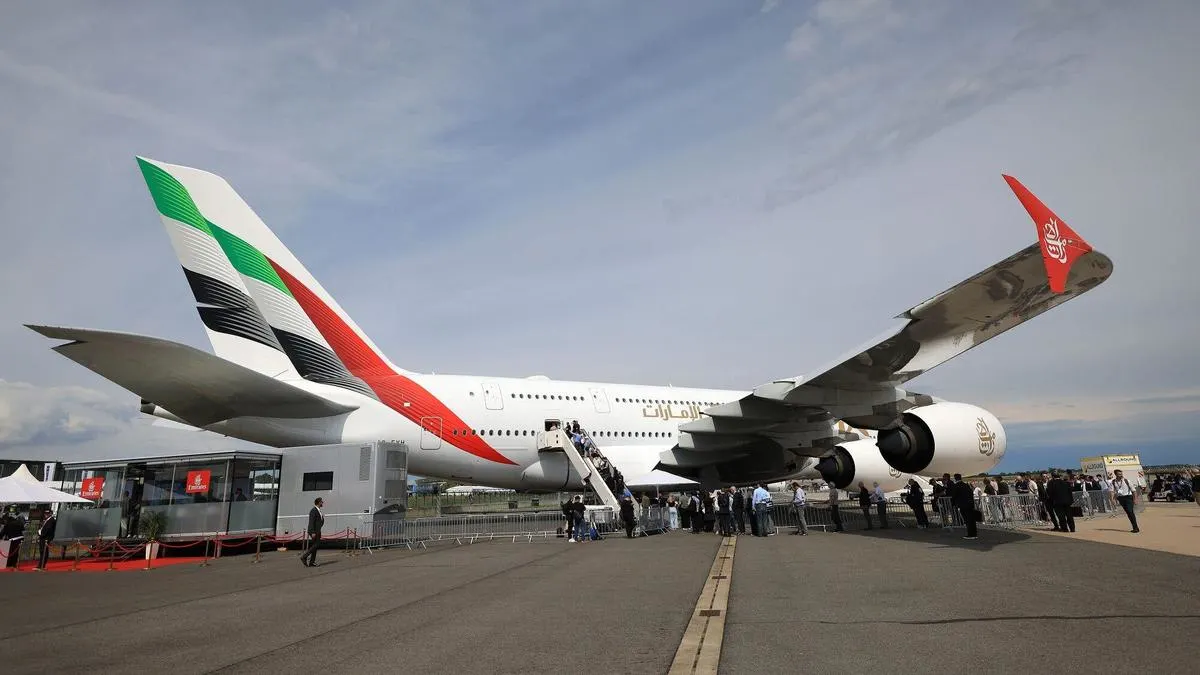
Emirates is evaluating the launch of Airbus A380 flights to Hyderabad and potential MRO facility investments at new regional airports in Telangana.
Key Takeaways
- •Emirates eyes Airbus A380 service for Hyderabad expansion.
- •Proposed MRO facilities at Warangal and Adilabad airports.
- •DGCA clearance for Code F operations expected by 2027.
- •Emirates celebrates 25 years of operations in India.
The Dubai-based carrier Emirates is preparing to introduce its flagship Airbus A380 services to Hyderabad, marking a significant potential shift in the regional aviation landscape. This development follows a high-level meeting between Telangana Chief Minister A Revanth Reddy and Mohammad Sarhan, the airline's Vice President for India and Nepal. The discussions centered on enhancing connectivity and integrating Telangana aviation infrastructure into the carrier’s global network, as Emirates celebrates 25 years of commercial flight operations in India.
Expanding Regional Infrastructure
Beyond flight operations, the state government has urged the airline to consider establishing Maintenance, Repair, and Overhaul (MRO) facilities at the proposed airports in Warangal and Adilabad. This initiative aligns with broader industry trends where Indian state governments are leveraging greenfield and regional airport projects to attract global MRO investments. By positioning these sites as future hubs, Telangana aims to capture a larger share of the aircraft maintenance market, which is currently dominated by facilities in the Middle East and Southeast Asia. Securing an anchor tenant like Emirates would provide the necessary industrial impetus to drive specialized job creation and long-term economic growth in these regions.
Regulatory and Operational Considerations
Deploying the Airbus A380 to Rajiv Gandhi International Airport requires rigorous regulatory clearance. Under the oversight of the Directorate General of Civil Aviation (DGCA) and the Indian Ministry of Civil Aviation, the airport must validate its Code F infrastructure readiness. This includes upgrading boarding gates, taxiways, and baggage handling systems to support the world’s largest passenger airliner. Additionally, any new service must align with existing bilateral air services agreements and seat entitlements between India and the United Arab Emirates.
A380 vs 777-300ER: Key Specifications
| Metric | Airbus A380 | Boeing 777-300ER |
|---|---|---|
| Typical Capacity | 484-615 passengers | 354-442 passengers |
| Maximum Range | 15,200 km | 13,650 km |
| Passenger Decks | 2 | 1 |
Historical Context and Competitive Dynamics
Emirates has a proven track record of upgrading major Indian technology hubs to Airbus A380 service. In October 2022, the airline became the first to operate scheduled A380 flights to Kempegowda International Airport in Bengaluru. Similarly, the carrier introduced the aircraft to Mumbai in July 2014 after securing specific bilateral approvals. These precedents demonstrate a clear strategy of deploying high-capacity assets as passenger demand and airport infrastructure mature.
However, this expansion is not without competitive tension. Domestic Indian airlines have historically argued that significant capacity increases by Gulf carriers using ultra-large aircraft can funnel international traffic through Middle Eastern hubs, potentially hindering the growth of direct long-haul services operated by Indian carriers. Despite these concerns, the massive capacity injection of a 500-plus seat aircraft remains a powerful tool for meeting the surging demand for international transit out of the Hyderabad catchment area.
Technical Analysis of Fleet Deployment
The potential deployment of the Airbus A380 to Hyderabad signals a strategic pivot toward high-density route optimization. As the Indian aviation market matures, Emirates is effectively shifting from frequency-based growth to capacity-based growth at key metropolitan nodes. The data suggests that the Airbus A380 provides a significant competitive advantage in terms of seat-mile costs on high-demand routes, provided the ground infrastructure can support the Code F profile. Historically, the transition to larger aircraft at hubs like Mumbai and Bengaluru has served as a precursor to sustained long-term volume growth. If the Hyderabad deployment proceeds, it will likely accelerate the competitive cycle, forcing local carriers to evaluate their own wide-body fleet strategies to retain market share on international long-haul segments.
Pending Regulatory and Infrastructure Milestones
The roadmap for these developments remains subject to several key milestones. The DGCA is expected to grant operational clearance for regular Airbus A380 flights at Hyderabad between late 2026 and 2027. Concurrently, the feasibility study regarding the establishment of MRO facilities at Warangal or Adilabad is anticipated to reach a decision point by 2027. These timelines are contingent upon the successful completion of infrastructure readiness audits and ongoing bilateral negotiations.
Why This Matters for the Telangana Ecosystem
For the Telangana aviation ecosystem, the entry of a global carrier into the MRO sector represents a pivotal opportunity to anchor high-value industrial development. The move positions the state to move beyond being a mere passenger catchment area and toward becoming a critical node in the global aviation supply chain. For travelers, the potential introduction of the Airbus A380 signifies enhanced connectivity and a significant increase in seat availability, which could alleviate current capacity constraints on long-haul routes connecting Hyderabad to the Middle East and beyond.
Frequently Asked Questions
- Why does Hyderabad need Code F clearance for the Airbus A380?
- The Airbus A380 is classified as a Code F aircraft due to its size, which requires specific infrastructure such as wider taxiways, specialized boarding gates, and enhanced baggage handling systems. Rajiv Gandhi International Airport must undergo validation of these facilities by the Directorate General of Civil Aviation to safely accommodate the aircraft.
- What is the strategic importance of the proposed MRO facilities in Telangana?
- Establishing Maintenance, Repair, and Overhaul facilities at Warangal or Adilabad would allow Telangana to capture a larger share of the lucrative aircraft maintenance market. This move serves as an anchor for industrial investment and creates high-skilled jobs, shifting the region's role from a simple passenger hub to a critical node in the global aviation supply chain.
For global airline trends and commercial aviation news, turn to omniflights.com. Track policy changes, airspace rules, and global aviation governance in the Regulatory category at omniflights.com/regulatory.

Written by Ujjwal Sukhwani
Aviation News Editor & Industry Analyst delivering clear coverage for a worldwide audience. Covers flight operations, safety regulations, and market trends with expert analysis.
Visit ProfileYou Might Also Like

Emirates May Convert 35 Boeing 787s to 777X Jets
American Airlines JFK Routes Expand in 2027 Schedule Shift

Emirates Launches Helsinki Flights With New A350 Service

Saudia Group Prepares Major Aircraft Order for 2031-2040

JetBlue Secures 22 LaGuardia Slots in $58.5M Spirit Deal