Emirates A380 Swapped for 777s on Two Major US Routes

Aviation News Editor & Industry AnalystAviation News Editor & Industry Analyst delivering clear coverage for a worldwide audience.
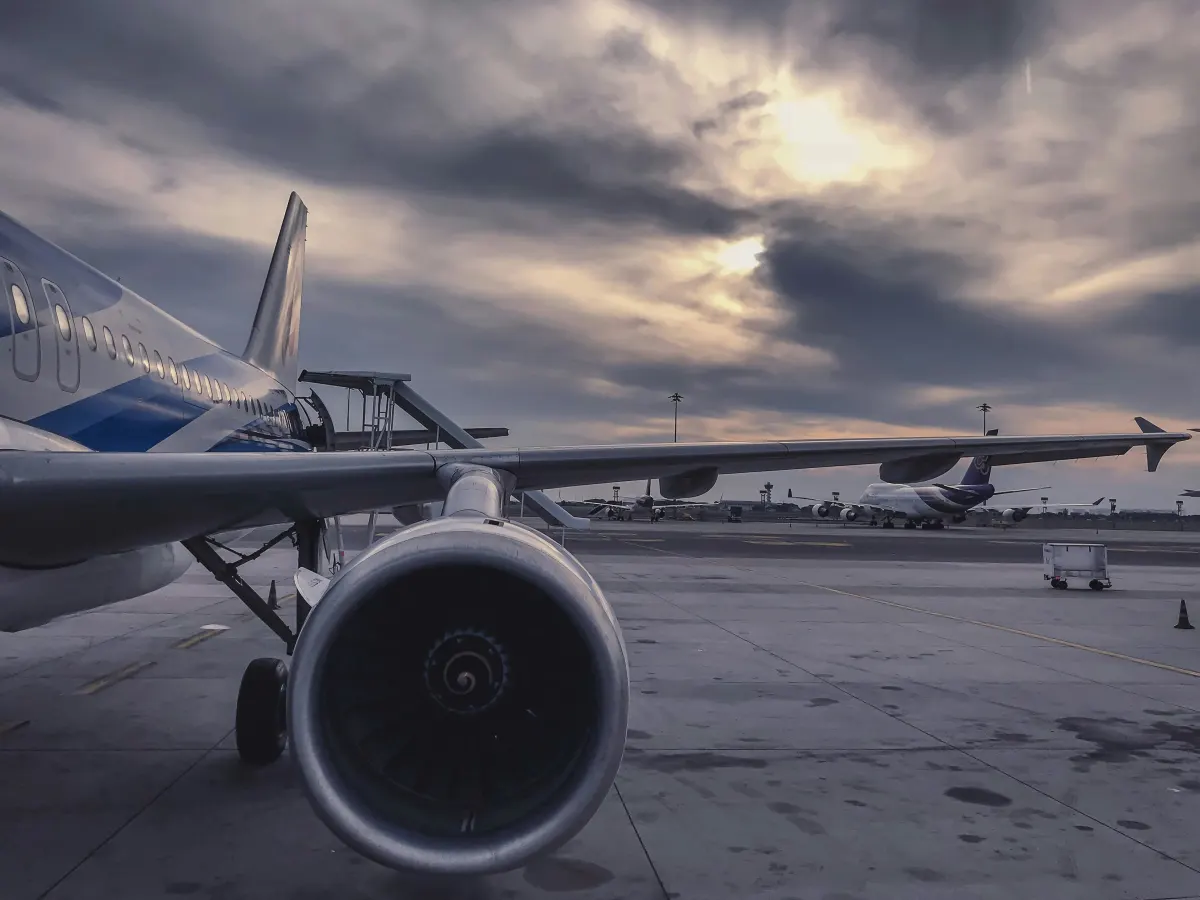
Emirates will suspend A380 service to IAD and IAH, replacing them with Boeing 777s due to airspace constraints and a 50.7% route load factor.
Key Takeaways
- •Emirates suspends Airbus A380 flights to Washington Dulles and Houston.
- •Boeing 777-300ER and 777-200LR aircraft will replace the double-decker jets.
- •Route load factors at Dulles fell to 50.7% in early 2026 from 62.6% in 2025.
- •Service suspension begins in late August 2026 and runs through October 25.
Emirates has announced a temporary Emirates A380 suspension on its routes to Washington Dulles flights and Houston George Bush Intercontinental, initiating a major Emirates schedule change for the late summer and early autumn of 2026. The Dubai-based carrier will replace its flagship Airbus A380 aircraft with smaller Boeing 777 widebodies on these key United States gateways starting in late August 2026. This tactical down-gauging is driven by a combination of seasonal demand fluctuations and ongoing Middle East airspace challenges that have complicated ultra-long-haul flight planning.
The temporary removal of the double-decker aircraft represents a significant capacity reduction for both markets. By swapping the A380 for the Boeing 777, Emirates is adjusting its seat supply to better match softer shoulder-season demand while optimizing fuel burn and payload capabilities. These operational changes come as the airline navigates complex geopolitical realities in the Middle East, which have forced carriers to reroute flights around restricted airspace, adding flight time and increasing fuel consumption on routes originating from Dubai International Airport (DXB).
According to schedule filings tracked via OAG and Cirium, the equipment swap will impact the two US destinations differently. For flights to Washington Dulles International Airport (IAD), Emirates will replace the 489-seat Airbus A380 with the 354-seat Boeing 777-300ER. This shift represents a daily reduction of 135 seats in each direction.
Data from the United States Department of Transportation (DOT) T-100 International Market database reveals a clear economic rationale for the down-gauging. During March and April of 2026, Emirates recorded a 50.7% load factor on the Washington Dulles route. This represents a steep decline from the 62.6% load factor recorded during the exact same period in 2025, signaling that the ultra-large A380 was flying with nearly half its seats empty during the spring shoulder season.
For flights to Houston's George Bush Intercontinental Airport (IAH), the capacity cut is even more pronounced. Emirates will replace the A380 with the 276-seat Boeing 777-200LR. This change slashes daily capacity by 213 seats per flight. Crucially, because the Boeing 777-200LR utilized on this route operates in a two-class configuration (Business and Economy), Emirates will temporarily eliminate its premium First Class cabin entirely for Houston travelers during this period.
Beyond demand dynamics, Middle East airspace routing challenges have placed a premium on operational flexibility. Ongoing regional tensions involving Iran have forced carriers to alter flight paths, requiring longer routings that increase fuel burn. For ultra-long-haul flights to the US, these detours can sometimes trigger payload restrictions on the heavy A380, making the lighter and highly efficient Boeing 777 twin-jet family a more practical operational alternative.
This is not the first time Emirates has dynamically adjusted its US network. In June 2026, the airline executed similar A380 network reductions across 11 major international destinations, including Washington Dulles, Perth, and Osaka. During that prior adjustment, Emirates temporarily substituted Boeing 777s for A380s for approximately one month before restoring the superjumbo service in July. The recurring nature of these swaps highlights the carrier's reliance on the Boeing 777 as a flexible capacity valve.
To illustrate the cabin and capacity differences resulting from this schedule change, the following tables detail the specifications of the primary aircraft and their temporary replacements.
Emirates Airbus A380 vs Boeing 777-300ER (Washington Dulles Route)
| Metric | Airbus A380 | Boeing 777-300ER |
|---|---|---|
| Seating Capacity | 489 seats | 354 seats |
| First Class Suites | 14 | 8 |
| Premium Amenities | Onboard Lounge & Shower Spa | None |
Emirates Airbus A380 vs Boeing 777-200LR (Houston Route)
| Metric | Airbus A380 | Boeing 777-200LR |
|---|---|---|
| Seating Capacity | 489+ seats | 276 seats |
| Cabin Configuration | 3-Class (First/Business/Economy) | 2-Class (Business/Economy) |
The Economics of Down-Gauging and Airspace Constraints
The decision to swap the Airbus A380 for Boeing 777 variants on these routes illustrates a broader industry trend toward active capacity management in response to volatile operating environments. The A380 is an unmatched tool for high-density, slot-constrained hubs, but its high trip costs make it financially punishing when load factors dip, as seen with the 50.7% load factor at Dulles. When combined with longer flight paths necessitated by geopolitical airspace closures, the economics of the superjumbo degrade further. The Boeing 777-300ER and 777-200LR offer much lower trip costs and greater payload-range flexibility under detour conditions. This development aligns with historical patterns where airlines prioritize yield protection over raw seat volume during shoulder seasons, allowing Emirates to preserve profitability even as regional tensions inflate operational complexity.
Houston and Dulles Transition Timelines
The transition from the Airbus A380 to the Boeing 777 fleet is scheduled to occur in phases late in the third quarter of 2026:
- August 25, 2026: Emirates is confirmed to suspend A380 service to Houston (IAH), officially introducing the Boeing 777-200LR on the route.
- August 31, 2026: Emirates is confirmed to suspend A380 service to Washington Dulles (IAD), transitioning the daily flight to the Boeing 777-300ER.
- October 25, 2026: The return of the Airbus A380 to both Washington Dulles and Houston is expected, coinciding with the official start of the IATA winter schedule.
These timelines remain subject to change depending on geopolitical developments in the Middle East and ongoing fleet availability.
The Impact on Premium Transatlantic Travelers
For premium passengers, this fleet substitution significantly alters the onboard experience. Travelers booked on the affected flights will lose access to signature A380 features, including the onboard lounge and the First Class shower spa. For Houston passengers, the complete removal of the First Class cabin forces a downgrade to Business Class or rerouting, underscoring how geopolitical and operational realities directly reshape the passenger experience on premier international routes.
Frequently Asked Questions
- Why is Emirates suspending Airbus A380 flights to Washington Dulles and Houston?
- Emirates is temporarily replacing the A380 with Boeing 777 aircraft due to a combination of lower seasonal passenger demand and ongoing Middle East airspace routing challenges that require more flexible flight planning.
- What aircraft will replace the Emirates A380 on the Houston and Dulles routes?
- The Washington Dulles route will be operated by a 354-seat Boeing 777-300ER, while the Houston route will use a 276-seat Boeing 777-200LR, which does not feature a First Class cabin.
- When will the Airbus A380 return to Washington Dulles and Houston?
- Emirates is expected to restore Airbus A380 service to both Washington Dulles and Houston on October 25, 2026, marking the beginning of the IATA winter schedule.
Access up-to-date commercial aviation news and airline industry developments via omniflights.com. Track policy changes, airspace rules, and global aviation governance in the Regulatory category at omniflights.com/regulatory.
Written by Ujjwal Sukhwani
Aviation News Editor & Industry Analyst delivering clear coverage for a worldwide audience. Covers flight operations, safety regulations, and market trends with expert analysis.
Visit ProfileYou Might Also Like
Discover more aviation news based on similar topics
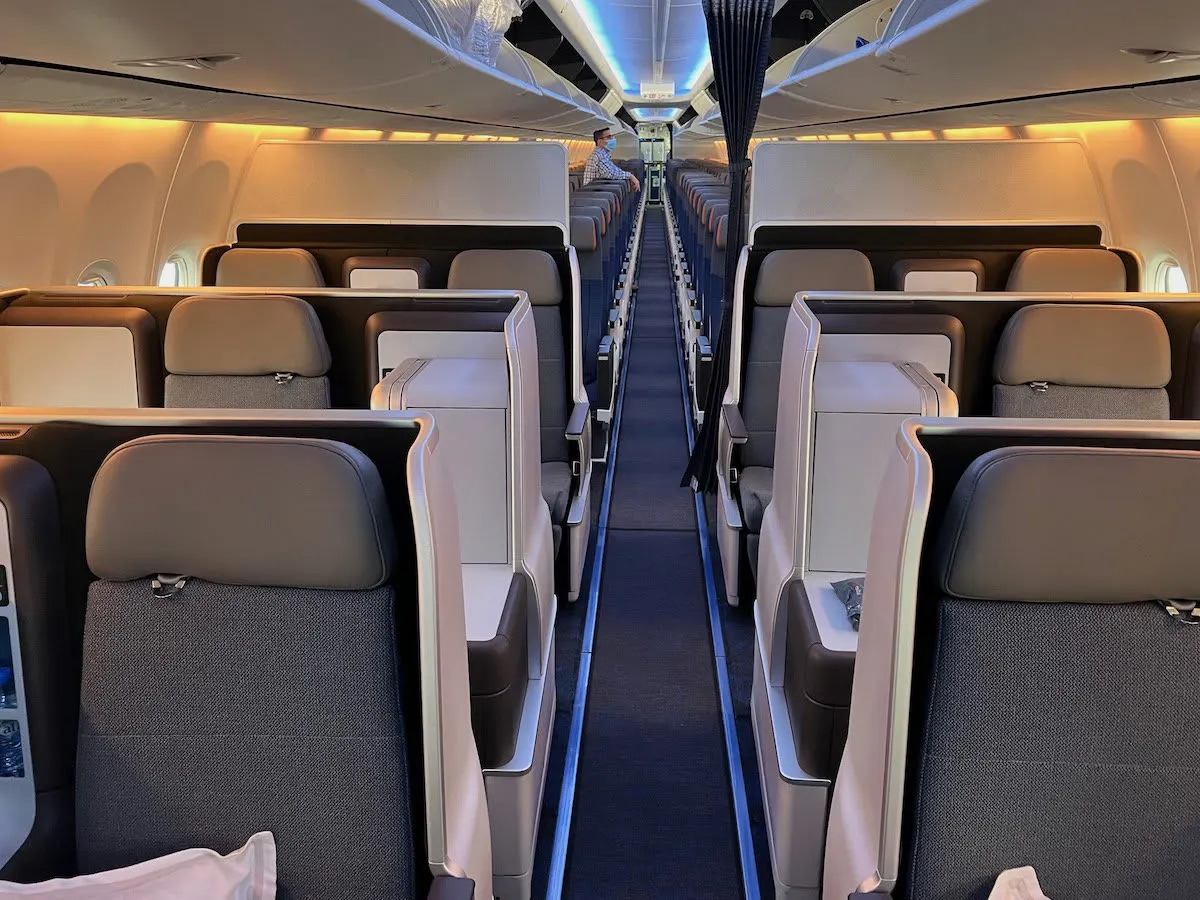
Flydubai Upgrading 21 Boeing 737 MAX 8s to Flat Bed Seats
Flydubai is retrofitting 21 Boeing 737 MAX 8 aircraft with lie-flat business class seats to standardize its premium product by late 2027.
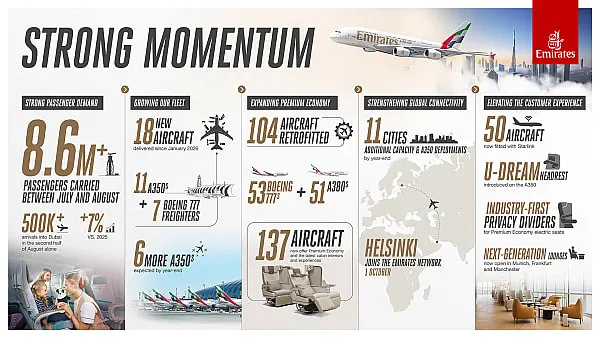
Emirates Winter Booking Momentum Grows Amid Fleet Expansion
Emirates carried 8.6 million passengers this summer and enters winter with strong demand as it accelerates fleet retrofits and network growth.
Air Arabia Consortium Gains AOC for New Dammam Budget Airline
A Saudi GACA-led consortium including Air Arabia has secured an AOC to launch a new budget airline based at Dammam's King Fahd International Airport.
Turkish Airlines Exits Luanda as Angola Hub Struggles
Turkish Airlines dropped its Luanda route as Angola's new airport struggles to attract traffic, handling only 756,028 passengers in 2025.
Red Sea Airlines Leases Two 737 MAX 8s for 2027 Expansion
Red Sea Airlines signed a lease for two Boeing 737 MAX 8 aircraft from SMBC Aviation Capital, arriving in 2027 to support its 14-aircraft fleet goal.
Avelo CEO Warns Airfares May Rise on Jet Fuel Price Spikes
Avelo Airlines CEO Andrew Levy warns that rising fuel costs may force fare increases as global jet fuel prices reach $171.01 per barrel.