EasyJet Flight U23905 Evacuated After Powerbank Fire

Co-Founder & CTOCo-Founder & CTO driving the technology and data systems behind Omni Flights.
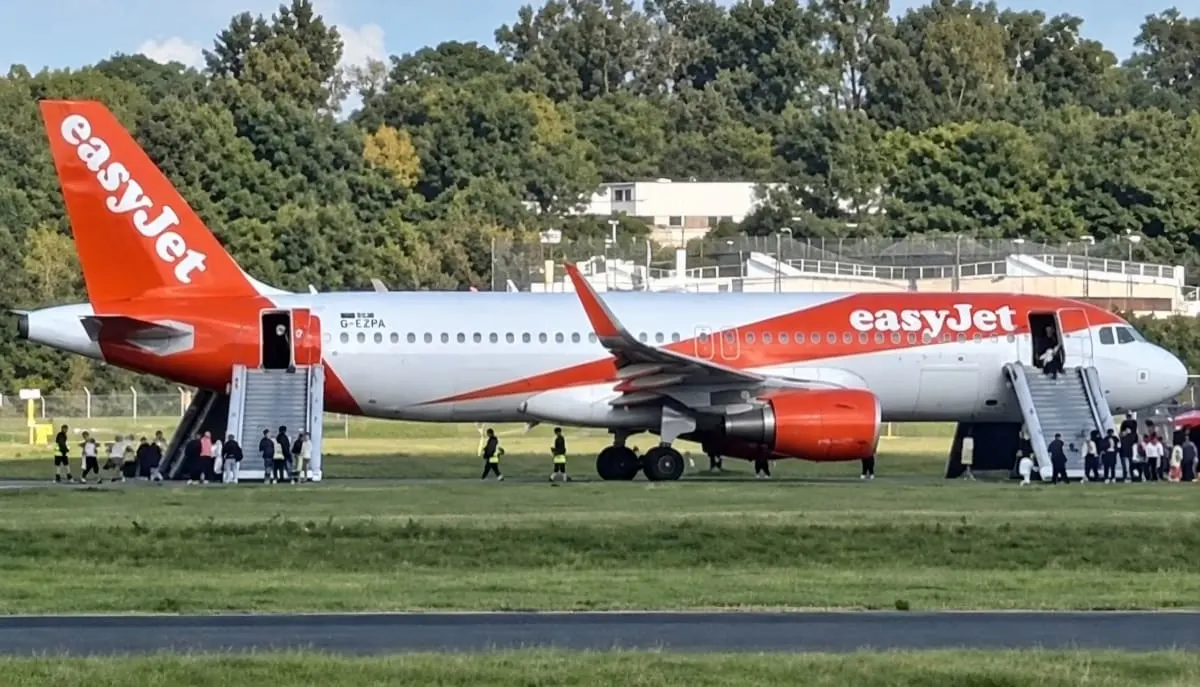
An easyJet A320 was evacuated at Milan Malpensa on September 10 after a passenger's powerbank caught fire in an overhead locker, causing two injuries.
Key Takeaways
- •EasyJet flight U23905 evacuated 146 passengers at Milan Malpensa.
- •Powerbank thermal runaway in an overhead bin triggered the emergency.
- •UK CAA reports a 98% increase in lithium battery incidents since 2024.
- •EasyJet prohibits in-flight powerbank charging to ensure cabin safety.
Incident Overview and Evacuation
EasyJet flight U23905 from Milan Malpensa (MXP) to Prague was evacuated via emergency slides on September 10, 2026, following a fire involving a lithium-ion powerbank. The incident occurred while the Airbus A320 (registration OE-IVS) was taxiing for departure. Cabin crew identified smoke emanating from an overhead locker, prompting the flight crew to abort the take-off and maneuver the aircraft to a position near the airport fire station. All 146 passengers aboard were successfully evacuated via the aircraft's inflatable slides. According to the Agenzia Nazionale per la Sicurezza del Volo (ANSV), two passengers sustained minor injuries during the evacuation process.
The Role of Lithium Batteries
Preliminary investigations by the ANSV indicate the fire originated from a portable charger packed inside a trolley bag stored in the overhead bin. The lithium cells within the device reportedly entered thermal runaway, a process where internal heat causes a rapid and uncontrollable increase in temperature, leading to smoke and potential ignition. While the cabin did not experience a full-scale conflagration, the presence of smoke necessitated an immediate emergency response. Operations at Milan Malpensa were disrupted for approximately one hour as emergency services secured the aircraft and cleared the runway, with operations resuming on one runway by 6:30 p.m.
Escalating Safety Concerns
This event is part of a growing trend of lithium battery-related incidents in commercial aviation. Data from the UK Civil Aviation Authority (CAA) shows that reports of overheating passenger devices nearly doubled between 2024 and 2025, reaching approximately two incidents per week. As the UK Civil Aviation Authority warned in June 2026, the prevalence of millions of incorrectly packed batteries poses a significant threat to flight safety. Giancarlo Buono, Director of Aviation Safety at the CAA, has stressed that passengers must keep batteries in the cabin rather than checked luggage to ensure crew can intervene rapidly if a thermal runaway occurs.
Technical Analysis: Thermal Runaway Risks
The aviation industry is currently grappling with the increasing frequency of thermal runaway incidents. Historically, the destruction of an Air Busan Airbus A321 in January 2025 serves as a stark precedent for the potential severity of these fires when they occur in overhead bins. Similarly, a Virgin Australia flight in July 2025 required crew intervention to extinguish a fire on descent. These events demonstrate that even small consumer electronics can compromise airframe integrity if not managed correctly. Current industry trends show carriers like easyJet and Emirates moving beyond standard regulatory requirements by implementing outright bans on the use of powerbanks during flight. This shift reflects a move toward stricter control, as regulators like EASA (European Union Aviation Safety Agency) and the ICAO (International Civil Aviation Organization) continue to refine guidelines for lithium battery carriage.
What Comes Next for Battery Safety
Following the Milan incident, the ANSV is conducting a formal investigation into the specific portable charger involved. A final incident report is expected by mid-to-late 2027. In the interim, passengers can expect heightened enforcement of cabin baggage policies. EasyJet currently limits passengers to two powerbanks, which must be carried in cabin bags and are strictly prohibited from being used for in-flight charging. Regulatory bodies are reportedly considering further industry-wide restrictions on the carriage of powerbanks to mitigate the risk posed by uncertified or damaged lithium cells, with potential policy updates expected throughout 2027.
Why This Matters for Passengers
This incident underscores the critical necessity of adhering to strict baggage safety protocols. For passengers, the failure to properly stow lithium-ion devices translates to significant operational disruptions and potential safety hazards during critical phases of flight. The incident signals a broader move toward zero-tolerance policies regarding in-flight battery usage, as airlines prioritize the ability of cabin crew to rapidly isolate and extinguish potential fires before they escalate into systemic cabin emergencies.
Frequently Asked Questions
- Why did easyJet flight U23905 evacuate at Milan Malpensa?
- The flight was evacuated because a passenger's lithium-ion powerbank caught fire in an overhead locker while the aircraft was taxiing, causing smoke to fill the cabin.
- Are passengers allowed to charge devices using powerbanks on easyJet flights?
- No, easyJet strictly prohibits the use of powerbanks for charging devices mid-flight. Powerbanks must be carried in cabin baggage and should be kept on the passenger's person to allow for rapid crew intervention in the event of a fire.
For in-depth airline coverage and commercial aviation news, omniflights.com delivers timely industry insights. Follow aviation sustainability efforts, emissions research, and green initiatives in the Environmental section at omniflights.com/environmental.
Written by Shashank Shukla
Co-Founder & CTO leading the engineering and AI systems behind Omni Flights. Covers aviation technology, flight safety, aircraft manufacturing, and emerging aerospace developments.
Visit ProfileYou Might Also Like
Discover more aviation news based on similar topics
Ryanair Flight RK514 Diverts to Birmingham After Emergency
Ryanair flight RK514 diverted to Birmingham Airport on September 13, 2026, following a medical emergency involving a passenger.
Amazon Suspends 21 Air After Fatal Miami 767 Runway Overrun
Amazon has suspended operations with 21 Air following a fatal Boeing 767 runway overrun at Miami International Airport that resulted in five deaths.
FAA Proposes A220 Fuel Line Inspections for US Operators
The FAA issued a proposed directive requiring inspection of motive-flow fuel lines on 13 US-registered Airbus A220s to prevent potential leaks.
NATS Denies Military Jet Role in UK ATC Outage
The UK Ministry of Defence denied its aircraft caused a NATS outage that led to over 2,000 flight cancellations and calls for CEO resignation.
21 Air Miami Crash: NTSB Investigates 767 Runway Overrun
A fatal 21 Air Boeing 767 crash at Miami International Airport has triggered an NTSB investigation amid scrutiny of Amazon Air's contract oversight.

Amazon Cargo Plane Crash: 5 Remembered After MIA Excursion
Five cleaning crew members died after an Amazon-contracted Boeing 767 overran the runway at Miami International Airport at 158 knots.