EASA Signals Regulatory Truce With Boeing, Production Risks Persist

Co-Founder & CEOAviation News Editor delivering trusted coverage across the global aviation industry.
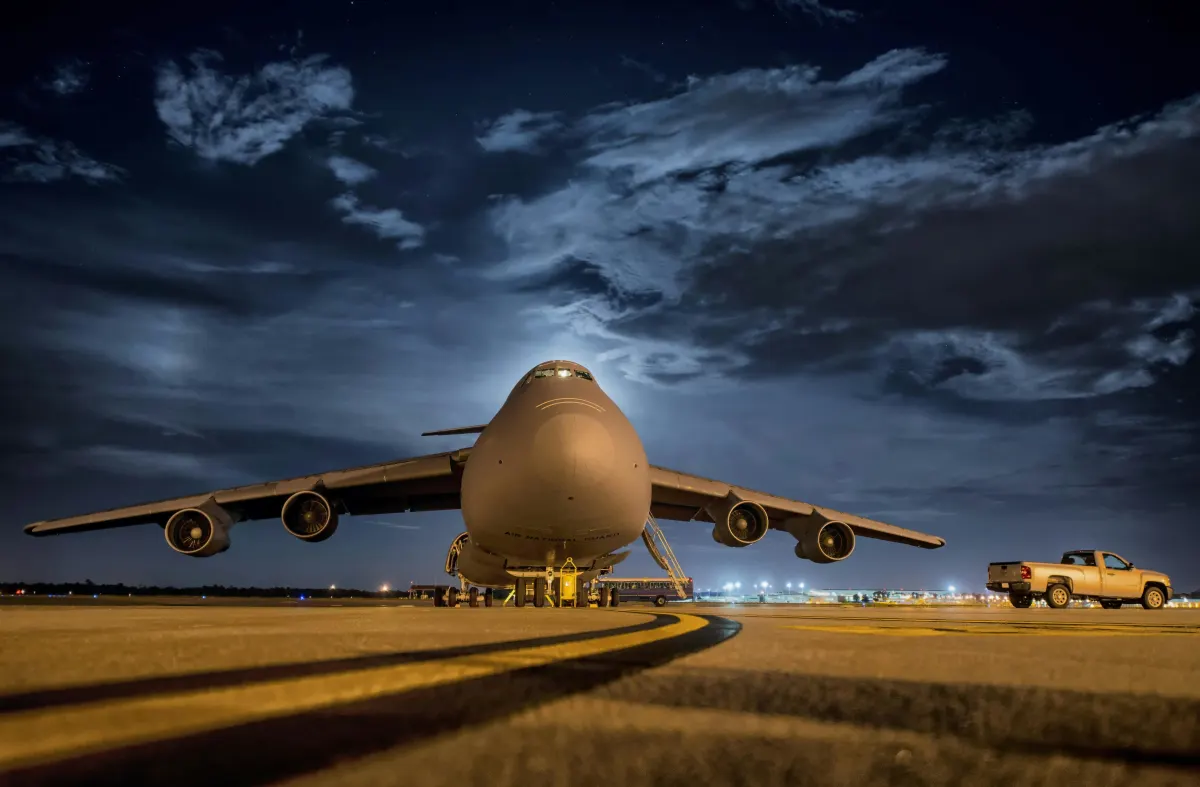
EASA leadership signaled a de-escalation in tensions with Boeing, but FAA production caps and ongoing quality control scrutiny continue to pose risks.
Key Takeaways
- •Signals improved EASA-FAA relations, reducing near-term certification risks for new Boeing models.
- •Maintains FAA production cap at 42 737 MAX aircraft per month, constraining revenue and delivery schedules.
- •Highlights a split between design approval trust and manufacturing process scrutiny following recent quality issues.
- •Paves the way for expected 737 MAX 7 and MAX 10 certifications in 2026 and 2027.
A significant shift in tone from the European Union Aviation Safety Agency (EASA) leadership in March 2026 has provided Boeing with a crucial, albeit temporary, reprieve from transatlantic regulatory pressure. EASA Executive Director Florian Guillermet signaled a restoration of trust with the U.S. Federal Aviation Administration (FAA), suggesting Boeing is now appropriately responding to heightened safety scrutiny.
While this de-escalation eases immediate concerns about the validation of new Boeing aircraft designs in Europe, it does not resolve the manufacturer's core production challenges. The FAA continues to impose a strict production cap on the 737 MAX program, creating a bifurcated risk profile for Boeing: a smoother path for future aircraft certification but a tightly constrained manufacturing environment governed by intense, ongoing oversight.
Regulatory Détente and the BASA Framework
The improved sentiment was articulated by EASA's Executive Director, Florian Guillermet, in March 2026. "We are working now as trustful partners... We do see that the FAA is taking care of what they should be taking care of, and that Boeing is reacting to that in the appropriate manner," he stated. This marks a notable reversal from earlier warnings by his predecessor, who had threatened to suspend EASA's recognition of U.S. production approvals—a move that would have effectively halted Boeing deliveries to European customers.
This partnership is foundational to the Bilateral Aviation Safety Agreement (BASA) between the two regulatory bodies. The BASA framework allows the FAA and EASA to recognize each other's safety and production approvals, streamlining the global aircraft certification process. A suspension of this trust, particularly following the January 2024 Alaska Airlines door plug incident, would have created significant disruptions for Boeing and its European airline customers. Guillermet's comments suggest that EASA is now confident in the FAA's increased oversight of Boeing's production lines.
Production Reality: The FAA's Firm Grip
Despite the diplomatic thaw, the operational reality for Boeing remains challenging. The FAA's direct oversight of the 737 MAX production line, intensified after the 2024 incident, continues to dictate the manufacturer's output. In October 2025, the FAA raised the monthly production cap from 38 to 42 aircraft, but this rate remains below Boeing's stated target of 47 aircraft per month. According to FAA announcements, each incremental increase is gated by rigorous safety and quality reviews, indicating a cautious, data-driven approach to authorizing higher production volumes.
This scrutiny is not without financial consequences. The FAA is currently seeking $3.1 million in fines from Boeing for alleged safety violations that occurred between September 2023 and February 2024, underscoring the granular level of compliance being enforced. While the FAA reinstated Boeing's Organization Designation Authorization (ODA) in late 2025, allowing the company to conduct certain final safety checks, the agency's direct presence on the factory floor ensures that ultimate authority rests with the regulator.
Stakeholder and Industry Impact
The tempered regulatory environment has distinct consequences for various stakeholders. For Boeing Commercial Airplanes, the reduced threat of an EASA-led delivery suspension provides critical stability for its European order book. However, the FAA's production cap at 42 aircraft per month continues to constrain revenue and complicates efforts to meet delivery commitments.
For major European customers like Ryanair, a key 737 MAX operator, the EASA-FAA truce reduces the immediate risk of delivery delays, which is crucial for fleet expansion and planning for peak travel seasons. The stability allows them to more reliably forecast capacity growth. Conversely, the ongoing production constraints at Boeing maintain pressure on the global aircraft supply, which benefits competitor Airbus by limiting Boeing's ability to capture market share and potentially driving up lease rates for available narrow-body aircraft.
Historical Context: A Pattern of Heightened Scrutiny
The current regulatory landscape is a direct consequence of past safety crises. The worldwide grounding of the Boeing 737 MAX in March 2019 was the catalyst that first strained EASA-FAA relations. That event prompted EASA to abandon its long-standing practice of automatically accepting FAA design approvals, demanding its own independent reviews of critical systems on Boeing aircraft.
This pattern of direct intervention was reinforced by the Boeing 787 Dreamliner delivery halts between 2020 and 2022, where the FAA stepped in to address manufacturing flaws. The January 2024 Alaska Airlines Flight 1282 incident served as the final trigger, leading to the current FAA production cap and the initial threats from EASA. In this context, the recent détente is not a return to the pre-2019 status quo but an acceptance of a new normal where transatlantic cooperation coexists with independent verification and direct manufacturing oversight.
Technical Analysis
This development indicates a maturation of the post-2019 regulatory framework. The fundamental relationship between EASA and the FAA has been permanently altered; mutual recognition is now conditional and subject to continuous verification. The current situation suggests a divergence in regulatory focus: EASA appears increasingly willing to trust the FAA's oversight of design certification processes under the BASA, preventing duplicative and costly design reviews for new variants. However, both agencies, led by the FAA's direct mandate, are applying unprecedented scrutiny to the manufacturing and quality control processes. This bifurcation allows for progress on certifying new aircraft like the 737 MAX 7 and MAX 10, while preventing a premature ramp-up in production that could compromise quality. This dynamic follows the trajectory set by previous incidents, cementing a new paradigm where production rates are a trailing indicator of proven safety and quality performance, not a leading driver of financial targets.
What Comes Next
With a more stable regulatory relationship, Boeing's focus shifts to meeting the FAA's stringent production quality metrics to unlock further rate increases. The manufacturer is expected to seek FAA approval to increase the 737 MAX production rate toward its goal of 47 aircraft per month in mid-to-late 2026, contingent on demonstrating sustained quality control improvements.
On the certification front, several key milestones are anticipated. The FAA certification for the Boeing 737 MAX 7 is expected in August 2026, followed by the certification of the larger Boeing 737 MAX 10 in late 2026 or early 2027. The smoother EASA-FAA relationship is critical for ensuring these new variants receive timely validation for the European market after their initial FAA approval.
Why This Matters
The truce between EASA and the FAA stabilizes a critical transatlantic aviation relationship, providing airlines with more predictable delivery schedules. However, it also solidifies a new era of stringent manufacturing oversight that will likely moderate Boeing's production growth for the foreseeable future. This dynamic directly impacts fleet planning for airlines worldwide and shapes the competitive landscape between Boeing and Airbus.
omniflights.com is your source for accurate commercial aviation news and global aviation updates. Get the latest updates on major hubs, regional terminals, and airport operations via the Airports section at omniflights.com/airports.
Written by Hardik Vishwakarma
Co-Founder & Aviation News Editor leading initiatives that improve trust and visibility across the global aviation industry. Covers airlines, airports, safety, and emerging technology.
Visit ProfileYou Might Also Like
Discover more aviation news based on similar topics

FAA Faces $3.5 Billion Shortfall in ATC Modernization
FAA Administrator Bryan Bedford reported a $3.5 billion shortfall for the Brand New Air Traffic Control System, totaling $16 billion for Phase One.
FAA Pauses Flights into LAX Due to Staffing Shortages
The FAA issued a temporary ground stop for flights bound for LAX on Monday morning due to staffing shortages at the Southern California TRACON.

FAA Proposes Ending Overland Supersonic Flight Ban
The FAA has proposed a new performance-based noise standard to replace the 1973 ban on overland supersonic flight, enabling future commercial travel.

DOT Rule Exempts Airlines From Cyberattack Delay Costs
Starting October 19, 2026, the DOT will allow airlines to withhold meal and hotel vouchers for delays caused by cyberattacks and nine other events.

Wizz Air, Ryanair Demand NATS Reform After ATC Failure
Wizz Air and Ryanair are calling for urgent NATS reform after a September 8 system failure caused over 1,000 flight cancellations across the UK.

US Treasury Iran Sanctions Target 27 Airlines, Mahan Air
The U.S. Treasury sanctioned 36 entities, including 27 Iranian airlines, to disrupt illicit procurement networks used by the Iranian government.