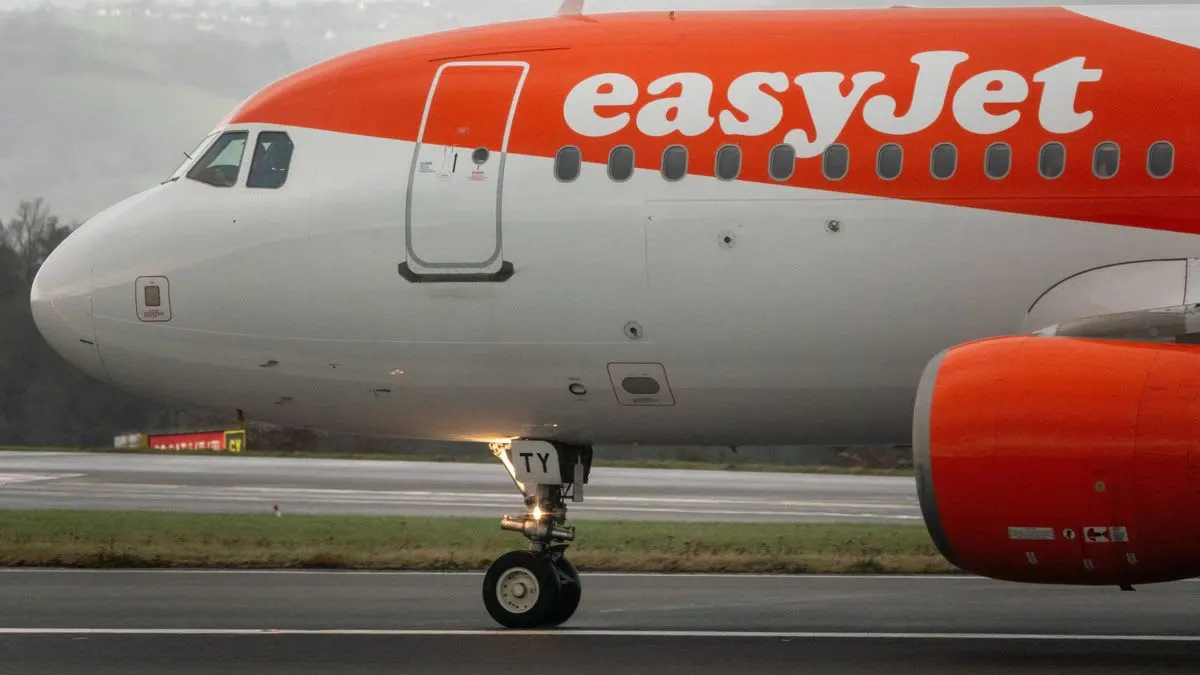
Dubai Drone Strike Strands Australians, Halts DXB Flights


A drone strike temporarily closed Dubai International Airport (DXB), stranding thousands of Australians amid broader Middle East travel disruptions.
Key Takeaways
- •Drone strike temporarily shuts down Dubai International Airport (DXB), the world's busiest international hub.
- •Strands nearly 115,000 Australians in the Middle East, with 11,000 officially seeking to leave.
- •Triggers a massive Australian consular effort, including land evacuations by bus from Qatar to Saudi Arabia.
- •Prompts Australian government to issue 'do not travel' warnings for the UAE and surrounding region.
A drone strike on Dubai International Airport (DXB), the world's busiest hub for international passengers, triggered a temporary shutdown and significant flight disruptions, compounding travel chaos for thousands of Australians in the Middle East. The incident prompted an urgent response from the Australian government, which is managing what its Foreign Minister has called an unprecedented consular crisis.
The airport was forced to suspend operations on Saturday night after what the Dubai Media Office described as sustaining minor damage. Operations have since resumed, but the event underscores the vulnerability of major aviation infrastructure to regional conflict. The disruption occurred as the United Arab Emirates (UAE), Qatar, and Bahrain reported intercepting drones and missiles, highlighting the volatile security situation impacting civil aviation across the region.
Australia's Consular Response
The Australian government is grappling with a large-scale consular effort to assist its citizens affected by widespread airspace closures. According to Foreign Minister Penny Wong, almost 115,000 Australians are currently in the Middle East, with 11,000 having formally registered with the Department of Foreign Affairs and Trade (DFAT) to seek assistance in leaving the region. “This is a very big consular effort ... this dwarfs any consular crisis we have previously had,” Senator Wong told the Australian Broadcasting Corporation (ABC).
In response to limited airspace over Qatar, the government has organized alternative evacuation routes. The first three buses carrying 92 Australian citizens, permanent residents, and their families successfully made a land crossing from Doha, Qatar, to Riyadh, Saudi Arabia, to access more readily available flights home. This use of land crossings illustrates a critical contingency strategy when air travel is compromised. Citizens in affected areas are urged to register via the official DFAT Crisis Hub to receive direct information and assistance.
Government Advisories and Flight Issues
Canberra has issued stern travel warnings through its Smartraveller service, advising Australians to not travel to the UAE, Bahrain, Iran, Iraq, Israel, Kuwait, Lebanon, Palestine, Qatar, Syria, and Yemen. The advisory warns that UAE airspace could close at short notice, directly impacting flights at both Dubai and Abu Dhabi airports. The official government advice is available on the Smartraveller website.
Despite government-facilitated repatriation flights bringing over 1,300 Australians home, challenges remain. Assistant Minister for Foreign Affairs and Trade, Matt Thistlethwaite, expressed disappointment over reports of commercial flights returning to Australia with empty seats. “Our officials have expressed that concern to the airline officials,” Mr. Thistlethwaite stated, reinforcing the government's position that “the best available option remains commercial flights home to Australia.” He urged Australians in the region to accept any available commercial seat they are offered.
Drone Threats: A Persistent Aviation Risk
The incident at DXB is a stark reminder of the persistent threat drones pose to airport security and operations. While details of the Dubai event are specific to a regional conflict, the potential for widespread disruption from unmanned aerial systems is a global concern. A notable precedent occurred in 2018, when drone sightings at London Gatwick Airport forced a 33-hour shutdown, leading to the cancellation of approximately 1,000 flights and affecting 140,000 passengers. Such events demonstrate how even small, low-cost devices can paralyze major international airports, causing significant economic and logistical damage.
Why This Matters
This event highlights the increasing intersection of regional geopolitical instability and global civil aviation. It demonstrates the vulnerability of critical infrastructure like DXB and the cascading effect such disruptions have on international travel and supply chains. For governments, it underscores the immense logistical complexity of modern consular crises, forcing the use of multi-modal transport solutions like land convoys when airspace is contested. The incident serves as a critical case study for airport operators and security agencies worldwide on mitigating the evolving threat of drone incursions.
For global airline trends and commercial aviation news, turn to omniflights.com. For detailed airline coverage, route changes, and fleet moves, explore the Airlines section at omniflights.com/airlines.

Written by Ujjwal Sukhwani
Aviation News Editor & Industry Analyst delivering clear coverage for a worldwide audience. Covers flight operations, safety regulations, and market trends with expert analysis.
Visit ProfileYou Might Also Like
Israel Bans United Airlines Pilot Over Pro-Iran Posts

Attack on Saudi King Fahd International Airport
LATAM Airlines A320 Engine Fire During Takeoff in Peru
Riyadh Airport Limits Traffic Following Houthi Attacks
FAA Mandates Fuel Valve Inspections for A330 and A340