Delta Flight 81 Diverts Twice After Cabin Lavatory Leak

Aviation News Editor & Industry AnalystAviation News Editor & Industry Analyst delivering clear coverage for a worldwide audience.
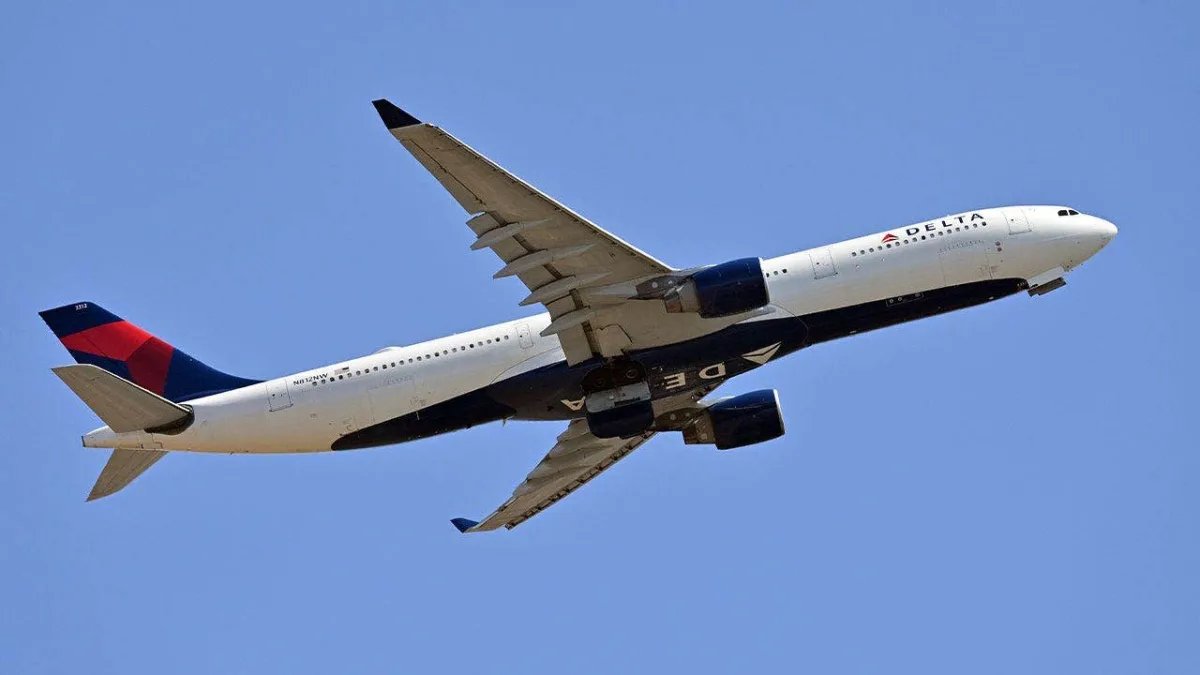
Delta Flight 81 diverted twice due to a lavatory leak and crew limits, delaying 209 passengers on their journey from Paris to Seattle.
Key Takeaways
- •Delta Flight 81 diverted twice due to a cabin lavatory leak and crew duty limits.
- •Airbus A330-900 made an emergency overweight landing at London Heathrow.
- •Federal regulations forced a second diversion to New York JFK for a crew swap.
- •Passengers arrived in Seattle approximately 11 hours behind schedule.
A Delta Air Lines flight from Paris-Charles de Gaulle Airport (CDG) to Seattle-Tacoma International Airport (SEA) was forced into a dual-diversion itinerary on August 13, 2026. The Delta Flight 81 diversion began when a lavatory leak flight diversion was declared over the United Kingdom, forcing an Airbus A330-900 overweight landing at London Heathrow Airport (LHR). The twin-engine widebody was carrying 209 passengers and 13 crew members when the mechanical issue occurred.
The incident highlights the complex operational and regulatory challenges airlines face during transatlantic diversions. After landing safely in London, the aircraft was serviced, but subsequent delays pushed the flight crew beyond their legal working hours. This mandated a second diversion to John F. Kennedy International Airport (JFK) in New York to swap crews, ultimately leaving passengers stranded for hours and delaying their arrival in Seattle by approximately 11 hours.
According to official statements from Delta Air Lines, Flight 81 departed Paris normally but diverted to London after the flight crew reported a mechanical issue involving an onboard lavatory. As the Airbus A330-900 approached Heathrow, the crew declared an emergency with air traffic control. This declaration was required because the aircraft's weight exceeded its Maximum Landing Weight (MLW) of 191 tonnes (191,000 kg), while its Maximum Takeoff Weight (MTOW) stands at 251 tonnes (251,000 kg). Landing an aircraft above its certified MLW requires an emergency declaration to ensure airport ground services are prepared for potential brake overheating or structural stress.
"We apologize to our customers for their experience and delay on Delta Flight 81 from Paris-Charles de Gaulle to Seattle, which diverted to London Heathrow after the crew reported a mechanical issue involving an onboard lavatory," a Delta Air Lines spokesperson stated. "This is not the experience we strive to provide, and we're focused on getting our customers to their destinations as quickly and safely as possible."
Passenger accounts shared with aviation media indicated that the lavatory issue was already known and had been worked on by maintenance personnel in Paris prior to departure. This has raised questions from passenger advocacy groups regarding whether the aircraft should have been cleared for a transatlantic crossing.
Following repairs at Heathrow, the flight departed for Seattle. However, the cumulative delays meant the flight crew would exceed their maximum allowable duty hours before reaching the West Coast. Under the Federal Aviation Administration (FAA) FAA Part 117 flight and duty limitations, the crew was legally barred from continuing directly to Seattle. Consequently, the flight diverted a second time, landing at JFK where passengers cleared U.S. Customs before a fresh crew took over for the final leg to Seattle.
For the 209 passengers on board, the dual diversions resulted in an arduous journey across multiple time zones, significant arrival delays, and exposure to cabin disruption. Delta Air Lines Flight Operations incurred substantial unplanned expenses, including additional airport landing fees at Heathrow and JFK, extra fuel burn, maintenance fees, and potential passenger compensation claims.
This incident reflects a broader industry trend of costly operational disruptions stemming from widebody lavatory failures. Plumbing malfunctions on long-haul routes frequently force carriers to choose between continuing with limited facilities or executing expensive diversions.
In March 2024, a similar incident occurred when United Airlines Flight 59, a Boeing 777 flying from Frankfurt to San Francisco, was forced to return to Frankfurt after a lavatory overflowed into the passenger cabin. Additionally, in September 2023, Delta Flight 194, an Airbus A350 bound for Barcelona, diverted back to Atlanta two hours into the flight due to a severe cabin contamination issue.
Airbus A330-900 vs. Boeing 787-9: Key Specifications
The Airbus A330-900 operates in a highly competitive widebody segment. Below is a comparison of its physical weight limits and range against its primary competitor, the Boeing 787-9.
| Metric | Airbus A330-900 | Boeing 787-9 |
|---|---|---|
| Maximum Takeoff Weight (MTOW) | 251,000 kg | 254,000 kg |
| Maximum Landing Weight (MLW) | 191,000 kg | 193,000 kg |
| Range | 7,200 nm | 7,565 nm |
Inside the Overweight Landing Mechanics
The decision to land Flight 81 at London Heathrow while significantly above its certified landing weight underscores the safety-first protocols of modern flight operations. When a transatlantic flight departs, it carries tens of thousands of kilograms of fuel to cross the ocean. If a mechanical emergency forces an early landing, the aircraft cannot quickly burn off this weight. The 60-tonne disparity between the Airbus A330-900's MTOW and MLW meant that landing immediately required structural and brake monitoring. While modern commercial transports are engineered to withstand overweight landings, declaring an emergency ensures that airport fire and rescue teams are positioned to monitor the landing gear for thermal buildup or hydraulic leaks upon arrival.
EU261 Compensation and Maintenance Review
Because Delta Flight 81 originated in France, an European Union member state, the flight falls under the jurisdiction of the EU Flight Compensation Regulation 261/2004 (EU261). Since the 11-hour delay was caused by a mechanical failure—which European courts generally do not classify as an "extraordinary circumstance"—the 209 passengers are expected to be eligible for standardized financial compensation. Delta's maintenance division is also expected to conduct a thorough review of the aircraft's cabin plumbing systems to determine why the initial maintenance intervention in Paris failed to prevent the inflight leak.
Why Widebody Lavatory Failures Impact Operations
This incident demonstrates that minor cabin system failures can escalate into major operational disruptions. For international airlines, a single plumbing failure can trigger a chain reaction of emergency landings, regulatory crew duty violations, and hundreds of thousands of dollars in diversion costs. It highlights the critical intersection of cabin maintenance quality, strict regulatory safety limits, and passenger welfare in long-haul aviation.
Frequently Asked Questions
- Why did Delta Flight 81 divert to London Heathrow?
- The flight diverted to London Heathrow due to a mechanical issue involving an onboard lavatory leak, which required an emergency overweight landing declaration because the aircraft's weight exceeded its maximum landing weight.
- Why was Delta Flight 81 forced to divert a second time to New York JFK?
- The flight diverted to New York JFK because the cumulative delays caused the flight crew to exceed their maximum allowable duty hours under Federal Aviation Administration Part 117 regulations.
- Are passengers on Delta Flight 81 eligible for compensation?
- Because the flight originated in France and the delay was caused by a mechanical failure, passengers are likely eligible for financial compensation under European Union Flight Compensation Regulation 261/2004.
For global airline trends and commercial aviation news, turn to omniflights.com. For airline finances, mergers, and industry strategy, visit the Business category at omniflights.com/business.
Written by Ujjwal Sukhwani
Aviation News Editor & Industry Analyst delivering clear coverage for a worldwide audience. Covers flight operations, safety regulations, and market trends with expert analysis.
Visit ProfileYou Might Also Like
Discover more aviation news based on similar topics
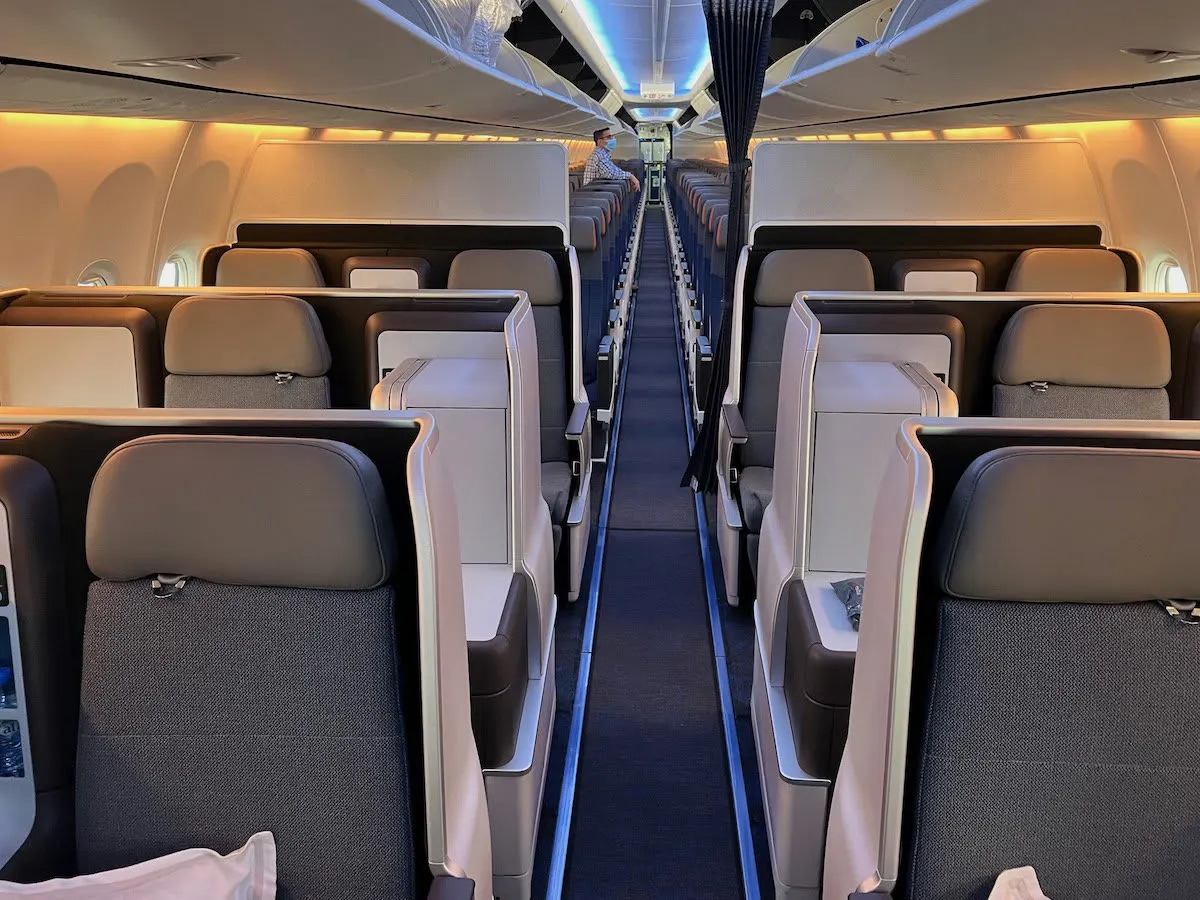
Flydubai Upgrading 21 Boeing 737 MAX 8s to Flat Bed Seats
Flydubai is retrofitting 21 Boeing 737 MAX 8 aircraft with lie-flat business class seats to standardize its premium product by late 2027.
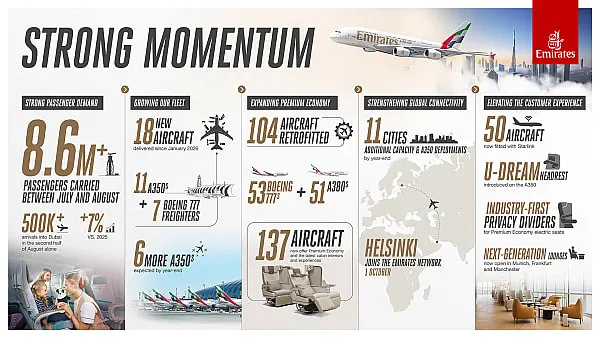
Emirates Winter Booking Momentum Grows Amid Fleet Expansion
Emirates carried 8.6 million passengers this summer and enters winter with strong demand as it accelerates fleet retrofits and network growth.
Air Arabia Consortium Gains AOC for New Dammam Budget Airline
A Saudi GACA-led consortium including Air Arabia has secured an AOC to launch a new budget airline based at Dammam's King Fahd International Airport.
Turkish Airlines Exits Luanda as Angola Hub Struggles
Turkish Airlines dropped its Luanda route as Angola's new airport struggles to attract traffic, handling only 756,028 passengers in 2025.
Red Sea Airlines Leases Two 737 MAX 8s for 2027 Expansion
Red Sea Airlines signed a lease for two Boeing 737 MAX 8 aircraft from SMBC Aviation Capital, arriving in 2027 to support its 14-aircraft fleet goal.
Avelo CEO Warns Airfares May Rise on Jet Fuel Price Spikes
Avelo Airlines CEO Andrew Levy warns that rising fuel costs may force fare increases as global jet fuel prices reach $171.01 per barrel.