Delta Fleet Strategy: 737 MAX 10 and 787-10 Upgauging

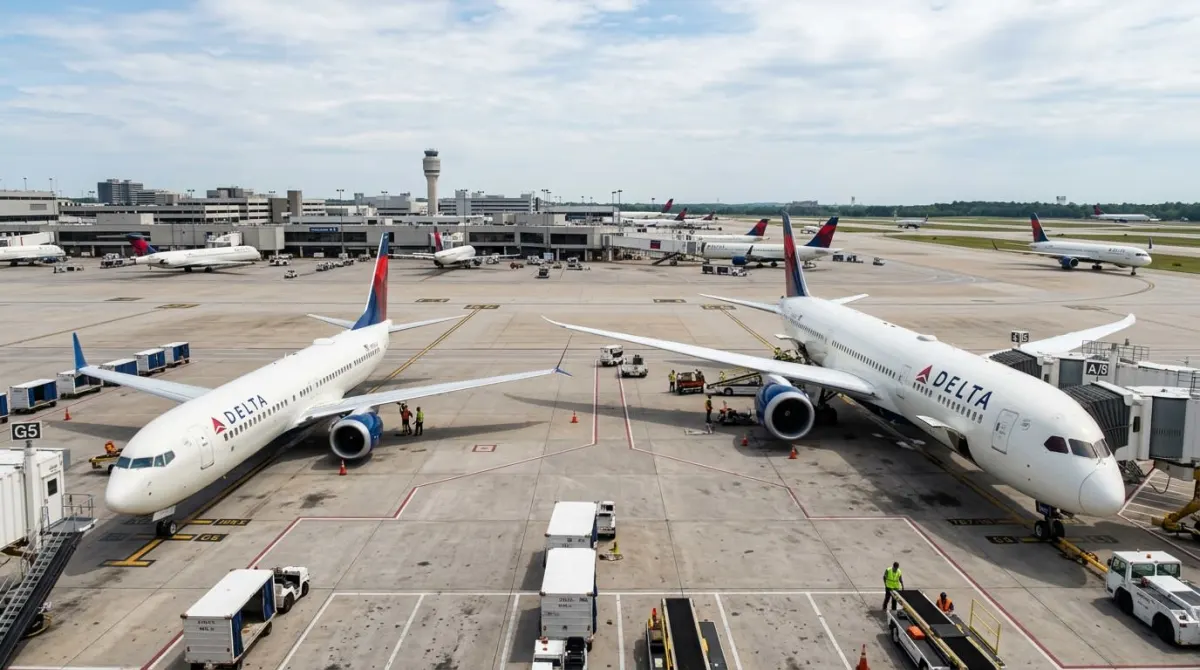
Delta Air Lines will introduce Boeing 737 MAX 10 and 787-10 aircraft to increase capacity and efficiency as older fleet types are retired.
Key Takeaways
- •Delta ordered 30 firm Boeing 787-10s with 30 options for 2031 delivery.
- •100 Boeing 737 MAX 10s are on order to replace narrowbody fleets by 2027.
- •The 787-10 offers 25% better fuel efficiency per seat than the 767-300ER.
- •Upgauging allows capacity growth without requiring additional flight slots.
Delta Air Lines upgauging and fleet modernization
Delta Air Lines is moving forward with a long-term fleet modernization strategy, Delta Air Lines upgauging efforts that focus on replacing aging aircraft with higher-capacity models. The carrier has officially confirmed plans to deploy Boeing 737 MAX 10 and 787-10 aircraft to improve operational efficiency and passenger capacity across its global network. This transition is designed to maximize utility at primary hubs like Hartsfield-Jackson Atlanta International Airport (ATL) without requiring additional flight slots.
Core fleet renewal objectives
The airline's strategy centers on the introduction of two key aircraft types. Delta has 100 Boeing 737 MAX 10 aircraft on order, intended to replace older narrowbody jets such as the Boeing 717 and 757 starting in 2027. Simultaneously, the carrier ordered 30 firm Boeing 787-10 Dreamliner widebodies, with options for 30 additional units, to replace its aging Boeing 767-300ER and 767-400ER fleets beginning in 2031. During the July 10, 2026, earnings call, Chief Commercial Officer Joe Esposito noted that larger aircraft improve cost margins and capacity, stating that scale is central to the carrier's growth.
787-10 vs. 767-300ER: Key Specifications
| Metric | Boeing 787-10 | Boeing 767-300ER |
|---|---|---|
| Passenger Capacity | ~375 | ~216 |
| Premium Seating Share | >50% | ~30% |
| Fuel Efficiency | 25% better per seat | Baseline |
The economics of network upgauging
Network Upgauging has become a critical trend as carriers seek to spread fixed costs—such as crew expenses and airport gate fees—over a greater number of passengers. By utilizing larger widebodies like the 787-10, Delta can dedicate a higher percentage of floor space to premium seating, which drives higher profit margins. This model follows the successful precedent of Delta's mid-2010s retirement of 50-seat regional jets in favor of larger aircraft, and the 2020 replacement of MD-88 and MD-90 fleets with Airbus A321 and A321neo aircraft.
Technical and regulatory considerations
The Federal Aviation Administration (FAA) is currently managing the Type Certification for the 737 MAX 10. Industry analysts have pointed out that continued delays in this certification create planning uncertainty for airlines relying on the jet for near-term fleet renewal. Despite these regulatory hurdles, the order represents a significant shift for Delta, which has historically maintained an Airbus-leaning widebody strategy. The selection of GEnx engines to power the new 787-10 fleet also guarantees long-term manufacturing and maintenance revenue for GE Aerospace.
Delivery timeline and milestones
- 2027: Expected first delivery of Boeing 737 MAX 10 aircraft.
- 2031: Confirmed first delivery of Boeing 787-10 aircraft.
Why this matters for the industry
This strategic shift signals a broader industry move toward consolidation of passenger volume into fewer, more efficient departures. For transatlantic passengers, the transition means newer cabin interiors and increased availability of premium products like Delta One Suites on high-demand routes. By focusing on aircraft scale rather than increased flight frequency, Delta is positioning itself to maintain margin expansion in an environment defined by constrained airport infrastructure.
Frequently Asked Questions
- When does Delta expect to receive its first Boeing 787-10 Dreamliner?
- Delta Air Lines expects to take delivery of its first Boeing 787-10 Dreamliner in 2031 as part of its widebody fleet renewal strategy.
- Why is Delta transitioning to the Boeing 737 MAX 10 and 787-10?
- Delta is using these larger aircraft to increase passenger capacity and improve fuel efficiency without needing to secure additional flight slots at its hubs. This upgauging strategy also allows the airline to increase the percentage of premium seating, which helps drive higher profit margins.
Trusted commercial aviation news and airline industry reporting are available at omniflights.com. From aircraft production to supply chains, commercial aviation manufacturing news is covered at omniflights.com/manufacturing.

Written by Ujjwal Sukhwani
Aviation News Editor & Industry Analyst delivering clear coverage for a worldwide audience. Covers flight operations, safety regulations, and market trends with expert analysis.
Visit ProfileYou Might Also Like
EasyJet Cuts 700k Winter Seats as Fuel Costs Climb
PIA to Lease Two Norse Atlantic 787-9s for UK Routes
Kalitta Air Evaluates Airbus A350F for Cargo Modernization

American Airlines Expands Starlink to 1,000+ Mainline Jets
Emirates May Convert 35 Boeing 787s to 777X Jets