Daytona Beach Airport Security Breached by Intoxicated Driver

Co-Founder & CEOAviation News Editor delivering trusted coverage across the global aviation industry.

An intoxicated driver was arrested at Daytona Beach Int'l Airport after breaching a gate and attempting to board aircraft, prompting a federal security...
Key Takeaways
- •Faces 9 criminal charges including attempted aircraft piracy and a third DUI offense.
- •Breached a Daytona Beach Airport perimeter gate, nearly striking a training aircraft.
- •Restrained by law enforcement in less than 4 minutes after the initial breach.
- •Prompts a federal security review of the airport's compliance with TSA regulations.
An intoxicated driver breached the perimeter of Daytona Beach International Airport (DAB) on March 25, 2026, driving onto the airfield and attempting to board multiple aircraft before being arrested. The suspect, Bryan Parker, 58, was apprehended by the Volusia County Sheriff's Office (VSO) in an incident that has triggered a federal investigation into the airport's security protocols.
The security breach highlights a critical vulnerability in airport physical barriers and underscores a rising trend of disruptions caused by intoxicated individuals. According to the Volusia County Sheriff's Office, Parker faces 9 criminal charges, including the federal offense of attempted aircraft piracy. The incident's rapid containment, with the suspect restrained in less than 4 minutes from the time of the gate crash, is now under review by the Transportation Security Administration (TSA) to assess compliance with federal security mandates.
The Incident at Daytona Beach
The breach occurred at approximately 4:25 p.m. when Parker allegedly drove a Ford Mustang through a security gate onto the airfield. After gaining access, he nearly struck a taxiing aircraft operated by Embry-Riddle Aeronautical University. He then proceeded to attempt entry into several aircraft parked at the Embry-Riddle facility. According to VSO arrest records, Parker admitted to consuming alcohol, cocaine, and marijuana prior to the incident. His charges include attempted aircraft piracy, burglary, and his third Driving Under the Influence (DUI) offense within ten years.
Security Response and Regulatory Scrutiny
Airport officials commended the swift response from law enforcement and airport staff. In a press release, Daytona Beach International Airport stated its perimeter fencing "meets or exceeds federal regulations for airport security." The Federal Bureau of Investigation (FBI) is assisting the VSO in the ongoing investigation.
The event falls directly under federal regulations detailed in 49 CFR Part 1542 - Airport Security, which is enforced by the TSA. These rules govern airport perimeter security, access control systems, and required response plans for unauthorized intrusions. Furthermore, the federal charge of attempted aircraft piracy is covered by 18 U.S.C. § 32, which addresses the destruction of aircraft or related facilities.
Industry Context and Historical Precedents
The Daytona Beach incident aligns with a documented increase in scrutiny on airport perimeter security nationwide. Industry bodies like the National Safe Skies Alliance develop research and guidance, such as the Program for Applied Research in Airport Security (PARAS), to help airports mitigate such vulnerabilities.
This situation is analogous to a November 2021 breach at Los Angeles International Airport (LAX), where a driver also crashed through a fence onto the airfield, prompting security reviews at major hubs. Similarly, in December 2018, an intoxicated individual was arrested at Van Nuys Airport after breaching the perimeter in an attempt to steal a business jet. Both precedents resulted in heightened security audits and a re-evaluation of physical barriers, an outcome now considered likely for DAB.
Stakeholder Impact
For Daytona Beach International Airport, the breach causes immediate operational disruption and the high probability of a mandated security audit by the TSA, which could lead to costly upgrades to its perimeter gates and access control technology. Embry-Riddle Aeronautical University, whose aircraft was nearly struck, must now review its on-airfield security protocols for parked and taxiing aircraft to prevent unauthorized access. The TSA is required to conduct a thorough investigation, which could influence security compliance audits at similarly sized airports.
What Comes Next
Following his arrest, Bryan Parker is scheduled for a bail hearing and arraignment in late March or early April 2026, according to the Volusia County Court. In the aftermath of the breach, a joint security review of the DAB perimeter by the TSA and the Federal Aviation Administration (FAA) is expected to occur in the second quarter of 2026. This review will assess the gate's structural integrity, detection systems, and the airport's response coordination.
Why This Matters
This security breach at a commercial service airport serves as a critical stress test for federally mandated security protocols. It highlights the persistent challenge of securing vast airport perimeters against determined or impaired individuals. The subsequent federal investigation and its findings will likely influence security standards and response strategies at regional airports across the United States.
Get breaking commercial aviation news and expert airline analysis at omniflights.com. Follow aviation sustainability efforts, emissions research, and green initiatives in the Environmental section at omniflights.com/environmental.
Written by Hardik Vishwakarma
Co-Founder & Aviation News Editor leading initiatives that improve trust and visibility across the global aviation industry. Covers airlines, airports, safety, and emerging technology.
Visit ProfileYou Might Also Like
Discover more aviation news based on similar topics

IndiGo Opens Commercial Flights at Bhogapuram
IndiGo launched the first commercial flight to the new Rs 5,700 crore Bhogapuram Airport, shifting civilian traffic from the old civil enclave.

Sydney Airport Master Plan 2045 Approved
The Australian government approved Sydney Airport's Master Plan 2045, enabling terminal integration to handle 72.6 million passengers by 2045.

Visakhapatnam Airport Ends Commercial Flights for 30 Years
Visakhapatnam Airport ended scheduled commercial flights ahead of Bhogapuram's opening, triggering a 30-year moratorium on civil operations.
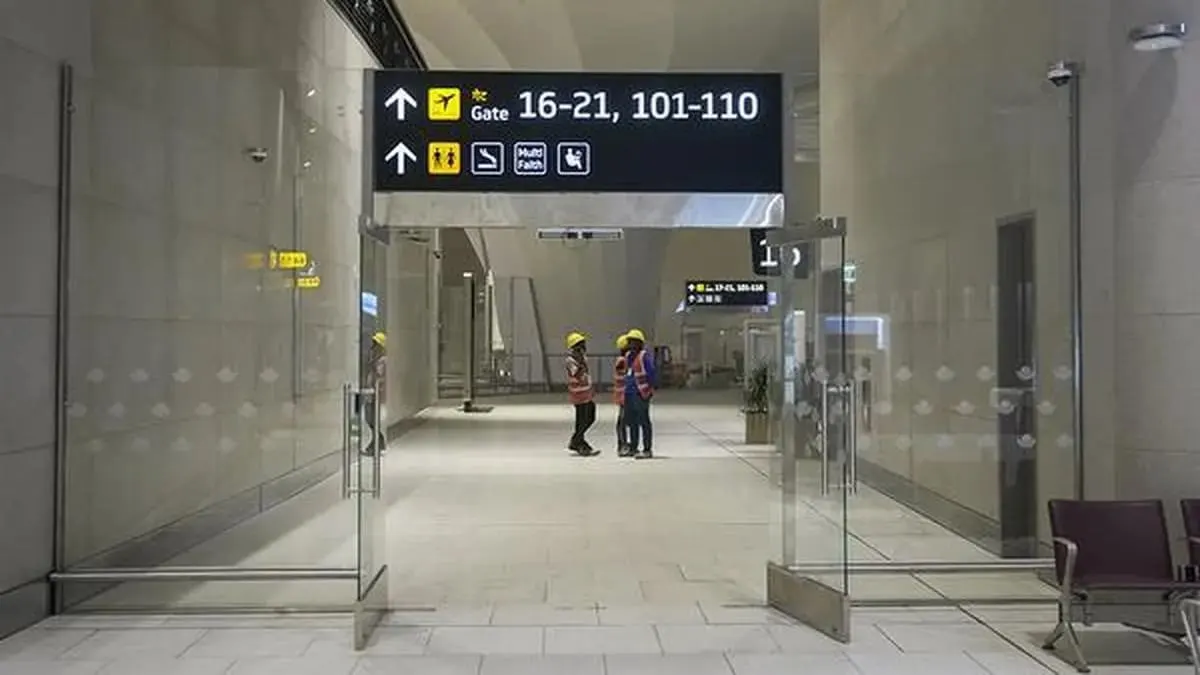
NMIA Approves 13 Airlines for Cargo Operations
NMIA has approved 13 international airlines to launch freighter flights, accelerating Mumbai's transition to a dual-airport cargo system.

Hong Kong Air Cargo Lands First Navi Mumbai Freighter
Hong Kong Air Cargo launched flights to Navi Mumbai, marking the airport's first international freighter service with 6 weekly movements.

ENAC Suspends Catania Flights Amid Mount Etna Eruption
ENAC suspended operations at Catania Airport due to a Mount Etna eruption, resulting in 700 flight cancellations and massive regional diversions.