CBP Orders 10 Airbus H125 Helicopters for Border Security

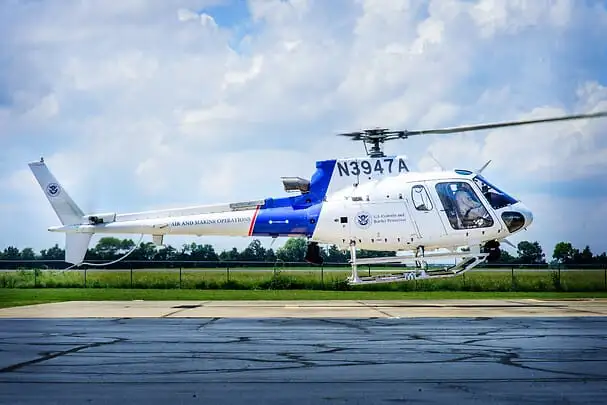
U.S. Customs and Border Protection Air and Marine Operations has finalized a contract to acquire 10 new Airbus H125 helicopters for border security.
Key Takeaways
- •CBP AMO finalized a contract for 10 new Airbus H125 helicopters.
- •The H125 fleet will replace legacy AS350 models for border security.
- •New helicopters feature dual-channel FADEC for enhanced engine control.
- •Manufacturing will take place at the Airbus facility in Columbus, Mississippi.
Fleet Modernization at CBP
U.S. Customs and Border Protection (CBP) Air and Marine Operations (AMO) has finalized a contract to purchase 10 light-single Airbus H125 helicopters to support law enforcement, search, and border security duties. This official acquisition announcement marks a significant step in the agency's broader Light Enforcement Platform (LEP) strategy. By integrating these modern airframes, the agency aims to enhance its tactical patrol and surveillance capabilities across complex operational environments.
Impact on Operational Capability
The procurement serves as a critical component of a Department of Homeland Security (DHS) mandate to modernize the agency's rotary-wing fleet. According to the GAO-24-106573 DHS Annual Assessment, these H125 units are slated to replace aging AS350 legacy models. The objective is for AMO to reach a full operational capability requirement of 84 light enforcement helicopters. This transition is expected to reduce pilot workload and standardize maintenance protocols across the national fleet.
Airbus H125: Technical Advantages
The shift from legacy platforms to the H125 represents a move toward advanced safety and reliability standards. The H125 features a dual-channel Full Authority Digital Engine Control (FADEC) system, which provides more precise engine management compared to older, manual-control systems. These improvements are essential for high-altitude operations and demanding mission profiles common in border security.
Airbus H125 Safety Systems (Current vs Legacy)
| Metric | H125 (Current) | AS350 (Legacy) |
|---|---|---|
| Engine Control | Dual-channel FADEC | Single-channel/manual |
| Flight Controls | Dual hydraulic system | Single hydraulic system |
Manufacturing and Strategic Alignment
These helicopters will be manufactured at the Airbus Helicopters facility in Columbus, Mississippi. This production pipeline secures a consistent manufacturing backlog and supports regional employment. Bart Reijnen, Head of the North America Region for Airbus Helicopters, noted that the expansion of the fleet underscores the long-standing collaboration between the manufacturer and CBP. The agency continues to rely on the H125 platform for consistent performance under rigorous public safety conditions.
Historical Context for Fleet Transition
The current order follows a 2023 DHS authorization that established the framework for the LEP transition. Historically, the agency has relied on mixed-generation fleets, which often created logistical bottlenecks in maintenance and training. The move toward a uniform H125 fleet mirrors broader trends in airborne law enforcement, where agencies are increasingly favoring standardized platforms with crash-resistant fuel systems and modern avionics to ensure long-term mission readiness.
Why This Matters for Border Security
For CBP AMO, this modernization is vital for maintaining consistent surveillance coverage along the border. By phasing out legacy airframes, the agency mitigates the risk of unscheduled maintenance downtime, ensuring that personnel have reliable, technologically current aircraft for time-sensitive interdiction missions. This investment signals a commitment to long-term operational stability within the DHS aviation portfolio.
Frequently Asked Questions
- What is the primary purpose of the new Airbus H125 helicopters for CBP?
- The 10 new H125 helicopters will be used by CBP Air and Marine Operations to conduct law enforcement, search, and border security missions as part of the agency's Light Enforcement Platform modernization.
- Why is CBP replacing its legacy AS350 fleet with the H125?
- The H125 offers advanced safety and performance features, such as dual-channel FADEC and a dual hydraulic system, which improve reliability and reduce maintenance compared to the legacy AS350 models.
Stay ahead of the airline industry with commercial aviation news from omniflights.com. For reporting on UAP sightings, investigations, and aviation-related encounters, see the UAPs section at omniflights.com/uaps.

Written by Ujjwal Sukhwani
Aviation News Editor & Industry Analyst delivering clear coverage for a worldwide audience. Covers flight operations, safety regulations, and market trends with expert analysis.
Visit ProfileYou Might Also Like

Biman Bangladesh Airlines to Sign 10-Aircraft Airbus Deal
KLM Receives First A350-900 De Nachtwacht for Fleet Renewal

Flydubai Upgrading 21 Boeing 737 MAX 8s to Flat Bed Seats

Emirates Winter Booking Momentum Grows Amid Fleet Expansion

Air Arabia Consortium Gains AOC for New Dammam Budget Airline