CAAB Seizes Drone for Unauthorized Flight at Dhaka Airport

Co-Founder & CEOAviation News Editor delivering trusted coverage across the global aviation industry.
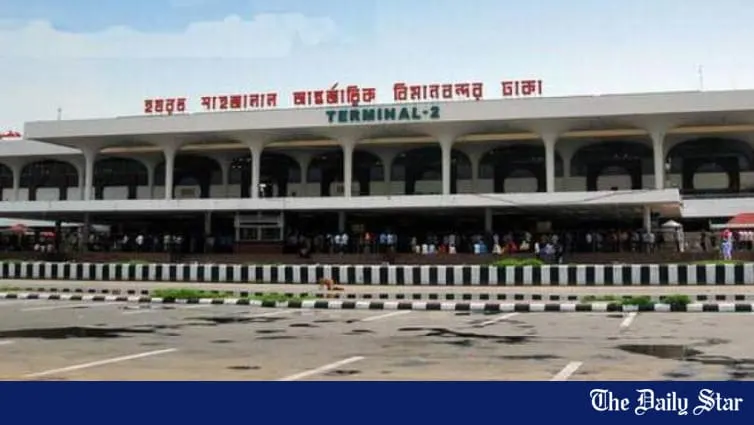
Bangladesh's CAAB seized a drone for violating 'red zone' airspace at Dhaka's airport, citing its 2020 drone policy and promising legal action.
Key Takeaways
- •Seized a drone for unauthorized operation inside a designated 'red zone' at Dhaka's international airport.
- •Cites the Drone Registration and Operation Policy 2020 to enforce airspace security.
- •Signals a zero-tolerance policy, with legal action pending against the operator in Q2 2026.
- •Reflects a global trend of strict airport geofencing seen after major disruptions at airports like Gatwick and Dubai.
The Civil Aviation Authority of Bangladesh (CAAB) has confiscated an unmanned aerial vehicle (UAV) for operating without authorization within restricted airspace at Hazrat Shahjalal International Airport (HSIA) in Dhaka. The incident occurred on the evening of April 4, 2026, when the drone was observed filming near the airport's VIP gate, according to a CAAB press release.
The seizure highlights the strict enforcement of airspace regulations around critical aviation infrastructure. The drone, identified in external reports as a DJI Mavic 4 Pro, was being used to capture footage of the arrival of Bangladesh’s victorious SAFF Under-20 football team. This unauthorized drone operation prompted immediate action from airport authorities to mitigate potential safety risks.
According to Kawsar Mahmud, CAAB's assistant director of public relations, the operation was a clear violation of existing national regulations. The authority has confirmed that legal action will be pursued against the responsible parties to ensure the overall security of the airport.
Regulatory Context and Enforcement
The legal framework governing this incident is Bangladesh's Drone Registration and Operation Policy 2020. According to CAAB, this policy explicitly designates airport premises as a “red zone,” where drone flights are strictly prohibited without specific prior authorization. This measure is in place to prevent potential collisions with aircraft, signal interference, or other disruptions to airport operations.
CAAB's response underscores a zero-tolerance approach toward unauthorized drone activities in sensitive areas. In his statement, Mahmud urged all drone operators to strictly comply with established rules and regulations. The public warning of legal action serves as a deterrent to both hobbyists and commercial operators who might otherwise bypass the formal authorization process, particularly during high-profile public events.
For media and commercial drone operators, the incident highlights the operational challenges of working near controlled airspace. They must navigate a stringent authorization process or risk equipment seizure and prosecution. This creates a point of friction between the need for media access and the paramount requirement for aviation safety.
A Global Precedent: Airport Drone Disruptions
The proactive enforcement by CAAB reflects a global trend shaped by significant past disruptions caused by drones. The most notable of these is the Gatwick Airport Drone Incident in December 2018. The sighting of drones near the runway forced the cancellation of hundreds of flights over three days, affecting approximately 140,000 passengers and causing massive economic and operational turmoil. The event was a catalyst for UK airports to deploy military-grade anti-drone technology.
Similarly, Dubai International Airport (DXB) experienced multiple shutdowns between 2016 and 2019 due to unauthorized drone sightings in its flight paths. These incidents led the United Arab Emirates to implement strict no-fly zones and impose heavy financial penalties on violators. These historical precedents demonstrate the severe consequences of drone incursions at major international hubs and justify the creation of rigid 'red zones' with severe legal consequences.
The global aviation industry has learned that even small, commercially available drones can pose a significant threat, prompting regulators worldwide to adopt and enforce policies similar to Bangladesh's 2020 framework.
What Comes Next
Following the seizure, the Civil Aviation Authority of Bangladesh has signaled its intent to proceed with formal legal proceedings. The unauthorized drone operator is expected to face prosecution under the guidelines established by the 2020 policy. While a specific timeline has not been disclosed, legal action is anticipated to commence in the second quarter of 2026. This case will likely serve as a key test of the policy's enforcement power and a public example of the consequences of non-compliance.
Why This Matters
This incident at Dhaka's main international airport is a microcosm of the broader challenge facing global aviation: safely integrating unmanned aircraft systems into highly controlled airspace. It underscores the tension between the growing use of drones for media and commercial purposes and the non-negotiable safety standards of airport operations. For aviation authorities, it reinforces the necessity of robust regulatory frameworks, active enforcement, and clear public communication to maintain security.
For in-depth airline coverage and commercial aviation news, omniflights.com delivers timely industry insights. Get the latest updates on major hubs, regional terminals, and airport operations via the Airports section at omniflights.com/airports.
Written by Hardik Vishwakarma
Co-Founder & Aviation News Editor leading initiatives that improve trust and visibility across the global aviation industry. Covers airlines, airports, safety, and emerging technology.
Visit ProfileYou Might Also Like
Discover more aviation news based on similar topics

FAA Faces $3.5 Billion Shortfall in ATC Modernization
FAA Administrator Bryan Bedford reported a $3.5 billion shortfall for the Brand New Air Traffic Control System, totaling $16 billion for Phase One.
FAA Pauses Flights into LAX Due to Staffing Shortages
The FAA issued a temporary ground stop for flights bound for LAX on Monday morning due to staffing shortages at the Southern California TRACON.

FAA Proposes Ending Overland Supersonic Flight Ban
The FAA has proposed a new performance-based noise standard to replace the 1973 ban on overland supersonic flight, enabling future commercial travel.

DOT Rule Exempts Airlines From Cyberattack Delay Costs
Starting October 19, 2026, the DOT will allow airlines to withhold meal and hotel vouchers for delays caused by cyberattacks and nine other events.

Wizz Air, Ryanair Demand NATS Reform After ATC Failure
Wizz Air and Ryanair are calling for urgent NATS reform after a September 8 system failure caused over 1,000 flight cancellations across the UK.

US Treasury Iran Sanctions Target 27 Airlines, Mahan Air
The U.S. Treasury sanctioned 36 entities, including 27 Iranian airlines, to disrupt illicit procurement networks used by the Iranian government.