Bombardier US Sales Ban Threatened by Trump Trade Policy

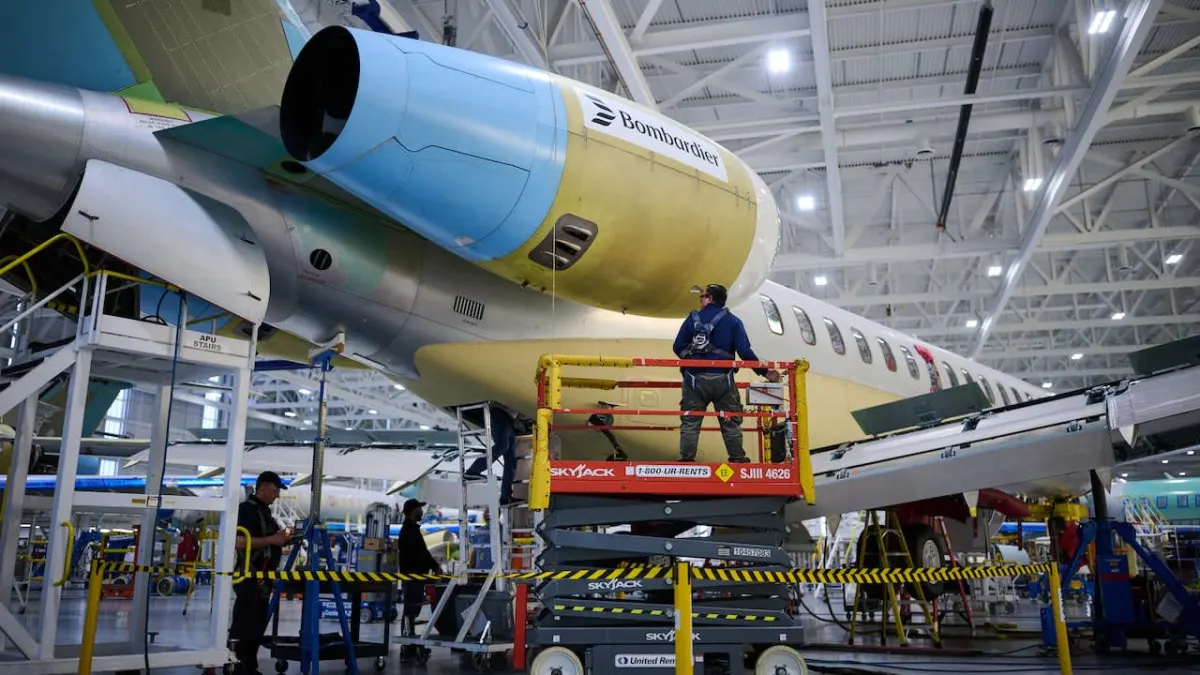
President Trump threatened to ban Bombardier aircraft sales in the U.S. unless the company shifts more manufacturing to American soil.
Key Takeaways
- •Trump threatened to ban Bombardier sales unless it increases U.S. manufacturing.
- •Bombardier employs 3,500 workers and uses 2,800 suppliers in the U.S.
- •U.S. aerospace sector recorded a $109.2 billion trade surplus in 2025.
- •Bombardier reported $2.15 billion in Q2 2026 revenue, up 6% year-over-year.
Trump Targets Bombardier in Trade Dispute
U.S. President Donald Trump announced on Monday that Bombardier would face a potential ban on sales within the United States, citing a requirement for the Montreal-based manufacturer to increase domestic production. This declaration marks a significant escalation in the ongoing trade friction between Washington and Ottawa. The President stated on social media that the company must build in the U.S. to access the market, characterizing the current trade arrangement as unfavorable to American interests.
This policy shift comes as the U.S. pursues a broader strategy of protectionist measures, often involving a near-global tariff wall. The administration's focus on Bombardier follows a broader trend of pressuring foreign firms to relocate manufacturing capacity to the United States. While the White House has not yet clarified the legal mechanism for enforcing such a ban, the threat arrives as Canada prepares to implement a wave of counter-tariffs against the United States.
Economic Integration and Supply Chain Impact
Despite the rhetoric, the aerospace sector remains highly integrated across the North American border. According to the 2026 AIA Facts & Figures: U.S. Aerospace & Defense Industry Leads the World with $1 Trillion in Sales, the U.S. aerospace and defense sector maintains a $109.2 billion trade surplus, with exports rising 25% year-over-year in 2025. Bombardier currently employs 3,500 people in the U.S. and relies on a network of 2,800 American suppliers. Furthermore, approximately half of the 5,100 aircraft currently operated by the company's customers worldwide are based in the United States.
Industry analysts, including Richard Aboulafia, have expressed skepticism regarding the feasibility of a market lockout. Most Bombardier business jets utilize U.S.-manufactured engines from GE Aerospace and Honeywell Aerospace. Any disruption to the delivery of these aircraft would likely cause significant operational challenges for U.S. fractional jet operators and internal manufacturing supply chains. Bombardier reported $2.15 billion in revenue for the second quarter of 2026, a 6% increase compared to the previous year, underscoring its continued demand in the U.S. market.
Regulatory and Historical Context
This is not the first time the manufacturer has faced such threats. In January 2026, the administration threatened to decertify Bombardier Global Express jets and impose 50% tariffs until Canada certified Gulfstream Aerospace aircraft. That situation was resolved when Canada granted the requested certifications, averting the tariffs. The current threat also faces legal complexities under the Canada-United States-Mexico Agreement (CUSMA), which currently governs the trade of these aircraft.
Historically, the 2017-2018 trade complaint involving the Bombardier CSeries provides a precedent for how such disputes can evolve. In that instance, the U.S. proposed significant tariffs, which were later bypassed when Bombardier partnered with Airbus to establish a U.S. assembly line in Mobile, Alabama. The International Trade Commission eventually rejected the tariffs, demonstrating the difficulty of using regulatory tools to block established aerospace programs.
The Path Toward Vertical Integration
Bombardier is actively consolidating its production capabilities to mitigate supply chain risks. On September 1, 2026, the company announced the acquisition of the Mitsubishi Heavy Industries (MHI) aerostructures facility in Canada, which manufactures wings for the Global 5500 and 6500 aircraft. This move is part of a broader strategy to bring critical components in-house, ensuring greater control over delivery timelines as the company expands its U.S. service footprint, which currently includes five facilities with a sixth in development.
Pending Trade Milestones
The immediate outlook remains tense as both nations navigate the implementation of retaliatory tariffs. Canada’s counter-tariffs are expected to take effect early Tuesday, September 8, 2026. Meanwhile, Bombardier is expected to finalize its acquisition of the MHI wing facility by late 2026. Analysts expect the administration to continue targeting specific Canadian industrial entities, with Bombardier viewed as the first of several potential targets in the ongoing trade dispute.
Why This Matters for U.S. Aerospace
A ban on Bombardier sales would have profound consequences for U.S.-based suppliers and operators who rely on the company's integrated production model. For U.S. aerospace suppliers, the potential loss of revenue from engine and avionics contracts is a significant concern. Furthermore, for U.S. operators, the inability to receive new aircraft would lead to immediate capacity constraints. The situation signals a broader shift in how regulatory and trade frameworks are being leveraged to force industrial relocation, creating uncertainty for companies operating within the highly interdependent North American aerospace sector.
Frequently Asked Questions
- Does Bombardier currently have manufacturing operations in the United States?
- Yes, Bombardier has a significant U.S. footprint, employing 3,500 workers and utilizing 2,800 suppliers across 47 states. The company also produces wings for its Global 8000 jet in Texas and operates a defense division facility in Kansas.
- What is the impact of U.S. trade policy on the aerospace sector's trade surplus?
- The U.S. aerospace and defense sector remains highly productive, recording a $109.2 billion trade surplus in 2025 according to the Aerospace Industries Association. The sector is globally integrated, with many U.S. manufacturers relying on Canadian parts and assembly for their own operations.
Get breaking commercial aviation news and expert airline analysis at omniflights.com. Track policy changes, airspace rules, and global aviation governance in the Regulatory category at omniflights.com/regulatory.

Written by Hardik Vishwakarma
Co-Founder & Aviation News Editor leading initiatives that improve trust and visibility across the global aviation industry. Covers airlines, airports, safety, and emerging technology.
Visit ProfileYou Might Also Like

Dubai Aerospace Enterprise Completes United Airlines Lease

RTX Reports Record $340B Backlog and Strong Q3 2026 Growth
Boeing 737 MAX Litigation Nears Resolution in Chicago
Qatar Airways Enters Japanese JOLCO Financing Market

United Nigeria Airlines Plans N20bn Commercial Paper Debt