Boeing Wins $75 Million USAF Contract for Powered JDAM LR

Co-Founder & CTOCo-Founder & CTO driving the technology and data systems behind Omni Flights.
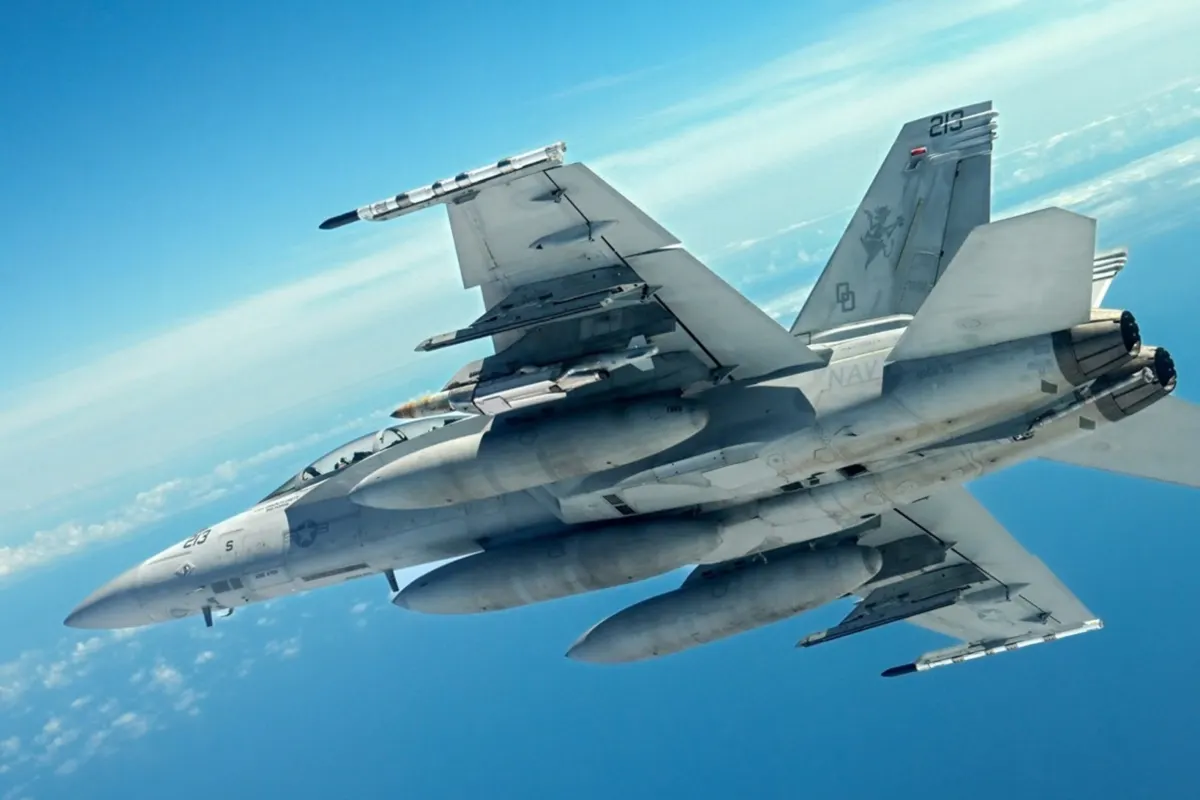
Boeing secured a $75 million USAF contract to produce the powered JDAM LR, extending the standoff range of naval strike fighters to over 300 miles.
Key Takeaways
- •Boeing receives $75 million contract for GBU-75 JDAM LR production.
- •Powered JDAM LR achieves range exceeding 300 nautical miles.
- •Initial production kits are destined for US Navy F/A-18 strike wings.
- •Boeing invested nearly $100 million of internal funds in development.
Boeing has secured a $75 million US Air Force contract to begin initial production of the GBU-75 Powered JDAM (Joint Direct Attack Munition), a long-range standoff weapon. This Boeing JDAM LR program introduces a low-cost, turbojet-powered precision-guided munition capable of striking targets at distances exceeding 300 nautical miles. The award marks a pivotal transition from developmental testing to active military procurement.
By converting standard unguided gravity bombs into long-range, precision-guided cruise weapons, the program delivers a high-volume, cost-effective alternative to traditional standoff cruise missiles. The initial production run of the BSU-111/B Payload Delivery Unit (PDU) will directly support the US Navy, enhancing the survivability and strike range of carrier-based aircraft operating in highly contested environments.
According to a Boeing press release dated August 5, 2026, the $75 million agreement was structured as an Undefinitized Contract Action (UCA) issued by the US Air Force Life Cycle Management Center. While the Air Force serves as the central procurement authority under the Joint Service JDAM Program Management framework, the initial production batch of the BSU-111/B PDU kits is destined for the US Navy. The contract follows a series of successful flight tests conducted off the coast of California in April 2026, which validated the weapon's integration and flight characteristics.
The GBU-75 system functions by pairing a standard 500-pound class (226-kilogram) payload with a deployable wing kit and a compact Kratos TDI-J85 turbojet engine. This combination transforms the unguided munition into a powered, precision-guided standoff weapon. Boeing invested nearly $100 million of its own internal research and development funds to mature the design prior to this initial production contract.
Bob Ciesla, Vice President of Boeing Precision Engagement Systems, emphasized the strategic value of the system: "Scaling production of the GBU-75 will provide the fleet with an affordable, sustainable solution designed to eliminate long-range land and sea-based threats to U.S. and international forces and enable them to safely and effectively operate in a contested battlespace."
The development of the powered GBU-75 represents a major leap in standoff capability compared to previous iterations of the JDAM family. In 2015, the introduction of the JDAM-ER (Extended Range) utilized a passive glide wing kit to extend the range of standard gravity bombs to approximately 45 nautical miles. The JDAM LR builds directly upon this concept, but the addition of active turbojet propulsion increases the weapon's effective range by more than sixfold.
JDAM Family Range Comparison
| Metric | Standard JDAM | JDAM-ER | GBU-75 JDAM LR |
|---|---|---|---|
| Range | ~15 nm | ~45 nm | >300 nm |
| Propulsion | Unpowered gravity drop | Unpowered gravity drop | Kratos TDI-J85 turbojet |
The Economics of Standoff Mass
The transition to the GBU-75 reflects a broader shift in defense procurement toward affordable mass munitions. Historically, striking targets at ranges exceeding 300 nautical miles required sophisticated, clean-sheet cruise missiles costing over $1 million per unit. By leveraging existing 500-pound bomb inventories and integrating them with the modular BSU-111/B PDU, the military can field precision standoff capabilities at a fraction of the cost of traditional cruise missiles. This approach addresses critical stockpile depth concerns, allowing carrier air wings to sustain high-intensity operations against sophisticated air defense networks without rapidly exhausting high-end missile inventories.
Production and Deployment Timeline
Following the initial contract award, Boeing is expected to establish the assembly line for the BSU-111/B PDU. Initial Operational Capability (IOC) and the first deliveries of the production kits for the US Navy are expected by 2027. These first units will be integrated onto Navy carrier-based strike fighters, primarily the F/A-18 Super Hornet fleet, allowing pilots to launch precision strikes from outside the coverage of modern medium- and long-range surface-to-air missile systems.
What This Means for Carrier Air Wings
For naval aviators, the deployment of the GBU-75 fundamentally alters the tactical equation in contested maritime environments. It provides carrier strike groups with a high-volume standoff weapon that can neutralize land-based radar installations and hostile surface vessels from safe distances. This capability ensures that carrier air wings remain relevant and survivable against modern anti-access/area-denial threats.
Frequently Asked Questions
- What is the range of the Boeing GBU-75 JDAM LR?
- The GBU-75 Joint Direct Attack Munition Long Range has an operational range exceeding 300 nautical miles, representing a major increase over the 15-nautical-mile range of standard unpowered JDAMs.
- Which military branch will receive the first GBU-75 JDAM LR production kits?
- Although the contract was awarded by the United States Air Force, the initial production kits of the BSU-111/B Payload Delivery Unit are destined for the United States Navy to support carrier-based F/A-18 Super Hornet strike wings.
- What engine powers the GBU-75 JDAM LR?
- The GBU-75 JDAM LR is powered by a compact Kratos TDI-J85 turbojet engine, which is integrated into the BSU-111/B Payload Delivery Unit wing kit.
Stay ahead of the airline industry with commercial aviation news from omniflights.com. Get the latest updates on major hubs, regional terminals, and airport operations via the Airports section at omniflights.com/airports.
Written by Shashank Shukla
Co-Founder & CTO leading the engineering and AI systems behind Omni Flights. Covers aviation technology, flight safety, aircraft manufacturing, and emerging aerospace developments.
Visit ProfileYou Might Also Like
Discover more aviation news based on similar topics

Boeing 777X Testing Spills Into 2027 Amid Certification Hurdles
Boeing expects some 777X testing to extend into 2027, though the manufacturer maintains its target for the first delivery of the aircraft that year.

Airbus A350F Completes Ground Tests Before Maiden Flight
Airbus has finished initial ground tests for the A350F, with the freighter set for a late 2026 maiden flight and a 2027 entry into service.

Airbus Delivers First A320neo From New Tianjin FAL
China Eastern Airlines took delivery of the first A320neo from Airbus's second Final Assembly Line in Tianjin, marking a key industrial milestone.

Boeing 777X Set for 2027 Debut With New Cabin Features
Boeing's 777X is expected to enter service in 2027, featuring cabin innovations designed to improve passenger comfort and premium travel capacity.
Boeing Awarded $562M Contract for MQ-25 Stingray Production
The U.S. Navy awarded Boeing a $562 million contract for the first three MQ-25 Stingray unmanned aerial refueling tankers, with deliveries expected in...

Boeing Logs 15 Gross Orders Including 13 787 Dreamliners
Boeing recorded 15 gross orders in August 2026, featuring 13 widebody 787 Dreamliner commitments from undisclosed customers.