Boeing 737 MAX Smoke Fixes Delayed Until 2028

Co-Founder & CEOAviation News Editor delivering trusted coverage across the global aviation industry.

The FAA is mandating a software fix for Boeing 737 MAX engines to prevent toxic fumes, but full global fleet implementation will take until mid-2028.
Key Takeaways
- •FAA mandates software fix for CFM LEAP-1B engine LRD fume issues.
- •Global fleet implementation of the software patch is expected by mid-2028.
- •DOT OIG audit in April 2026 scrutinized FAA regulatory response.
- •Pilot unions remain divided on the adequacy of existing safety regulations.
FAA Regulatory Response to Engine Fume Hazards
The aviation industry is grappling with the persistent challenge of Boeing 737 MAX smoke events linked to the CFM LEAP-1B engine fumes. Following two major cabin smoke incidents in March and December 2023 caused by bird strikes activating the engine's Load Reduction Device (LRD), regulators and manufacturers have been forced to re-evaluate system safety. The FAA (Federal Aviation Administration), through its CARB (Corrective Action Review Board), convened in November 2024 to determine the appropriate response. Instead of mandating immediate operational changes to takeoff procedures, the board opted for a long-term software update designed to automatically close the PRSOV (Pressure Regulating Shutoff Valve) during an LRD activation.
DOT OIG Audit and Regulatory Scrutiny
This decision prompted significant oversight from the DOT OIG (Department of Transportation Office of Inspector General). The agency initiated a formal review in April 2025 to scrutinize the FAA’s internal debate and its reliance on a delayed software patch. The resulting audit, published on April 21, 2026, highlights the tension between the FAA’s certification process and the immediate safety concerns voiced by accident investigators. While the FAA has maintained that the software design change is sufficient, the multi-year implementation timeline has drawn criticism regarding the exposure of flight crews to toxic cabin air.
Pilot Union Perspectives on Emergency Complexity
Industry stakeholders remain divided on the adequacy of current safety protocols. According to the ALPA (Air Line Pilots Association) in 2025, existing regulations were sufficient to address the risks posed by aircraft bleed air contamination. Conversely, the APA (Allied Pilots Association) has argued that an LRD-fume event creates a complex emergency for flight crews, necessitating more urgent mitigation than a software update currently allows. This divergence reflects the broader challenge of managing cockpit fume incidents that occur during critical phases of flight.
CFM LEAP-1B vs. Historical Safety Precedents
| Metric | Current LRD Software Fix | Historical Precedent (737 MAX MCAS) |
|---|---|---|
| Primary Mitigation | PRSOV Software Logic | MCAS Software Logic |
| Regulatory Path | Ongoing AD Process | Mandatory Grounding |
| Implementation | Through Mid-2028 | 20 Months (2019-2020) |
The reliance on software-based mitigations for mechanical design flaws follows historical patterns observed in the industry. In 2013, the Boeing 787 Dreamliner fleet was grounded following battery fire hazards, eventually requiring a hardware redesign. The current situation with the 737 MAX mirrors the 2019-2020 MCAS (Maneuvering Characteristics Augmentation System) grounding, where the FAA’s reliance on software updates became a focal point of regulatory scrutiny. For more information on official safety guidance, operators and stakeholders can consult the NTSB Safety Recommendations.
Certification Timeline and Software Rollout
The software update is expected to receive certification in the first quarter of 2026. Following this, the FAA is anticipated to issue a formal Airworthiness Directive to mandate the installation. However, due to the scale of the global fleet, full implementation is not projected until mid-2028. CFM International remains responsible for the development and certification of this patch, while operators must manage interim risk through enhanced pilot training and maintenance schedules.
Why This Matters for Flight Safety
This development signals a critical shift in how regulators approach mechanical design flaws that impact environmental control systems. For flight crews and passengers, the prolonged timeline underscores the difficulty of addressing complex, low-frequency, high-consequence events. The outcome of the DOT OIG audit will likely influence future FAA processes regarding how the Corrective Action Review Board balances operational continuity against the immediate safety risks of toxic smoke exposure.
Frequently Asked Questions
- What is the cause of the Boeing 737 MAX smoke incidents?
- The incidents are caused by bird strikes that activate the engine's Load Reduction Device (LRD) on CFM LEAP-1B engines, which inadvertently allows oil into the bleed air system and results in toxic smoke entering the cabin.
- When will the software fix for the LRD fume issue be fully implemented?
- While the software update is expected to be certified in the first quarter of 2026, it is not expected to be fully implemented across the global Boeing 737 MAX fleet until mid-2028.
From airline operations to fleet updates, commercial aviation news lives at omniflights.com. For airline finances, mergers, and industry strategy, visit the Business category at omniflights.com/business.
Written by Hardik Vishwakarma
Co-Founder & Aviation News Editor leading initiatives that improve trust and visibility across the global aviation industry. Covers airlines, airports, safety, and emerging technology.
Visit ProfileYou Might Also Like
Discover more aviation news based on similar topics
Ryanair Flight RK514 Diverts to Birmingham After Emergency
Ryanair flight RK514 diverted to Birmingham Airport on September 13, 2026, following a medical emergency involving a passenger.

Amazon Suspends 21 Air After Fatal Miami 767 Runway Overrun
Amazon has suspended operations with 21 Air following a fatal Boeing 767 runway overrun at Miami International Airport that resulted in five deaths.
FAA Proposes A220 Fuel Line Inspections for US Operators
The FAA issued a proposed directive requiring inspection of motive-flow fuel lines on 13 US-registered Airbus A220s to prevent potential leaks.
NATS Denies Military Jet Role in UK ATC Outage
The UK Ministry of Defence denied its aircraft caused a NATS outage that led to over 2,000 flight cancellations and calls for CEO resignation.
21 Air Miami Crash: NTSB Investigates 767 Runway Overrun
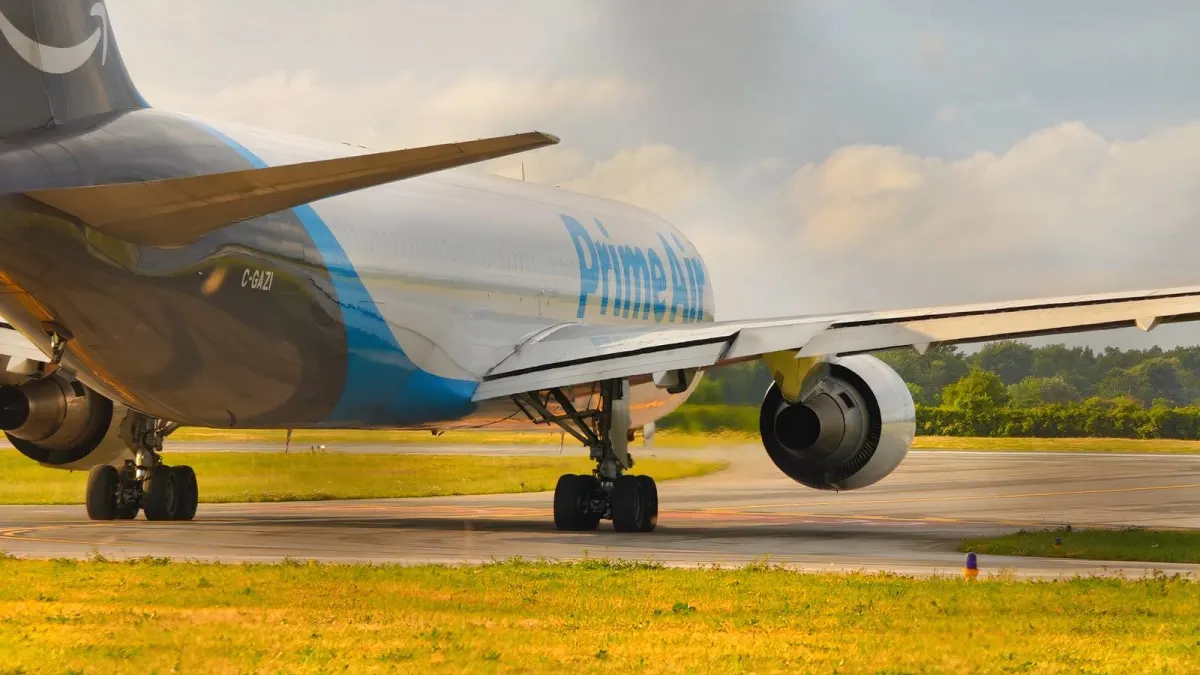
A fatal 21 Air Boeing 767 crash at Miami International Airport has triggered an NTSB investigation amid scrutiny of Amazon Air's contract oversight.

Amazon Cargo Plane Crash: 5 Remembered After MIA Excursion
Five cleaning crew members died after an Amazon-contracted Boeing 767 overran the runway at Miami International Airport at 158 knots.