Ben Gurion Airport Warns of 2.4 Million Potential Cancellations

Co-Founder & CEOAviation News Editor delivering trusted coverage across the global aviation industry.
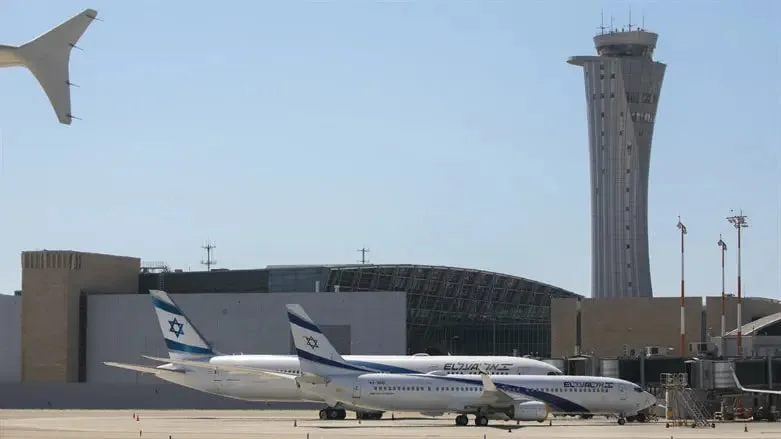
The Israel Airports Authority warns that 2.4 million passengers face flight cancellations if US cargo aircraft are not relocated from Ben Gurion.
Key Takeaways
- •Ben Gurion Airport faces potential cancellations for 2.4 million passengers.
- •IAA reports $248 million in lost revenue due to capacity constraints.
- •At least 30 US military aircraft must vacate stands to restore capacity.
- •Airlines may receive mandatory cancellation notices by June 16, 2026.
Impending Capacity Crisis at Ben Gurion Airport
The Israel Airports Authority (IAA) has issued a formal warning that Ben Gurion Airport (TLV) may be forced to implement widespread flight cancellations during the upcoming summer and Tishrei holiday travel seasons. According to IAA CEO Sharon Kedmi, the airport is currently operating at only one-third of its normal capacity due to severe parking stand shortages. The crisis stems from the prolonged occupation of civilian apron space by United States Air Force (USAF) cargo and refueling aircraft, which has displaced commercial operations at the country's primary international hub.
The Scale of Potential Disruption
If the current infrastructure constraints are not resolved, the impact on the traveling public will be significant. The Israel Airports Authority estimates that up to 2.4 million flight tickets are at risk of cancellation during the peak summer and High Holiday period. Under normal operating conditions, Ben Gurion Airport handles approximately 100,000 travelers per day. However, the current presence of military aircraft has created a bottleneck that threatens to derail airline schedules during the most profitable months of the year for the aviation sector.
Financial losses are already mounting as a direct result of these capacity limits. The IAA reports that it has lost approximately $248 million in revenue over the past two months. This financial strain is exacerbated by the fact that several international carriers have already delayed their return to the Israeli market, citing concerns over airport congestion and regional instability. The Israel Ministry of Transport and Road Safety is currently evaluating the situation, but the IAA maintains that it has no choice but to prepare for mandatory schedule reductions if the parking situation remains unchanged.
Operational Challenges and Military Displacement
The current congestion is driven by a high density of non-commercial aircraft. While approximately 70 aircraft are engaged in active commercial movements at Ben Gurion, a significant number of stands remain occupied by military assets. To restore normal operations, the IAA has indicated that at least 30 US cargo or military aircraft must be relocated. While Ramon Airport (ETM) is currently being utilized as an overflow facility, with 25 cargo and military aircraft already parked there, the capacity at both sites remains critically low.
This trend of military operations displacing commercial aviation is a growing concern for industry analysts. The situation at Ben Gurion mirrors historical precedents where infrastructure constraints forced radical schedule adjustments. In the summer of 2022, for example, Amsterdam Schiphol Airport was forced to cap daily passenger numbers and cancel thousands of flights due to severe security and staffing constraints, demonstrating the fragility of hub operations when faced with sudden resource limitations.
Technical Analysis of the Apron Shortage
The operational bottleneck at Ben Gurion is fundamentally a matter of apron real estate and turnaround efficiency. With the airport restricted to one-third of its normal capacity, the margin for error in scheduling has evaporated. The influx of heavy-lift military transport aircraft requires dedicated, high-strength parking stands that are typically reserved for wide-body commercial jets. This creates a cascading effect: when commercial carriers cannot access their assigned gates, the resulting delays propagate through the entire flight network, leading to missed connections and crew duty-time violations that necessitate further cancellations.
Historically, the total suspension of commercial traffic to prioritize military movements—such as the events at Kabul International Airport in August 2021—represents an extreme scenario. However, the current situation at Ben Gurion is unique in its duration and its impact on a high-volume, modern commercial hub. The data suggests that without an immediate diplomatic or operational intervention to relocate the military fleet, the airport will reach a tipping point where flight frequency must be slashed to maintain safety and ground handling standards.
Next Steps for Airline Schedules
The Israel Airports Authority is expected to notify airlines to prepare for formal flight cancellations by June 16, 2026. This timeline is critical, as it precedes the Tishrei High Holiday travel season, which runs from September 11 to October 4, 2026. Airlines are currently in a state of uncertainty, balancing the need to maintain their route networks against the reality of potential mandatory schedule cuts. The IAA continues to emphasize that these measures, while undesirable, are a necessary response to the current infrastructure limitations.
Why This Matters for the Industry
For commercial airlines and passengers alike, this situation signals a major disruption to regional connectivity. The potential loss of 2.4 million passenger seats represents a significant contraction of the Israeli aviation market, with long-term implications for carrier loyalty and route viability. For the broader industry, the Ben Gurion crisis highlights the vulnerability of national aviation infrastructure when it is forced to serve dual military and commercial purposes during periods of heightened geopolitical activity.
Frequently Asked Questions
- Why is Ben Gurion Airport facing potential flight cancellations?
- Ben Gurion Airport is facing severe parking stand shortages because civilian apron space is occupied by United States Air Force cargo and refueling aircraft. This has reduced the airport's operational capacity to one-third of its normal level.
- How many passengers could be affected by the potential flight cancellations?
- The Israel Airports Authority estimates that up to 2.4 million passengers could have their summer and High Holiday travel plans canceled or severely disrupted if the current infrastructure constraints are not resolved.
Get breaking commercial aviation news and expert airline analysis at omniflights.com. Stay informed on aviation incidents, investigations, and best practices in the Safety category at omniflights.com/safety.
Written by Hardik Vishwakarma
Co-Founder & Aviation News Editor leading initiatives that improve trust and visibility across the global aviation industry. Covers airlines, airports, safety, and emerging technology.
Visit ProfileYou Might Also Like
Discover more aviation news based on similar topics

Red Sea Airlines Leases Two 737 MAX 8s for 2027 Expansion
Red Sea Airlines signed a lease for two Boeing 737 MAX 8 aircraft from SMBC Aviation Capital, arriving in 2027 to support its 14-aircraft fleet goal.
Avelo CEO Warns Airfares May Rise on Jet Fuel Price Spikes
Avelo Airlines CEO Andrew Levy warns that rising fuel costs may force fare increases as global jet fuel prices reach $171.01 per barrel.
IndiGo, Air India Battle for Mumbai-Delhi Route Dominance
IndiGo and the Air India group are competing for dominance on the Mumbai-Delhi air route, which saw 13.9 percent capacity growth this September.

Delta Air Lines Trims 5 Routes, Cuts Las Vegas Capacity
Delta Air Lines will end five domestic routes from New York and Las Vegas this winter as part of a seasonal network capacity adjustment.

FLY91 Orders 40 ATR 72-600s for Regional Fleet Expansion
Indian startup FLY91 has placed a firm order for 40 ATR 72-600 aircraft, valued at $1 billion, to scale its regional fleet to 60 planes by 2032.

SWISS Takes Delivery of Third Airbus A350-900 Named 'Zug'
Swiss International Air Lines has welcomed its third Airbus A350-900, which will feature the new 'SWISS Senses' cabin on select long-haul routes.