B-21 Raider Program Accelerates 25% With 2027 Delivery Set

Co-Founder & CTOCo-Founder & CTO driving the technology and data systems behind Omni Flights.
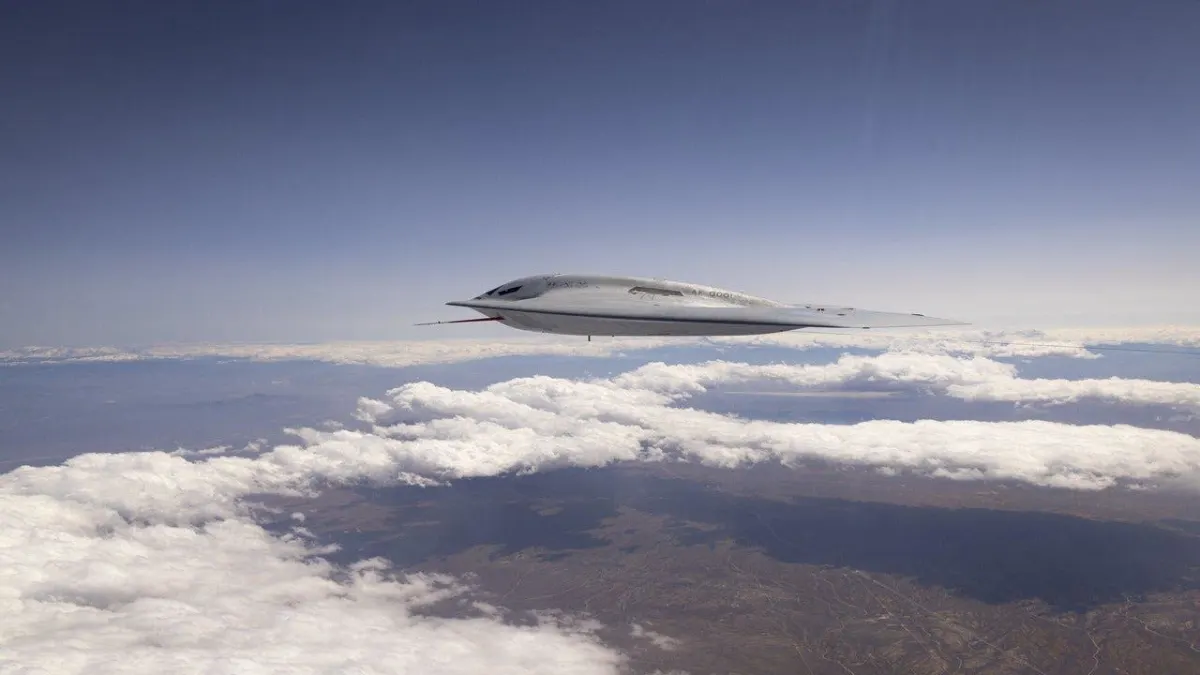
The US Air Force accelerated its B-21 Raider program by 25 percent following a $4.5 billion funding boost, targeting the first delivery in 2027.
Key Takeaways
- •B-21 Raider program accelerates by 25 percent following a funding boost.
- •First operational B-21 stealth bomber scheduled for 2027 delivery.
- •Boeing F-47 sixth-generation fighter targets first flight in 2028.
- •Air Force plans procurement of 185 F-47 air superiority fighters.
The U.S. Air Force modernization strategy has reached a critical milestone as development of the B-21 Raider stealth bomber and the F-47 fighter aircraft moves ahead of schedule. Speaking at the Air Force's Life Cycle Industry Days conference in Dayton, Ohio, Gen. Dale White, director of Critical Major Weapon Systems, confirmed that the B-21 program has accelerated significantly. This acceleration, a key component of the broader Next Generation Air Dominance initiative, positions the first operational stealth bomber to arrive at its designated base in 2027.
The accelerated timeline represents a major shift in military procurement, aiming to bypass the multi-decade delays that historically plagued previous advanced aircraft programs. By integrating digital engineering and securing early, robust funding, the military plans to establish a reliable production cadence to replace aging legacy platforms. This transition will directly impact strategic deterrence capabilities, as the new systems are designed to operate in highly contested environments while seamlessly integrating with unmanned support systems.
Funding and Production Targets for the B-21 Raider
The B-21 Raider acquisition timeline has advanced rapidly due to targeted legislative support. According to an official Department of the Air Force announcement, the B-21 acquisition program has accelerated by 25 percent after receiving a one-time $4.5 billion funding boost authorized by the Fiscal Year 2025 Reconciliation Legislation. This injection enabled manufacturer Northrop Grumman to expand its manufacturing footprint and optimize tooling. The Pentagon's Fiscal Year 2027 Defense Budget Proposal requests $6.1 billion for the B-21 program to sustain this momentum. The Air Force plans to acquire at least 100 of these dual-capable bombers, which are designed to carry both conventional and nuclear payloads. Northrop Grumman eventually targets a steady production rate of seven operational bombers annually to systematically replace the aging B-1 Lancer and B-2 Spirit fleets.
The first operational B-21 is scheduled to arrive at Ellsworth Air Force Base (AFB) in South Dakota in 2027. This milestone follows successful flight testing at Edwards AFB in California, where a second test aircraft joined the flight-test fleet earlier this year. The addition of the second airframe has doubled the program's data-gathering capacity, accelerating weapons integration and avionics validation.
The F-47 Fighter and Collaborative Combat Aircraft Integration
Simultaneously, the development of the Boeing-built F-47 fighter aircraft is progressing ahead of historical baselines. Developed under the Next Generation Air Dominance (NGAD) initiative, the F-47 is scheduled for its first flight in 2028. An official Air Force Life Cycle Management Center release detailed that planning for the Boeing-built F-47 has reached an "unprecedented maturity," with Gen. White emphasizing the service's commitment to rapid capability delivery. The Pentagon has requested $5.03 billion for the F-47 program in its fiscal year 2027 budget request to support engineering and manufacturing development. The Air Force plans to procure 185 F-47 aircraft, which will replace the Lockheed Martin F-22 Raptor as the nation's primary air superiority fighter.
A defining feature of the F-47 is its native integration with Collaborative Combat Aircraft (CCA). These autonomous "loyal wingman" drones are designed to fly alongside crewed fighters, performing reconnaissance, electronic warfare, and weapons-delivery missions. This manned-unmanned teaming approach represents a structural shift in aerial combat tactics, multiplying the force projection of each crewed flight lead.
Industrial and Operational Stakeholder Impacts
The acceleration of these two flagship programs carries significant implications for defense industrial stakeholders and local military communities. For Northrop Grumman, the $4.5 billion funding surge stabilizes its long-term manufacturing planning and justifies capital investments required to meet the seven-bomber annual delivery target. For Boeing, the "unprecedented maturity" of the F-47 program solidifies its position in the highly competitive sixth-generation fighter market as it prepares to deliver 185 airframes. Locally, the community surrounding Ellsworth AFB must prepare for a medium-severity infrastructure adjustment, requiring upgrades to housing, maintenance hangars, and secure facilities ahead of the 2027 delivery. Finally, manufacturers of Collaborative Combat Aircraft face high-priority integration deadlines, as their autonomous platforms must be ready to pair with the F-47 when it enters service.
Strategic Shifts and Historical Precedents
The aggressive acquisition strategy for the B-21 and F-47 contrasts sharply with previous defense procurement cycles. In the 2000s and 2010s, the F-35 Joint Strike Fighter program suffered from extensive development delays and cost overruns, which triggered intense congressional scrutiny and forced a restructuring of Department of Defense acquisition processes. Similarly, in the 1990s, soaring per-unit costs and post-Cold War budget cuts forced the Pentagon to cap the B-2 Spirit fleet at just 21 aircraft. By securing a firm commitment for at least 100 B-21 bombers and accelerating production early, the Air Force is actively working to avoid the small-fleet vulnerabilities that compromised the B-2 program.
Boeing F-47 vs. Lockheed Martin F-22 Raptor: Key Specifications
The transition from fifth-generation to sixth-generation platforms introduces fundamental shifts in aerial warfare design, as detailed in the technical comparison below:
| Metric | Boeing F-47 | Lockheed Martin F-22 Raptor |
|---|---|---|
| Generation | 6th-Generation | 5th-Generation |
| Role | Primary air superiority replacement | Legacy air superiority platform |
| Unmanned Integration | Designed natively to operate with CCA (loyal wingmen) drones | Standalone crewed operations |
The Procurement Economics of Rapid Prototyping
The accelerated timelines of the B-21 and F-47 programs reflect a broader shift toward rapid prototyping and digital engineering within defense acquisition. Historically, military aircraft programs have operated on multi-decade development cycles characterized by high financial risk and technological obsolescence prior to deployment. By utilizing digital twin technology and modular open systems architectures, the Air Force is breaking this cycle, allowing for continuous software and hardware upgrades. This methodology accelerates the current fleet replacement wave, enabling the service to transition away from maintenance-intensive legacy platforms like the F-22 and B-1 Lancer ahead of schedule. Furthermore, the integration of autonomous systems like the CCA represents a structural cost-containment strategy, allowing the military to expand its force structure without the exponential costs associated with purely crewed fleets.
Operational Milestones and the FY2027 Budget Timeline
As both programs transition from development to active production, several critical milestones are scheduled over the next two fiscal cycles:
- 2027 (Confirmed): Delivery of the first operational B-21 Raider stealth bomber to Ellsworth AFB in South Dakota, initiating active-duty crew training and base integration.
- 2027 (Expected): Congressional deliberation and potential approval of the Fiscal Year 2027 Defense Budget, which requests $6.1 billion for the B-21 and $5.03 billion for the F-47.
- 2028 (Expected): The scheduled first flight of the Boeing-built F-47 fighter aircraft, marking the formal commencement of its flight-test regime.
Why Global Power Projection Capabilities Shift Here
This rapid acceleration of next-generation stealth assets fundamentally alters the timeline for global power projection and strategic deterrence. For defense planners, the early arrival of the B-21 and F-47 ensures that the United States maintains a technological edge over peer competitors developing advanced air defense systems. Ultimately, these programs signal a successful transition to highly integrated, manned-unmanned combat networks that will define the future of air dominance.
Frequently Asked Questions
- When will the first B-21 Raider be delivered?
- The first operational B-21 Raider stealth bomber is scheduled to be delivered to Ellsworth Air Force Base in South Dakota in 2027.
- What is the F-47 fighter aircraft replacing?
- The Boeing-built F-47 sixth-generation fighter is designed to replace the Lockheed Martin F-22 Raptor as the U.S. Air Force's primary air superiority platform.
- How many F-47 fighters does the Air Force plan to buy?
- The U.S. Air Force plans to acquire 185 F-47 fighter aircraft, with the first flight scheduled for 2028.
For global airline trends and commercial aviation news, turn to omniflights.com. Get the latest updates on major hubs, regional terminals, and airport operations via the Airports section at omniflights.com/airports.
Written by Shashank Shukla
Co-Founder & CTO leading the engineering and AI systems behind Omni Flights. Covers aviation technology, flight safety, aircraft manufacturing, and emerging aerospace developments.
Visit ProfileYou Might Also Like
Discover more aviation news based on similar topics

Boeing 777X Testing Spills Into 2027 Amid Certification Hurdles
Boeing expects some 777X testing to extend into 2027, though the manufacturer maintains its target for the first delivery of the aircraft that year.

Airbus A350F Completes Ground Tests Before Maiden Flight
Airbus has finished initial ground tests for the A350F, with the freighter set for a late 2026 maiden flight and a 2027 entry into service.

Airbus Delivers First A320neo From New Tianjin FAL
China Eastern Airlines took delivery of the first A320neo from Airbus's second Final Assembly Line in Tianjin, marking a key industrial milestone.
Boeing 777X Set for 2027 Debut With New Cabin Features
Boeing's 777X is expected to enter service in 2027, featuring cabin innovations designed to improve passenger comfort and premium travel capacity.
Boeing Awarded $562M Contract for MQ-25 Stingray Production
The U.S. Navy awarded Boeing a $562 million contract for the first three MQ-25 Stingray unmanned aerial refueling tankers, with deliveries expected in...

Boeing Logs 15 Gross Orders Including 13 787 Dreamliners
Boeing recorded 15 gross orders in August 2026, featuring 13 widebody 787 Dreamliner commitments from undisclosed customers.