Autonomous Drone Emergency Landings: Lessons from Sydney

Co-Founder & CEOAviation News Editor delivering trusted coverage across the global aviation industry.
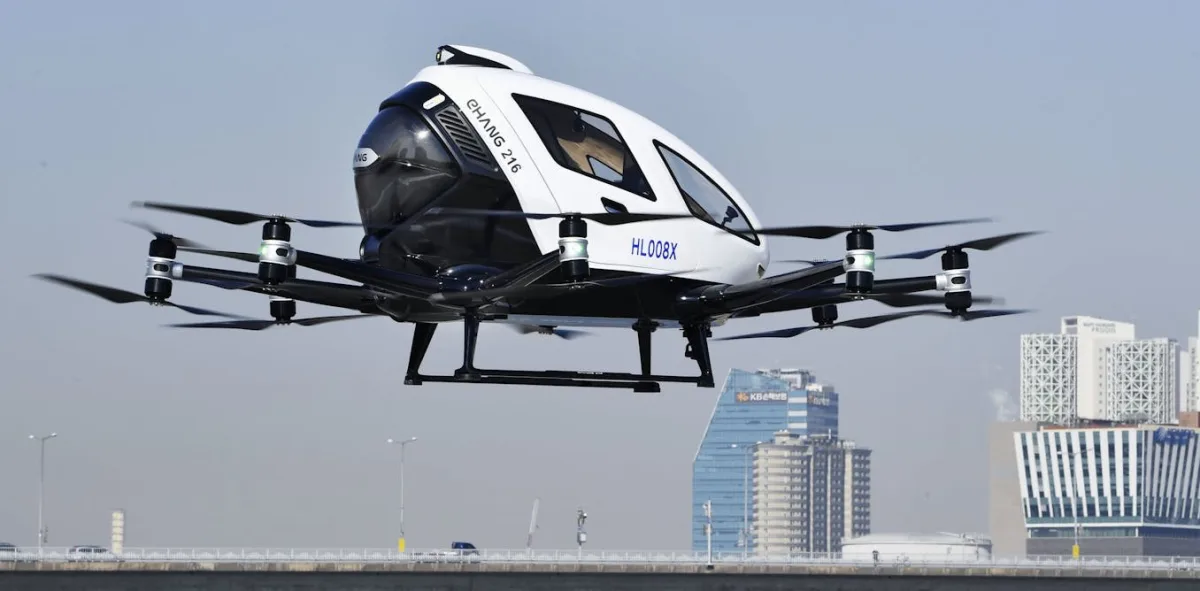
The Vivid Sydney drone failure highlights the critical need for robust autonomous emergency landing protocols as commercial drone delivery scales.
Key Takeaways
- •Vivid Sydney drone crash involved 90 units failing due to RF interference.
- •Wing and Walmart aim to reach 40 million residents by 2027.
- •Autonomous systems must now integrate real-time emergency landing decision software.
- •FAA Part 108 rulemaking will set new safety standards for BVLOS operations.
The Challenge of Autonomous Resilience
Recent incidents, including the Vivid Sydney drone failure in May 2026, have underscored the technical and safety hurdles facing the Advanced Air Mobility (AAM) sector. During the festival, radio frequency interference caused nearly 90 drones from the fleet operated by Skymagic to fall into Darling Harbour. While no injuries occurred, the event serves as a high-profile case study for the industry as autonomous systems move toward widespread integration in urban environments. As eVTOL (Electric Vertical Takeoff and Landing) aircraft and delivery drones become more common, the focus is shifting from basic hardware redundancy to the development of sophisticated software capable of managing complex, real-time emergencies.
Scaling Commercial Drone Logistics
Despite the risks, the commercial deployment of UAS (Unmanned Aircraft System) technology is accelerating rapidly. Wing, a subsidiary of Alphabet, recently announced a significant expansion of its drone delivery partnership with Walmart. This initiative aims to reach more than 40 million Americans across 270 locations by 2027. According to official press releases, Wing has already completed over 1 million commercial drone deliveries globally, with drones capable of cruising at 65 mph to fulfill orders in under 30 minutes. This transition from experimental pilots to integrated daily services necessitates a robust regulatory framework, such as the FAA (Federal Aviation Administration) Part 108 rulemaking, which addresses BVLOS (Beyond Visual Line of Sight) operations.
Technical Requirements for Emergency Response
For autonomous aircraft to operate safely, they must move beyond simple failure prevention. Current industry efforts, as noted in industryTrends, focus on developing systems that can "see, decide, and act" during an anomaly. This requires the aircraft to identify safe landing zones in real-time, assess risks to bystanders, and calculate the safest trajectory while managing a fault. The Air Line Pilots Association (ALPA) has argued that these systems should eventually meet the same stringent certification standards as crewed commercial carriers to ensure public safety. Historically, incidents like the 2022 Joby Aviation prototype crash and the 2018 Hong Kong drone swarm failure demonstrate that cascading technical issues require advanced, software-driven mitigation strategies.
AAM vs. Legacy Delivery: Key Specifications
| Metric | Wing New 5lb Model | Amazon Prime Air MK30 |
|---|---|---|
| Payload Capacity | 5 lbs | 5 lbs |
| Cruise Speed | 65 mph | 73 mph |
| Range | 12 miles (round-trip) | 7.5 miles |
Future Milestones and Regulatory Evolution
The path to full-scale autonomous integration depends on proving resilience under pressure. Regulators, including the FAA and the Civil Aviation Safety Authority (CASA) in Australia, are refining certification paths that prioritize operational safety assurance. By 2027, the expansion of Wing and Walmart networks is expected to serve millions of households, making the ability to manage rare but critical failure events a prerequisite for long-term commercial viability.
Why Public Trust Remains the Final Hurdle
The long-term success of autonomous aviation will be measured by its performance during the most challenging conditions. While the industry focuses on efficiency and economic scale, the public's willingness to accept drones overhead depends on the guarantee of safety protocols that trigger automatically when systems fail. The Vivid Sydney incident serves as a reminder that safety is not merely the absence of failure, but the ability to manage it without harm to the public.
Frequently Asked Questions
- What caused the drone swarm failure at the Vivid Sydney festival?
- The failure was caused by radio frequency interference, which resulted in nearly 90 drones falling into Darling Harbour.
- How do autonomous drones manage emergency landings?
- Autonomous drones utilize software systems that perceive surroundings, identify potential hazards, and assess risks to choose the safest landing site in real-time without human intervention.
- What is the goal of the Wing and Walmart drone delivery partnership?
- The partnership aims to reach over 40 million Americans across more than 270 locations by 2027, scaling commercial drone delivery into a standard retail service.
From airline operations to fleet updates, commercial aviation news lives at omniflights.com. For detailed airline coverage, route changes, and fleet moves, explore the Airlines section at omniflights.com/airlines.
Written by Hardik Vishwakarma
Co-Founder & Aviation News Editor leading initiatives that improve trust and visibility across the global aviation industry. Covers airlines, airports, safety, and emerging technology.
Visit ProfileYou Might Also Like
Discover more aviation news based on similar topics
Ryanair Flight RK514 Diverts to Birmingham After Emergency
Ryanair flight RK514 diverted to Birmingham Airport on September 13, 2026, following a medical emergency involving a passenger.
Amazon Suspends 21 Air After Fatal Miami 767 Runway Overrun
Amazon has suspended operations with 21 Air following a fatal Boeing 767 runway overrun at Miami International Airport that resulted in five deaths.
FAA Proposes A220 Fuel Line Inspections for US Operators
The FAA issued a proposed directive requiring inspection of motive-flow fuel lines on 13 US-registered Airbus A220s to prevent potential leaks.
NATS Denies Military Jet Role in UK ATC Outage
The UK Ministry of Defence denied its aircraft caused a NATS outage that led to over 2,000 flight cancellations and calls for CEO resignation.
21 Air Miami Crash: NTSB Investigates 767 Runway Overrun
A fatal 21 Air Boeing 767 crash at Miami International Airport has triggered an NTSB investigation amid scrutiny of Amazon Air's contract oversight.

Amazon Cargo Plane Crash: 5 Remembered After MIA Excursion
Five cleaning crew members died after an Amazon-contracted Boeing 767 overran the runway at Miami International Airport at 158 knots.