Asiana Retires Last Passenger Boeing 767-300 from World's Busiest Route

Co-Founder & CEOAviation News Editor delivering trusted coverage across the global aviation industry.
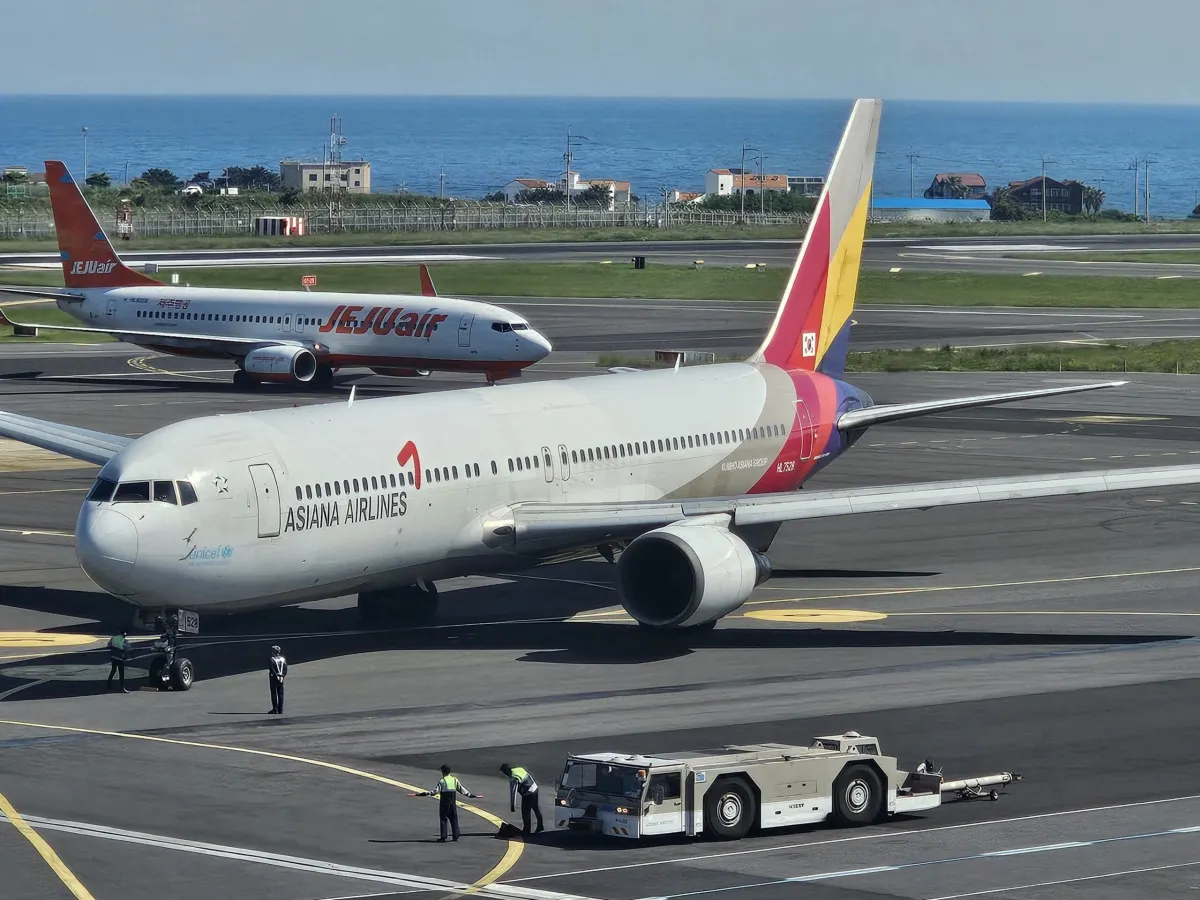
Asiana Airlines has retired its final passenger Boeing 767-300, marking an end for the classic widebody on the world's busiest route, Seoul to Jeju.
Key Takeaways
- •Retires the last passenger Boeing 767-300, registration HL7528, from service.
- •Operated on the Seoul Gimpo (GMP) to Jeju (CJU) route, the world's busiest with 14.4 million seats in 2025.
- •Aligns with fleet modernization ahead of the full integration of Asiana into Korean Air by 2027.
- •Marks the end for the rare non-ER variant, of which only 104 were built for passenger service.
Asiana Airlines has retired its final passenger Boeing 767-300, aircraft registration HL7528, from scheduled service. The aircraft's final operations were on the high-frequency domestic corridor between Seoul's Gimpo International Airport (GMP) and Jeju International Airport (CJU) — a route officially ranked as the world's busiest. The retirement marks the end of an era for the carrier's classic widebody fleet and is a direct consequence of its ongoing fleet modernization and integration into Korean Air.
The withdrawal of the non-ER (Extended Range) 767-300 variant is a significant milestone. This specific model was a workhorse on the GMP-CJU route, a sector that, according to the Official Aviation Guide (OAG), is the world's busiest with 14.4 million scheduled seats in 2025. The aircraft's retirement simplifies Asiana's fleet structure ahead of its full merger with Korean Air, expected to be completed by 2027. For passengers, it signals a transition from older, high-capacity aircraft to more modern, albeit potentially smaller, jets on the vital domestic link.
A Strategic Fleet Decision
The decision to phase out the aging 767 is rooted in both regulatory and commercial strategy. The aircraft, at over 26 years old, is less fuel-efficient than modern alternatives, aligning its retirement with directives from South Korea's Ministry of Land, Infrastructure and Transport (MOLIT) regarding emissions compliance and aging aircraft safety. Asiana's official fleet specifications confirm HL7528 was configured in a high-density, all-economy layout with 290 seats, optimized for the short, high-demand flight of approximately 243 nautical miles.
This move is also a key step in the operational consolidation mandated by the merger with Korean Air. The acquisition, which is under the oversight of the South Korea Fair Trade Commission (FTC), necessitates streamlining redundant fleet types to create a unified operational standard. By removing a legacy sub-fleet, Asiana and Korean Air can reduce maintenance complexities and streamline pilot training programs. John Grant, Chief Analyst at OAG, noted that the dominance of routes like GMP-CJU is a "remarkable indication of how these routes have recovered... and their significance to the airlines operating those sectors," underscoring the importance of operational efficiency on this corridor.
Context and Precedent
The retirement of the 767-300 follows a clear pattern of fleet modernization at Asiana. In March 2024, the airline retired its last passenger Boeing 747-400 (HL7428), another classic widebody. This historical precedent mirrors the current situation, demonstrating a systematic strategy to phase out older four-engine and twin-engine widebodies in favor of a newer, more efficient fleet. This is consistent with a global industry trend where carriers are replacing legacy aircraft with new-generation models like the Airbus A350 and Boeing 787.
However, the use of widebody aircraft on high-density domestic routes is a unique characteristic of Asian markets, particularly in Japan and South Korea. This strategy allows airlines to maximize passenger throughput at slot-constrained airports. The retirement of Asiana's 767 may signal a gradual shift in this approach, potentially favoring higher frequencies with modern narrowbodies like the A321neo.
Boeing 767-300 vs. 767-300ER: Key Specifications
According to Boeing Commercial Airplanes production data, the non-ER 767-300 operated by Asiana is a relatively rare variant, with only 104 units built before production ceased in 2000. This contrasts sharply with its more popular successor, the 767-300ER.
| Metric | Boeing 767-300 (Non-ER) | Boeing 767-300ER |
|---|---|---|
| Range | ~3,900 nm | ~5,980 nm |
| Maximum Takeoff Weight (MTOW) | 350,000 lbs | 412,000 lbs |
| Total Production | 104 built | 583 built |
Stakeholder and Passenger Impact
The most significant impact is on Star Alliance frequent flyers, who will lose access to Asiana's network and benefits as the airline transitions to the SkyTeam alliance post-merger. This represents a major shift in the loyalty program landscape for the Korean market. For passengers on the Seoul-Jeju route, the change involves moving from the spacious 2-3-2 cabin configuration of the 767 to newer aircraft. While modern jets offer improved amenities, some passenger reviews have noted that the retired 767 lacked personal inflight entertainment and Wi-Fi, making the upgrade a mixed experience depending on passenger priorities.
From an operational perspective, the retirement simplifies Asiana's maintenance and crew scheduling. For the broader market, the South Korea FTC has raised concerns that the merger and subsequent fleet consolidation could lead to reduced competition and potentially impact consumer protections.
What Comes Next
The retirement of HL7528 is a precursor to several larger milestones. Asiana Airlines is expected to formally exit the Star Alliance in late 2026, paving the way for its full integration into the SkyTeam alliance alongside Korean Air. According to Hanjin Group, Korean Air's parent company, the complete phase-out of the Asiana Airlines brand and full operational integration is expected by January 1, 2027.
Why This Matters
The retirement of Asiana's final passenger Boeing 767-300 is more than just a fleet update. It is a tangible symbol of the seismic consolidation underway in the South Korean aviation market, marking a definitive step toward the creation of a single flag carrier. For the industry, it closes a chapter on a classic widebody era and highlights the relentless push for efficiency and modernization, even on the world's busiest domestic air route.
For in-depth airline coverage and commercial aviation news, omniflights.com delivers timely industry insights. From aircraft production to supply chains, commercial aviation manufacturing news is covered at omniflights.com/manufacturing.
Written by Hardik Vishwakarma
Co-Founder & Aviation News Editor leading initiatives that improve trust and visibility across the global aviation industry. Covers airlines, airports, safety, and emerging technology.
Visit ProfileYou Might Also Like
Discover more aviation news based on similar topics
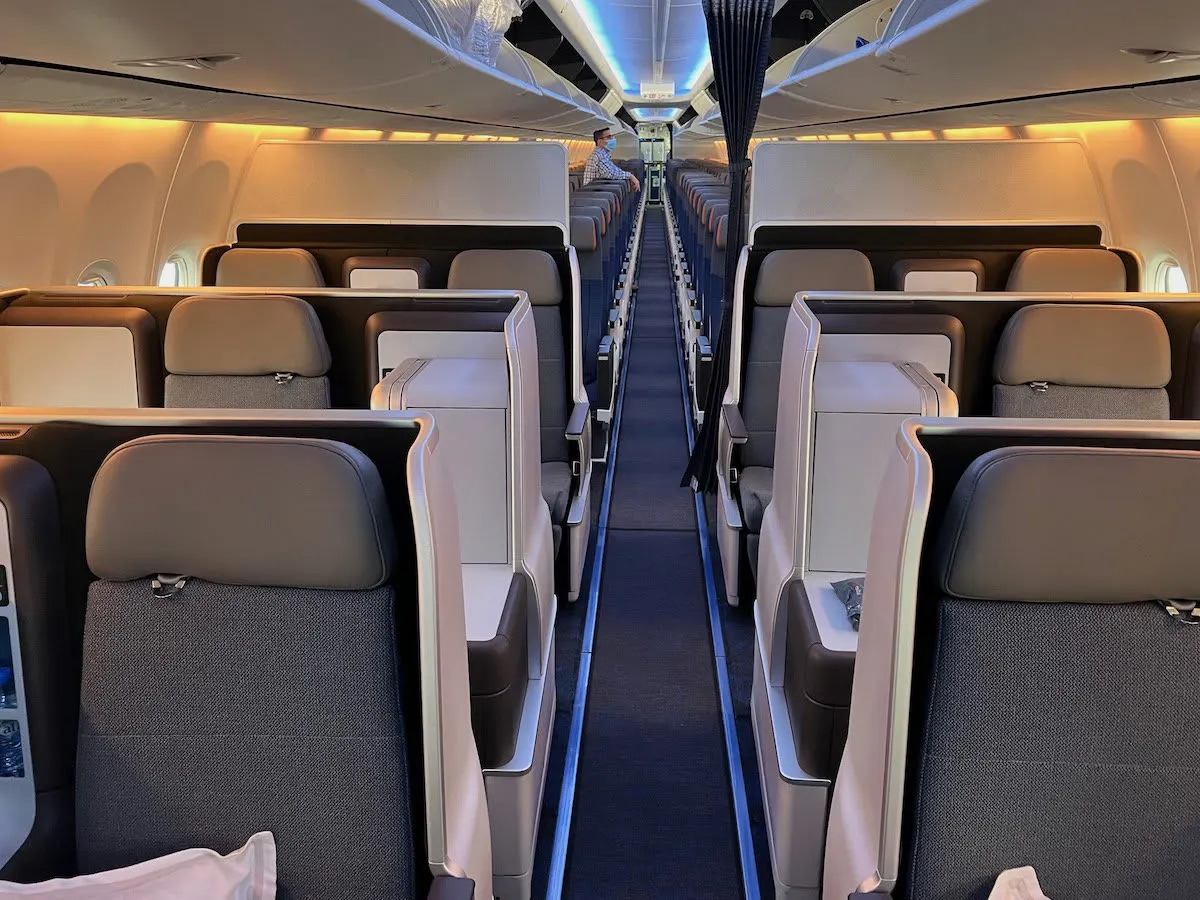
Flydubai Upgrading 21 Boeing 737 MAX 8s to Flat Bed Seats
Flydubai is retrofitting 21 Boeing 737 MAX 8 aircraft with lie-flat business class seats to standardize its premium product by late 2027.
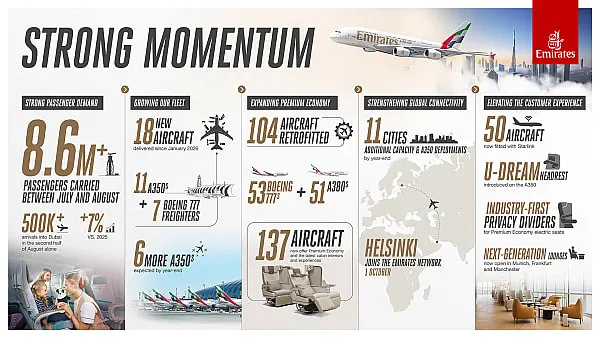
Emirates Winter Booking Momentum Grows Amid Fleet Expansion
Emirates carried 8.6 million passengers this summer and enters winter with strong demand as it accelerates fleet retrofits and network growth.
Air Arabia Consortium Gains AOC for New Dammam Budget Airline
A Saudi GACA-led consortium including Air Arabia has secured an AOC to launch a new budget airline based at Dammam's King Fahd International Airport.
Turkish Airlines Exits Luanda as Angola Hub Struggles
Turkish Airlines dropped its Luanda route as Angola's new airport struggles to attract traffic, handling only 756,028 passengers in 2025.

Red Sea Airlines Leases Two 737 MAX 8s for 2027 Expansion
Red Sea Airlines signed a lease for two Boeing 737 MAX 8 aircraft from SMBC Aviation Capital, arriving in 2027 to support its 14-aircraft fleet goal.
Avelo CEO Warns Airfares May Rise on Jet Fuel Price Spikes
Avelo Airlines CEO Andrew Levy warns that rising fuel costs may force fare increases as global jet fuel prices reach $171.01 per barrel.