Asia Airlines Gain as Mideast Crisis Drives Europe-Asia Fares Up 900%

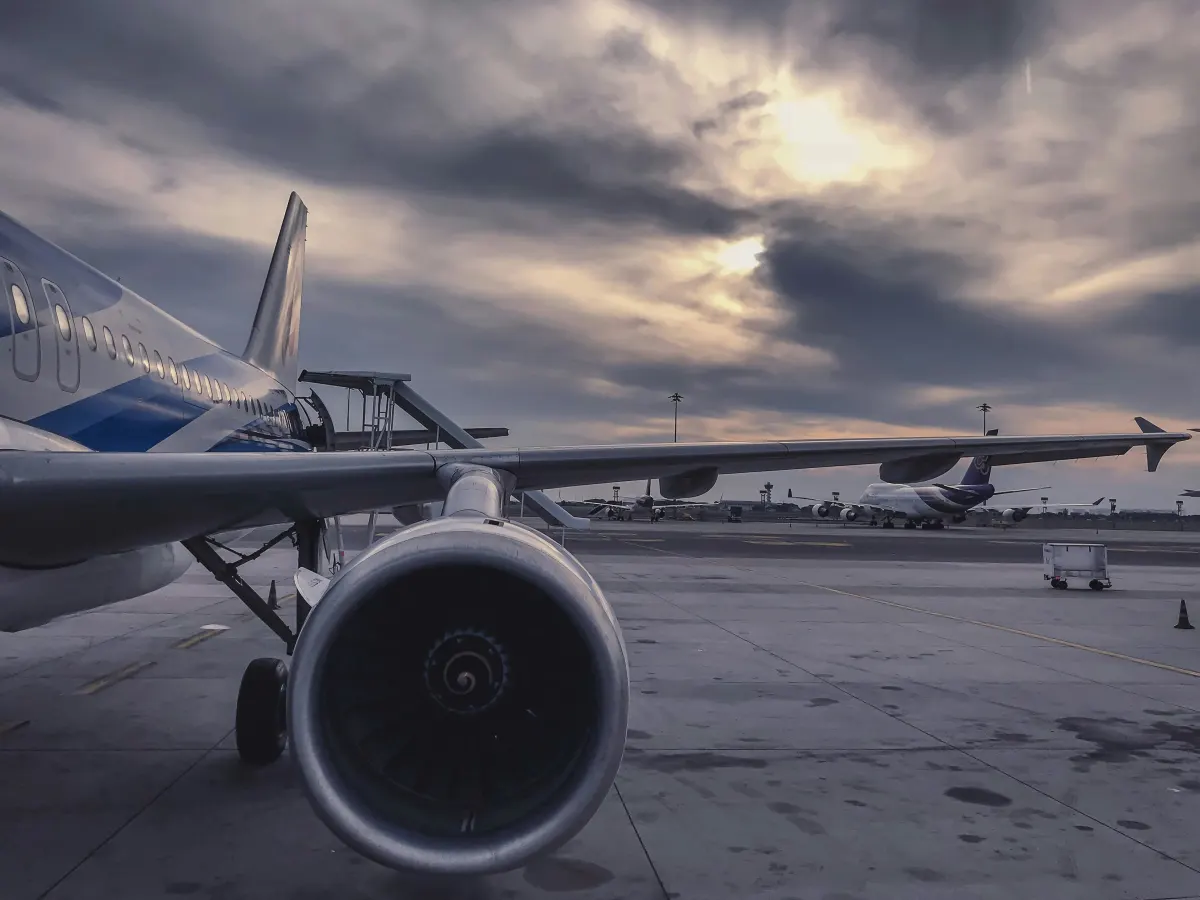
Mideast airspace closures drive Europe-Asia airfares up 900%, shifting passenger traffic to carriers like Cathay Pacific and Singapore Airlines.
Key Takeaways
- •Surge up to 900% for Europe-Asia airfares due to Mideast airspace closures.
- •Divert passenger traffic from Middle Eastern hubs to Asian carriers like Cathay Pacific and Singapore Airlines.
- •Increase flight times by 2-4 hours, adding $6,000-$7,500 in costs per flight hour.
- •Cancel over 12,300 flights across major Middle East airports since late February.
Widespread airspace closures across the Middle East have triggered a severe capacity crunch on key Europe-Asia routes, causing airfares to surge and diverting significant passenger traffic to Asian carriers. The disruption has led to immediate and substantial price increases, with some one-way economy tickets seeing a price hike of more than 900%. Airlines are now implementing lengthy and costly detours to bypass the conflict zone, fundamentally altering traffic flows between the two continents.
The operational and financial consequences for the airline industry are significant. With airspace closed over Iran, Iraq, Israel, and Jordan, carriers are forced into detours that add 2-4 hours to flight times. According to analysis from AirInsight, these longer routes increase operating costs by an estimated $6,000 to $7,500 per flight hour for a widebody aircraft. The instability has also resulted in mass cancellations, with data from Flightradar24 showing over 12,300 flights cancelled across seven major Middle East airports since February 28. Major hubs like Dubai, which typically handle over 1,000 flights daily, have faced severe operational challenges.
Shift in Global Traffic Patterns
The disruption has created a short-term advantage for Asian hub carriers like Cathay Pacific (CX) and Singapore Airlines (SQ). As passengers and airlines avoid Middle Eastern transit points, hubs in Hong Kong and Singapore are absorbing the redirected demand. This shift is reflected in recent traffic figures. The Cathay Group reported carrying a combined 3.3 million passengers in January 2026, an 11% increase compared to the previous year. Similarly, Singapore Airlines and its subsidiary Scoot carried 10.9 million passengers in the quarter ending December 2025, a 6.3% year-over-year increase.
The fare increases have been dramatic. A one-way economy ticket on Singapore Airlines from London to Singapore on March 5 was priced at HK$66,767 (about US$8,540), a stark contrast to fares available later in the month. This price volatility reflects a severe, albeit likely temporary, imbalance between supply and demand. The suspension of services by major Gulf carriers has removed over 10% of daily international flight capacity from the market, according to OAG Aviation, further exacerbating the capacity shortage and pushing prices higher.
Industry Response and Outlook
Aviation industry leaders have expressed concern over the escalating situation and its impact on operations. Willie Walsh, Director General of the International Air Transport Association (IATA), emphasized the need for safety, stating, "We all hope for an early, peaceful resolution to the current hostilities. In the meantime, states must respect their obligation to keep civilians and civil aviation free from harm." The financial strain of the detours is a primary concern. Subhas Menon, head of the Association of Asia Pacific Airlines (AAPA), commented on the economic pressure, noting, "Right now the whole of the Middle East is out of bounds, which is a high price for some airlines. If then Europe can only be served at a high cost, airline profitability will be undermined."
While Asian carriers are currently benefiting from the traffic redistribution, analysts caution that the gains may be temporary. Linus Benjamin Bauer, founder of aviation advisory firm BAA & Partners, characterized the situation as a tactical shift rather than a permanent change. "Asian airlines may see a short-term combination of higher fares, stronger cargo yields and modest market share gains," Bauer noted. "But this is fundamentally a redistribution of traffic, not a structural rebalancing of global aviation networks."
Why This Matters
This disruption highlights the vulnerability of global aviation networks to geopolitical instability. While creating a short-term revenue opportunity for carriers in unaffected regions, it imposes significant operational and fuel costs across the industry. The event underscores the critical role of stable transit hubs and the immediate financial impact that airspace closures can have on both airline profitability and passenger travel costs.
From airline operations to fleet updates, commercial aviation news lives at omniflights.com. Follow aviation sustainability efforts, emissions research, and green initiatives in the Environmental section at omniflights.com/environmental.

Written by Ujjwal Sukhwani
Aviation News Editor & Industry Analyst delivering clear coverage for a worldwide audience. Covers flight operations, safety regulations, and market trends with expert analysis.
Visit ProfileYou Might Also Like

Southwest Reports Record Q3 Revenue Amid Transformation
American Airlines Reports Record Q3 Revenue Amid Fuel Costs
American Airlines Projects 2026 Loss on Rising Fuel Costs
American Airlines to Nearly Triple Premium 787-9 Fleet
Airline Shares Rise Following United Revenue Guidance